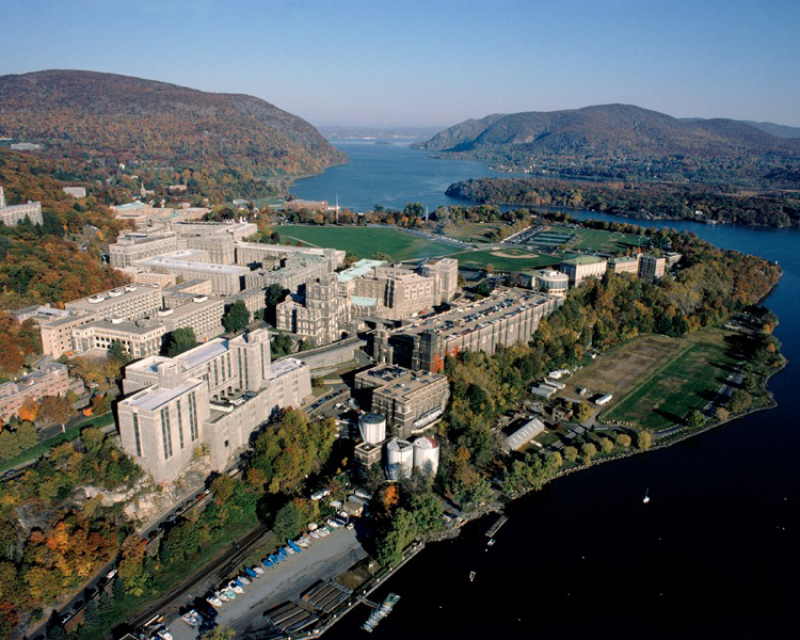
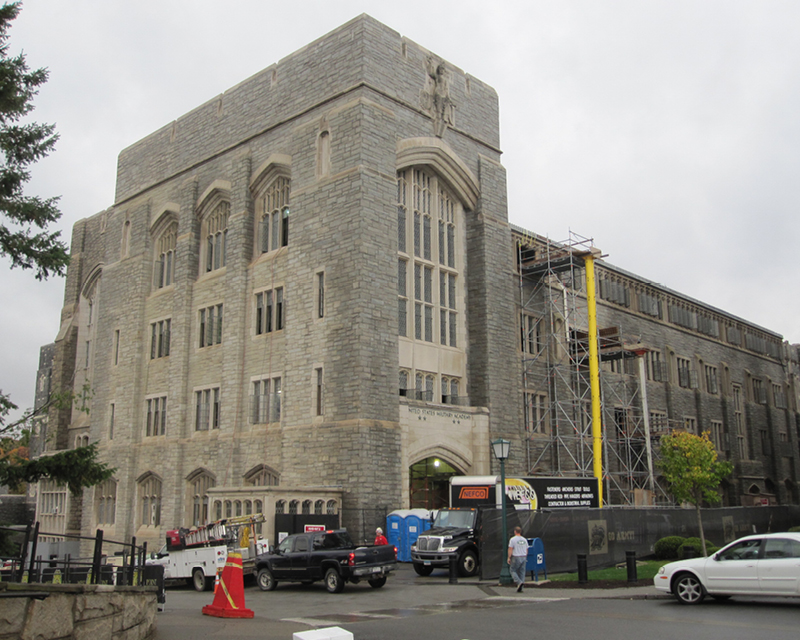
Bartlett Hall, the historic Gothic-style Science Center at the U.S. Military Academy at West Point, required a comprehensive modernization to transform its outdated learning environments into state‑of‑the‑art facilities for chemistry and physics instruction. As part of a multi-phase renovation commissioned by the U.S. Army Corps of Engineers (USACE), STV, in joint venture, delivered engineering and construction support services to upgrade 217,300 square feet of classrooms, laboratories, lecture halls and building systems while preserving the building’s architectural heritage.
What challenges did STV address?
USMA needed to significantly modernize aging science facilities while maintaining ongoing teaching and research. This required a complex, five‑year phased renovation that kept portions of the building occupied throughout construction. The project also demanded improvements in energy performance, integration of modern systems into a historic structure and the replacement of dated infrastructure built across multiple additions over several decades.
What solutions did STV deliver?
On behalf of USACE, STV provided civil, mechanical, electrical, plumbing and fire protection engineering services, along with contract and financial management for the joint venture. The team designed high-performance, energy-efficient systems to support the Academy’s goal of achieving LEED Silver certification. Strategic phasing plans ensured continuous building operations, allowing cadets and faculty to maintain access to essential academic spaces while modernization advanced in stages across the facility.
How does this project benefit the region and community?
The renovated Bartlett Hall delivers state‑of‑the‑art science teaching and research environments for future Army leaders. Modernized laboratories, improved building systems and enhanced energy performance support student success and long‑term campus sustainability. By upgrading an iconic campus landmark, the project preserves West Point’s architectural legacy while strengthening its academic capabilities for generations to come.
Key Stats and Accolades
- 217,300‑sf multi-phase renovation
- LEED Silver–targeted design
- Historic Gothic-style building modernization
- Continuous occupancy maintained during renovation