Across the country, transportation agencies are facing a narrowing set of choices. Persistent funding constraints, aging assets and growing public expectations are forcing leaders to rethink not only how infrastructure is paid for, but how it performs day to day. Tolling, once considered primarily as a way to address funding needs, is increasingly being evaluated as a decision making platform – shaping operations, safety, customer experience and long-term system resilience.
STV recently completed the nation’s first connected vehicle (C‑V2X) tolling pilot in partnership with the North Carolina Turnpike Authority, demonstrating how next‑generation tolling technology can integrate revenue collection, real‑time communications and safety analytics in a live roadway environment. The pilot was designed not as a showcase, but as a practical evaluation – helping the agency understand performance, risk and readiness before broader deployment.
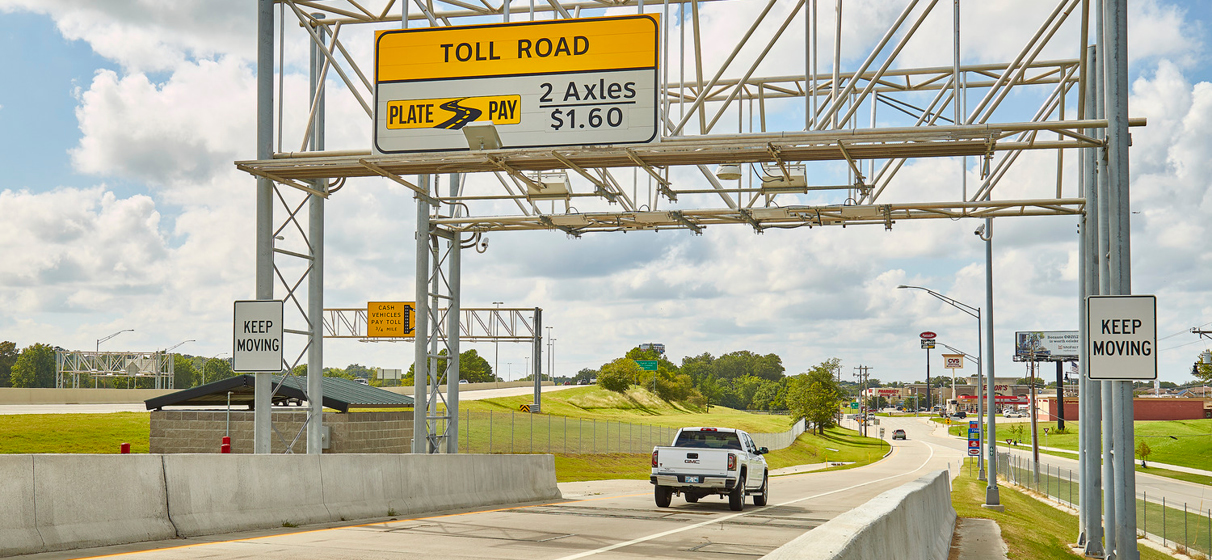
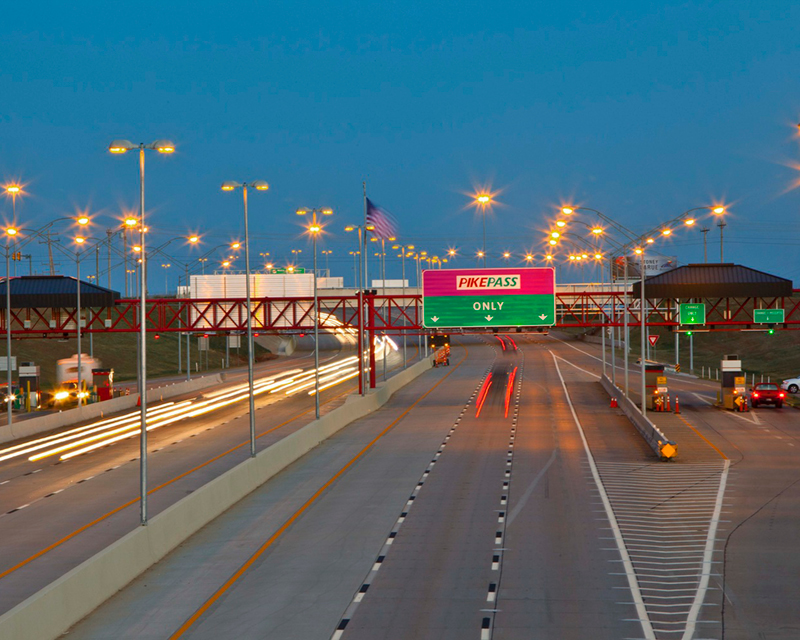
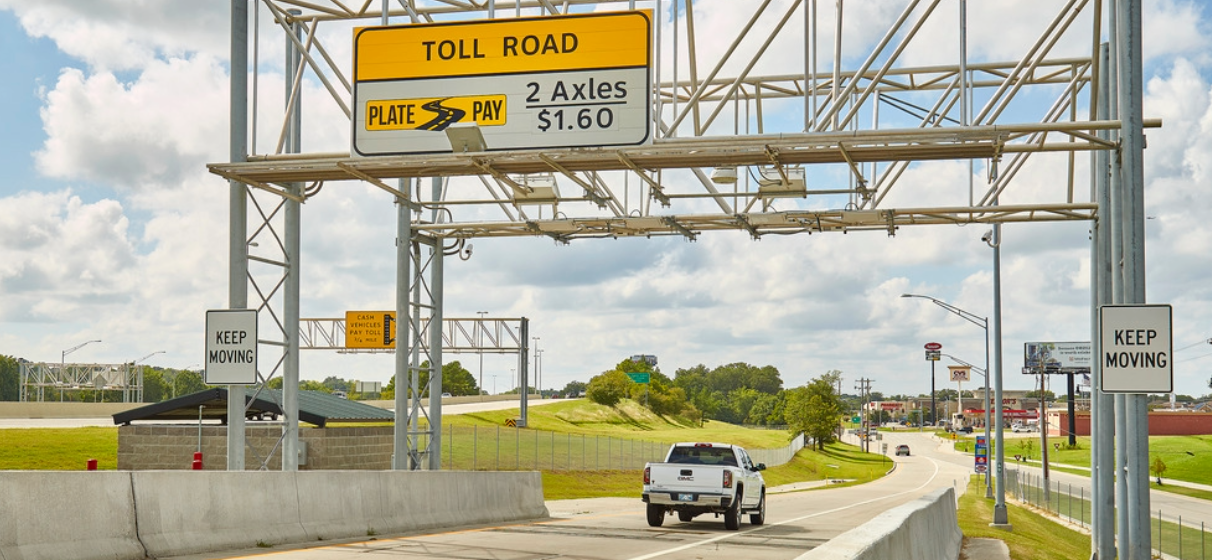
That approach reflects a familiar role for the firm: helping agencies evaluate emerging approaches under real-world conditions before committing to full-scale implementation. From early toll road infrastructure and toll plaza design in Pennsylvania, to statewide firsts in fully electronic tolling in Oklahoma, to supporting toll delivery and operations in fast-growing markets like Texas, STV has consistently worked with agencies as tolling systems – and public expectations – evolved.
In this interview, STV speaks with Heather Wills, vice president and national tolling director, about how that institutional history informs today’s innovation and why technology‑enabled tolling has become less about novelty and more about sound judgment, integration and risk management as agencies across the country rethink revenue, infrastructure delivery and customer experience.
1. The North Carolina Turnpike Authority pilot is being described as a first‑of‑its‑kind tolling project. From your perspective, what makes this milestone different from earlier tolling innovations?
What distinguishes this pilot is that it’s not focused solely on toll collection – it’s demonstrating how tolling can function as part of a connected, intelligent roadway system. In North Carolina, the focus was on understanding how tolling infrastructure could support real-time communication and safety – not in theory, but in live traffic conditions. We helped integrate C‑V2X tolling with advanced 3D LiDAR safety analytics, allowing the system to detect hazards like stalled vehicles or wrong‑way drivers and communicate that information in real time.
Just as important, this wasn’t a controlled laboratory test. It was a real‑world pilot, with STV serving as project manager and technical advisor from early concept through operations‑ready validation. That end‑to‑end involvement allowed the agency to evaluate not just the technology itself, but how it would function within existing operations and decision-making frameworks. Helping agencies move from idea to proven framework is consistent with how we’ve supported toll clients through earlier periods of technological change, ultimately supporting increased customer service and user readiness.
2. STV has been involved in tolling for more than half a century. How does the North Carolina pilot connect to the firm’s broader tolling history?
When you look across our history, the throughline isn’t any one technology – it’s helping agencies navigate change responsibly. Early on, that meant designing the physical and operational foundations of toll roads, including toll plazas and supporting infrastructure in places like Pennsylvania, when standards were still being established.
As technology evolved, our role shifted toward helping agencies transition away from cash collection. That included early electronic tolling deployments and, later, fully electronic facilities like Oklahoma’s first all-electronic open-road toll project. Each of those transitions required agencies to balance innovation with enforcement, operations and public communication – often simultaneously.
The North Carolina pilot fits squarely within that lineage. It’s about testing new assumptions – this time around connected vehicles and real‑time data – in a live environment, so agencies can make informed decisions about what to scale and when. The tools change, but the need to reduce risk during transition stays the same.
3. Many agencies today are looking at tolling to close the transportation funding gap under increasing financial pressure. How does technology change the equation for them?
Technology has made tolling more adaptable and less disruptive than in earlier generations, which matters as more agencies consider it part of their funding strategy. In fast‑growing states like Texas, agencies are often balancing the need for new capacity with construction impacts, customer expectations and long‑term operational considerations. Modern tolling systems give agencies more flexibility in how and where tolling is introduced without defaulting to large, disruptive infrastructure.
At the same time, technology raises expectations. Agencies aren’t just being asked to collect revenue efficiently – they’re expected to deliver a seamless customer experience, improve safety and provide transparency around system performance. That shift is why pilots like this one in North Carolina are so valuable. They allow agencies to see how new technologies perform under real-world conditions before making long-term commitments.
4. STV’s project history includes several early or first‑of‑their‑kind tolling deployments. Why are those early projects so consequential for agencies?
Early projects tend to carry disproportionate risk. Standards are still evolving, peer benchmarks are limited and public trust hasn’t yet been established. Decisions made during those first deployments often shape public perception and operational expectations for years to come.
Whether it’s early electronic tolling projects in the Northeast or a statewide first in fully electronic tolling, those efforts force agencies to confront operational, enforcement and customer‑experience questions all at once. Our role has been to help clients think through those implications holistically, so initial deployments create a foundation that can be built upon rather than corrected later.
5. Beyond technology, STV has also led innovations in how toll infrastructure is delivered. Why does delivery strategy matter so much in toll environments?
Toll facilities are revenue‑critical systems. Unlike general‑purpose highways, you can’t simply accept prolonged disruption without financial and public‑confidence consequences. That’s why delivery strategy – how projects are phased, constructed and integrated into live operations – is just as important as the tolling technology itself.
Our experience delivering major projects under active toll operations, including accelerated construction efforts on legacy systems, informs how we approach new technology deployments as well. In both cases, the core challenge is the same: how do you modernize infrastructure while protecting the system that agencies and customers rely on every day?
6. Looking ahead, how do you see the role of tolling evolving as agencies adopt more advanced, connected technologies?
I think tolling will increasingly be viewed as a foundational layer of smart infrastructure, rather than a standalone function. As connected vehicle technologies mature, tolling systems can support safety, traffic management and data‑driven decision‑making in ways that weren’t possible even a decade ago.
For agencies, the challenge will be integration – aligning technology, policy and delivery so systems scale responsibly and maintain public trust. For firms like STV, that means pairing emerging technology with historical perspective – helping agencies move forward without losing sight of what has worked, what hasn’t and why. The technology will keep changing, but the need for sound judgment, risk management and trusted partnerships will remain constant.