Across the United States, seismic hazards pose challenging questions about where and how infrastructure can fail. With aging bridges, highways and transit systems facing increased seismic forces across nearly 75% of the country, modern engineering approaches must anticipate both expected tremors and rare, high-impact events to protect communities and maintain mobility.
At a recent conference, I had the opportunity to discuss the evolving best practices that are helping agencies strengthen infrastructure performance under seismic loading, and how STV partners with clients to anticipate seismic risks and deliver long-term, resilient infrastructure solutions to our communities.
STV’s experience with resilience spans decades and geographies, with longstanding partnerships with public agencies for a deep understanding of how critical infrastructure must perform when it matters most. In Southern California, STV supported the launch of the Metrolink Commuter Rail system, the region’s first commuter rail, and later played a key role in rebuilding and strengthening the network following the Northridge earthquake. In the Pacific Northwest, our teams are currently serving as owner’s representative for Oregon’s Burnside Bridge, helping modernize a vital movable crossing to improve seismic adaptability and long-term resilience.
That experience extends nationwide. STV supported the South Carolina Department of Transportation in establishing seismic design standards for the state’s highway and bridge infrastructure and delivered seismic reinforcement for major transportation facilities, including the Anaheim Regional Transportation Intermodal Center (ARTIC). Across regions and project types, STV helps agencies translate evolving seismic best practices into practical, implementable solutions for maintaining safe operations for the communities that rely on it.
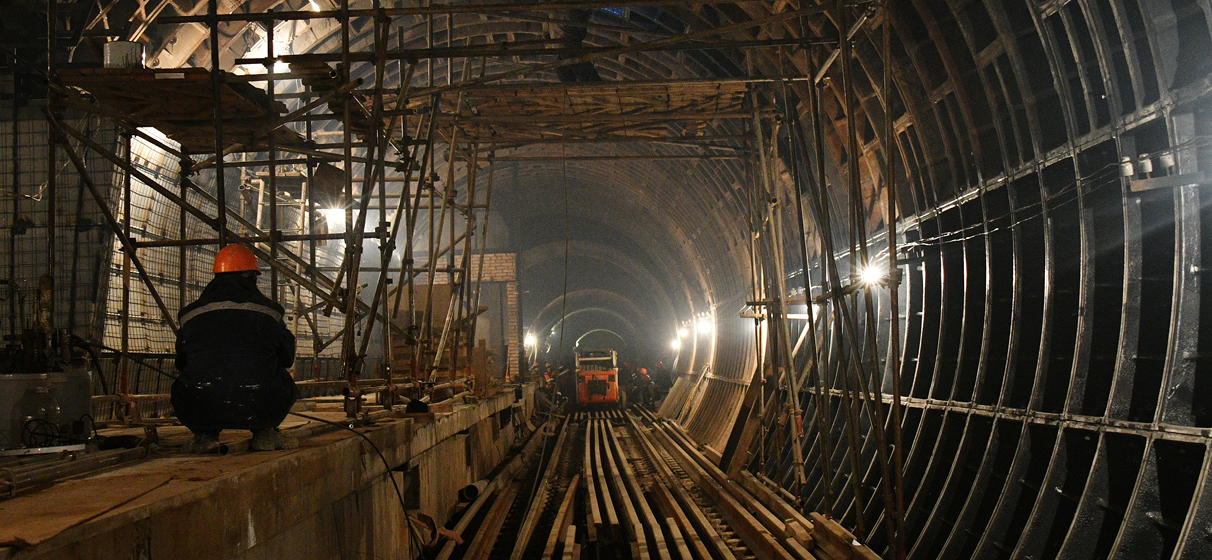
A crucial component of enhancing infrastructure resilience to seismic activity is characterizing the dynamic interaction between soil and structural systems. Through site-specific geotechnical investigations, including subsurface profiling, shear wave velocity testing and liquefaction potential assessments, STV’s geotechnical, underground structures and tunnelling team can design foundation solutions, such as deep pile systems or ground improvement, to mitigate seismic-induced lateral and vertical deformations. Integrating these complex geotechnical insights into design enables the development of infrastructure that is both more robust against earthquake forces and optimized for long-term performance.
This work also demands a system-wide perspective. Damage to one structure can ripple across transportation networks, disrupting communities and commerce. Scenario-based modeling helps anticipate how infrastructure is impacted by earthquakes, guiding retrofits and investment priorities. Integrating technical analysis with strategic foresight supports targeted, sustainable measures.
Ultimately, while seismic risk cannot be eliminated, it can be managed. By combining rigorous engineering with proactive planning, we can protect communities, maintain critical services and keep infrastructure ready to support economic growth and daily life.