Across California, community colleges are advancing large-scale capital programs to modernize facilities, expand access and address growing demands around enrollment, affordability and student housing. Increasingly, these programs are defined by overlapping funding sources, compressed delivery schedules and the need to manage risk across multiple, concurrent projects on active campuses – often requiring integrated program and construction management (PM/CM) leadership while maintaining day-to-day operations, safety and cost certainty.
At Sierra College’s Rocklin campus, this challenge has taken shape through a $675 million capital improvement program supported by long-standing program and construction management leadership, spanningnew construction, renovations and infrastructure upgrades. The program includes a wide range of project types – from academic buildings and student housing to parking, athletics and campuswide systems – requiring coordinated program management, governance and procurement strategies that enable consistent decision-making across projects while addressing different delivery risks from early planning through delivery.
Sierra College’s capital improvement program reflects a broader trend across California, where community colleges collectively face more than $32 billion in identified facility needs as campuses modernize aging infrastructure and invest in future growth.
To explore how this work comes together in practice, we spoke with STV’s Mansour Aliabadi, senior vice president, and Doug Evans, senior vice president, about their experience supporting Sierra College. Drawing on years of collaboration with the college and its stakeholders, they discuss how a coordinated program and construction management (PM/CM) approach enables complex campus programs to stay aligned with institutional priorities, deliver measurable outcomes and ultimately support student success.

Sierra College’s capital program spans a wide range of project types. How do you think about supporting a program of that scale and diversity?
Doug Evans: One of the defining characteristics of the work at Sierra College is the breadth. It’s not a single building – it’s a coordinated program that includes instructional space, student housing, athletics, parking and infrastructure. Managing that effectively starts with establishing a clear governance structure – how decisions are made, validated and communicated – along with consistent frameworks for budgets, schedules and procurement. That foundation is then applied across each project, with the flexibility to address different scopes, risks and delivery methods. For institutions undertaking similar programs, that consistency is what allows multiple projects to move forward without competing priorities or misaligned decisions.
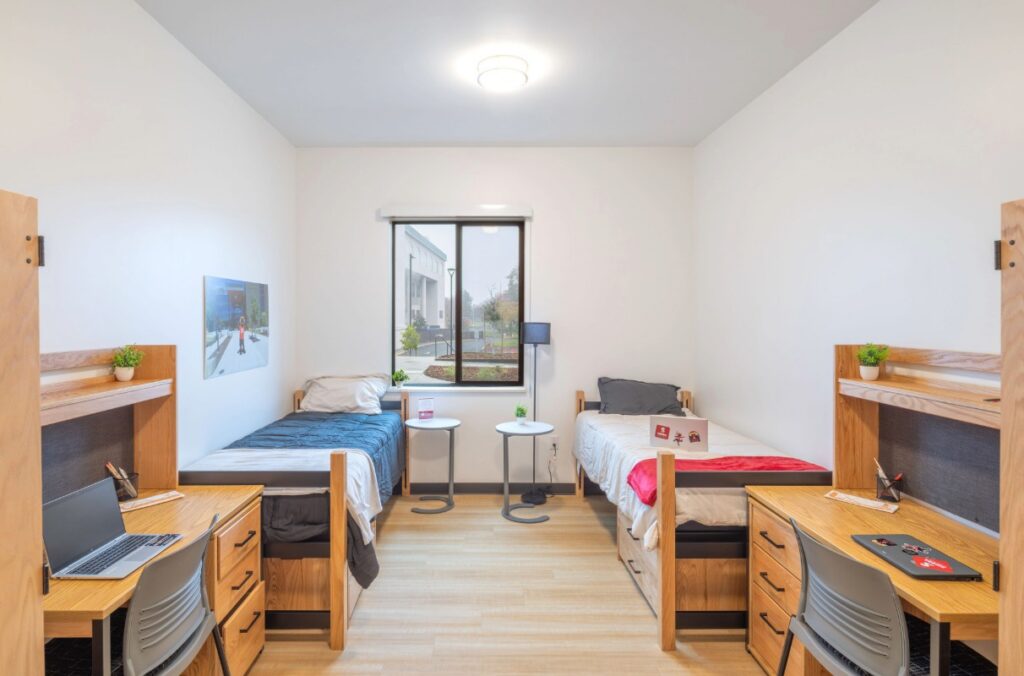
At the same time, each project serves a specific purpose. The parking structure, for example, focused on improving access and circulation across campus, adding 1,500 spaces and strengthening supporting infrastructure to accommodate growth. The student housing project addresses a different need – affordability and access. Delivering 358 beds is a tangible way to help students stay focused on their education. When you step back, the program works because those individual investments are connected to a broader strategy around access, affordability and long-term campus growth – outcomes that extend beyond any single project.
Mansour Aliabadi: That alignment is what allows the program to function as a single system, not a series of projects, and to stay tied to the college’s long-term vision. From early planning, we’re working with the college to define scope, establish budgets and develop a master schedule that integrates all the projects. That integrated program structure gives the college visibility into how decisions on one project affect others – whether it’s sequencing work, managing funding or coordinating procurement – and helps institutions proactively manage risk by addressing sequencing and funding decisions before conflicts arise.
Many of these projects are delivered on an active campus. What does that require from a PM/CM perspective?
Mansour Aliabadi: Working on an active campus adds a layer of complexity that touches everything. You’re coordinating construction while thousands of students, faculty and staff are moving through the same environment every day. That requires detailed phasing plans, clear communication and a constant focus on safety and access.
For example, when you’re building in the center of campus – like the student residence hall – there’s a need for careful traffic management, onsite coordination and oversight to ensure operations continue safely. Those considerations have to be built into planning from the start, not addressed during construction. That early integration of operations planning is often the difference between maintaining continuity and introducing disruption.
Doug Evans: It fundamentally changes how you sequence work and interact with stakeholders, because every decision has a direct impact on campus operations. For the parking garage, which was the first project on the campus to be delivered using design-build, the goal was to deliver a major new facility while minimizing disruption to daily activities. That meant close coordination with campus teams, validating pricing and managing construction in a way that maintained operations.
The same applies to renovation work, like the gymnasium expansion, where maintaining functionality is just as important as modernizing the facility. In those cases, phasing, communication and stakeholder alignment become as critical as the construction itself – an important takeaway for institutions planning work in occupied environments.

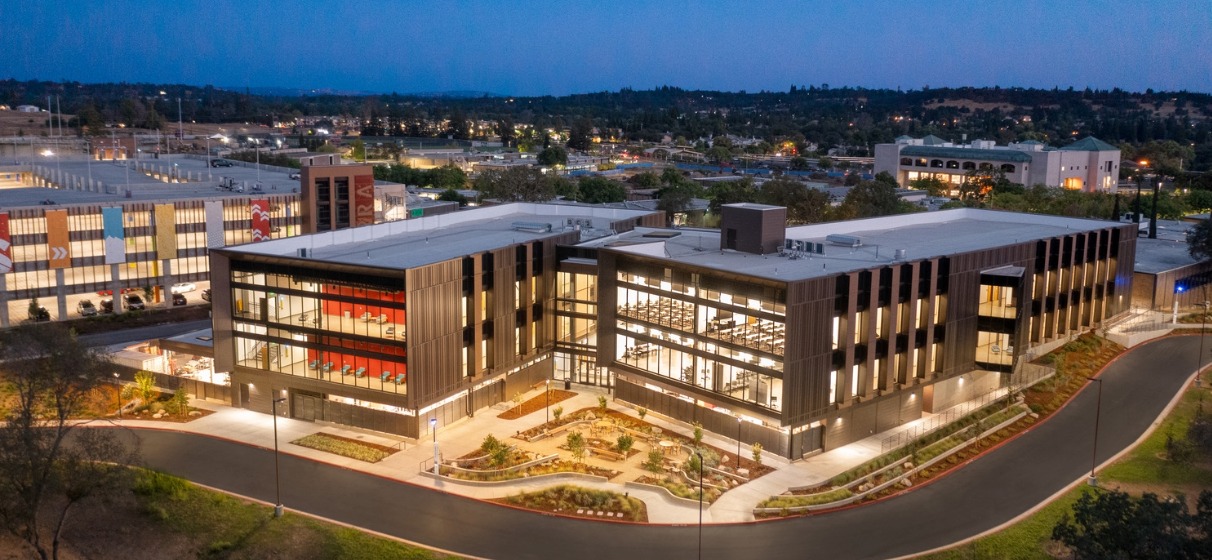
The New Instructional Building is a centerpiece of the program. What stands out about that project from a delivery standpoint?
Doug Evans: It’s a good example of how collaboration drives outcomes. The project brought together multiple stakeholders – from the college to designers and contractors – around a shared vision.
We worked closely with the college to validate scope, manage costs and guide procurement. That included developing independent estimates at key milestones and collaborating with the design-builder to keep the project aligned with budget and schedule
Mansour Aliabadi: What makes it particularly meaningful is how it’s being used. The building now supports a majority of the college’s classes, fundamentally improving access to modern learning environments and changing how students and faculty move through campus. That scale of impact – both operational and academic – is what defines success for institutions.
From a delivery standpoint, the team navigated several challenges – pandemic-related constraints, weather impacts and site conditions – but still achieved the goal of opening the facility in time for the academic calendar and within the established budget. That level of predictability is critical for institutions that operate on fixed academic calendars, where delays directly affect student access and experience. Delivering with that certainty provides a model for how complex projects can stay aligned with institutional priorities.

Across the program, what are some of the key outcomes or measures of success you focus on?
Mansour Aliabadi: We look at the fundamentals – scope, cost and schedule – but more importantly at how those translate into day-to-day outcomes for the campus. Delivering on time and within budget matters, but the real measure is how those results support the institution’s mission and student success.
For instance, the program includes infrastructure upgrades and utility replacements that aren’t always visible but are essential to long-term reliability. At the same time, projects like the instructional building and gymnasium directly improve the student experience by providing modern, accessible spaces for learning and athletics – demonstrating how both visible and behind-the-scenes investments contribute to stronger outcomes. Balancing those priorities is key to delivering a resilient campus environment.
Doug Evans: Another measure is how the projects support growth and access. The parking garage improves circulation and access across campus, while the student housing project addresses affordability challenges that many students face.
When those outcomes come together across multiple projects, the impact extends beyond campus – supporting the surrounding community and reinforcing the college’s role as a regional resource. That broader perspective is an important benchmark for institutions evaluating program success.

How does long-term collaboration with a client like Sierra College shape the way you approach the work?
Doug Evans: Long-term relationships allow you to build trust and continuity. Over time, you develop a deeper understanding of the client’s priorities, decision-making processes and long-term goals. That helps streamline delivery and creates a more collaborative working environment.
Mansour Aliabadi: It also enables consistency across projects. When you’re managing a multi-year program, having a stable team and a shared approach to planning, procurement, and construction management creates efficiencies and reduces uncertainty.
Ultimately, that continuity allows the program to function as more than a collection of projects – it becomes a coordinated, long-term effort to improve the campus. As institutions look ahead, that kind of sustained partnership will be increasingly important as programs grow more complex and require consistent coordination and insight across multiple, interrelated projects.