
In Dispatches from 2050, STV practitioners examine global pilot cities to understand how long-horizon infrastructure decisions unfold over decades and how our communities might follow similar trajectories.
Today, the built environment is grappling with rising raw-material costs, increased embodied carbon and a fragile supply chain. Amid these pressures, Singapore offers a look into what’s possible when the industry treats building materials as a strategic local asset rather than a one-time expense.
By aligning the Zero Waste Masterplan with the rigorous Green Mark building performance standard, Singapore has moved beyond traditional ‘green’ goals to create a performance-driven economic loop. This integrated framework positions the infrastructure built today as tomorrow’s local supply chain. By measuring a project’s total impact, they are proving that a more circular approach to construction is a better way to strengthen the local economy and rebuild our communities for the long term.
Ultimately, this strategy reduces reliance on landfills and lowers resource scarcity by keeping high-value materials within the domestic market. Since the launch of the Masterplan, Singapore has seen a reduction in domestic waste of more than 15%, and cut carbon emissions by an amount equivalent to planting a forest 13 times the size of the island nation itself.
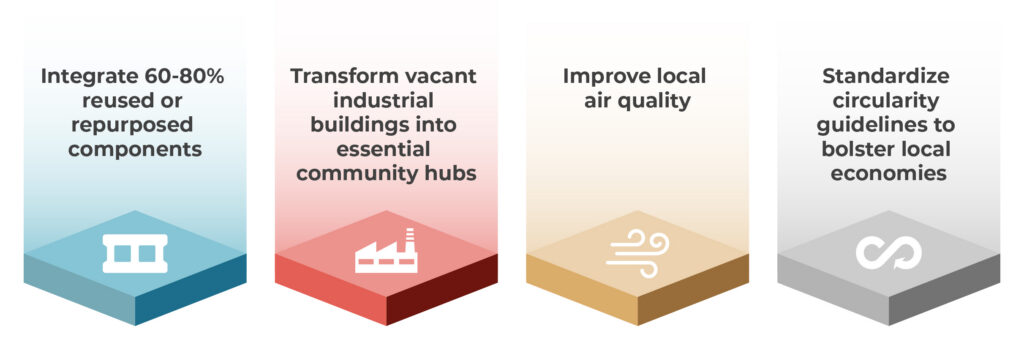
If cities commit to whole-building measurement, invest in regional reuse ecosystems and establish early deconstruction ordinances, then by 2050 our infrastructure could:
Systems changes are incremental: requiring coordinated policy, delivery innovations and sustained community trust.
- Delivery models must adapt. The shift toward asset recovery goes beyond demolition; it’s a core principle of responsible infrastructure stewardship. Each project should include a resource inventory, treating existing structures as a warehouse of materials for future use.
- Stability comes from long-term planning. Multi-decade roadmaps show how local leaders can build market certainty and move projects forward, even when regulatory frameworks are still emerging.
- Not everything works, and that’s the point. Progress depends on iteration, transparency and coordination. A “pilot” mindset and coordination efforts are key. International efforts in material reuse have already helped identify where we need better data and increased investment in our workforce through specialized training and skills. Learning from these early steps is how durable systems are built.
So, How Do We Get There?

Where is this already emerging?
These shifts are already taking hold through New York City’s Clean and Circular Guidelines, which have turned resource recovery into a binding bid requirement. We see similar momentum in Massachusetts’ Embodied Carbon Reduction Plan and the New York State Embodied Carbon Working Group, both of which work to bridge the gap between reporting and active market standards.
From Boulder, Colorado’s deconstruction ordinances to California’s landmark CALGreen updates, major agencies are now publishing the specific design specifications that are becoming the new baseline for doing business. When we move beyond treating circularity as a niche environmental tactic and invest in workforce transitions early, we support industry progress toward carbon reduction goals.
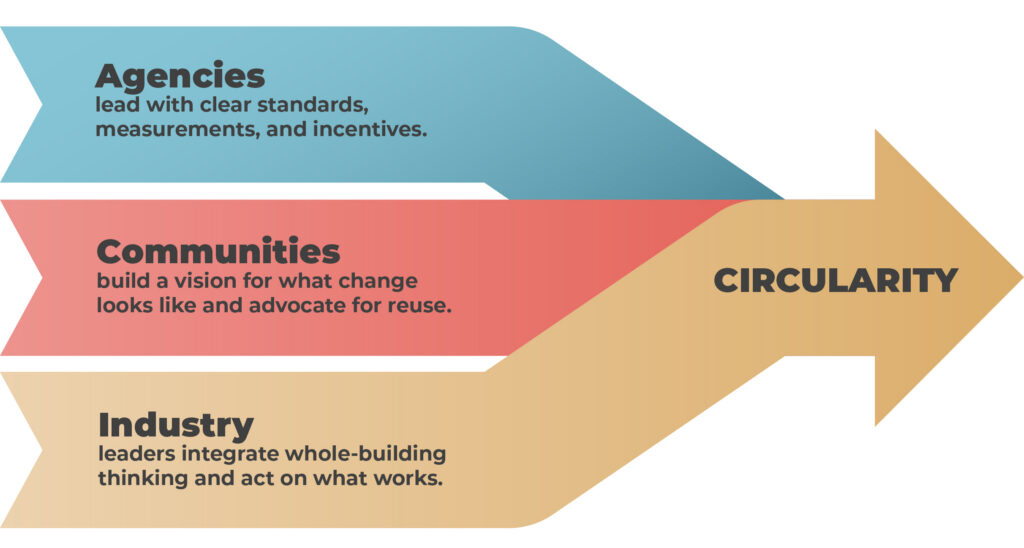
If Singapore teaches us anything, it’s that circularity becomes successful when agencies, communities, and industry move in tandem:
Learn more about how STV is identifying and disseminating the most effective methods for reducing embodied carbon and bringing circularity to our communities’ infrastructure projects.