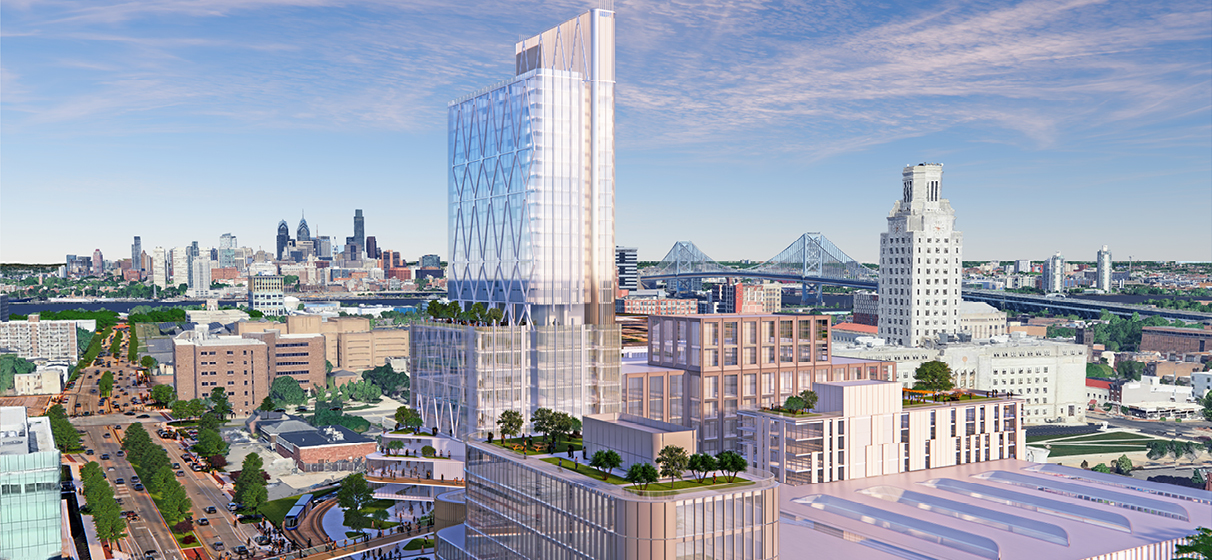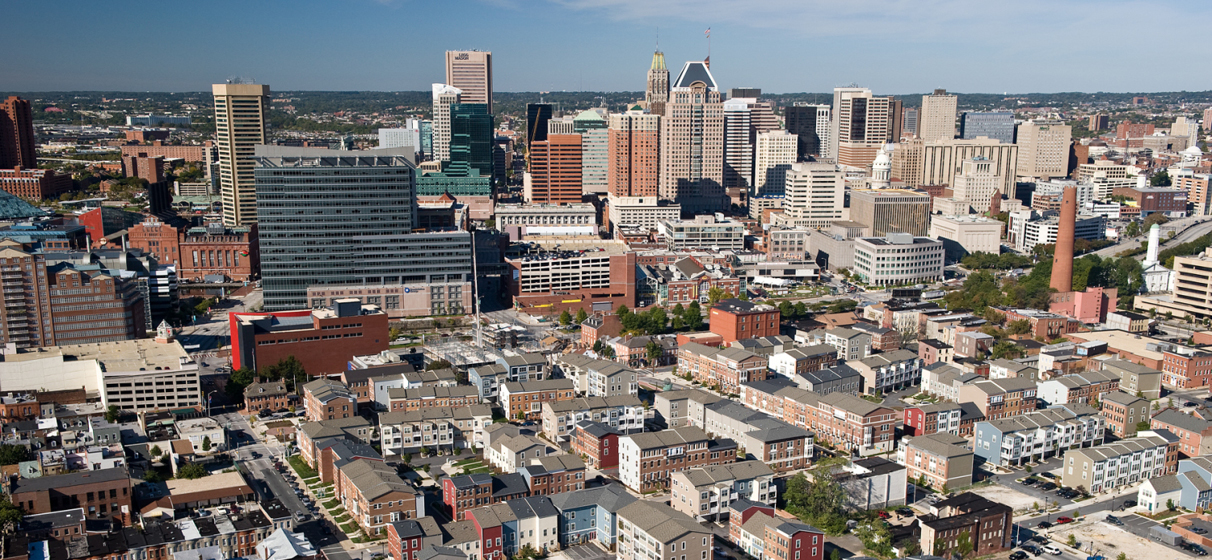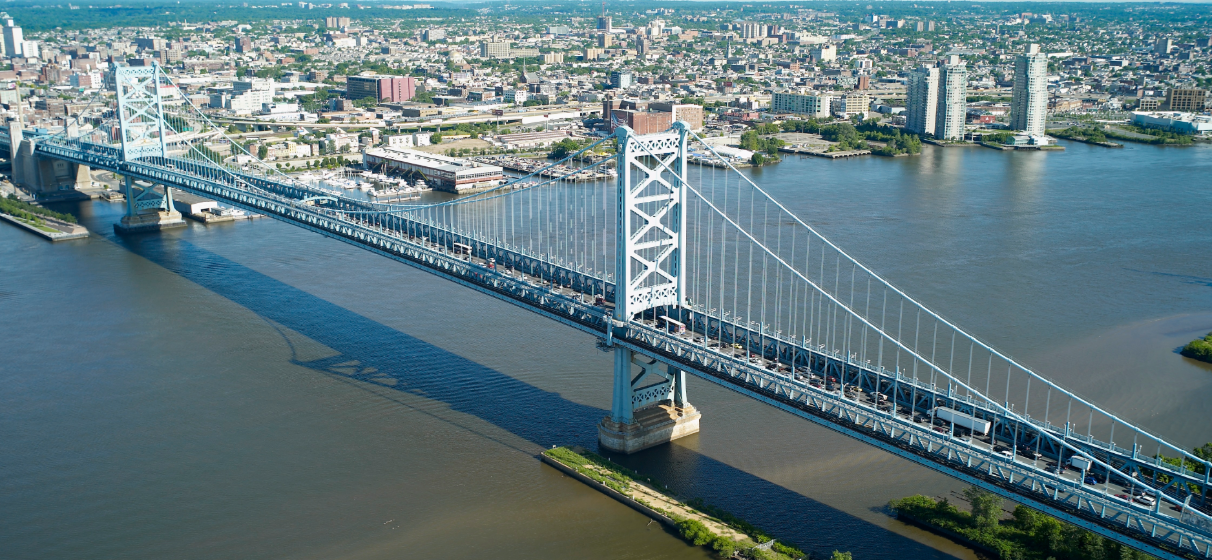
Camden, New Jersey, has no shortage of assets to build on. Its downtown area is shaped by regional transit access, major institutions, waterfront destinations and a level of connectivity that many cities spend decades trying to create. But the next phase of Camden’s progress may depend less on generating new momentum than on capturing more value from the momentum already there.
In this Q&A, John Manzoni, vice president and planning director at STV, shares his perspective on Camden’s next phase of downtown growth. STV’s work in the city has included efforts to better connect infrastructure investment with land-use and redevelopment priorities. Drawing on that experience, he explains why Camden’s greatest opportunity lies in strengthening the connections between mobility, institutions, land use and the public realm – and in making sure those investments deliver broader benefits for the people who live, work and study there.
1. Why is Camden’s opportunity different from the way cities usually talk about downtown momentum?
I think the difference is that Camden doesn’t need to invent momentum – it already has it. You’ve got regional access, major institutions, daily activity moving through downtown, the waterfront, major medical and educational facilities and a set of civic assets that give the city real strength. In many places, those are still aspirational. In Camden, they’re already in place.
So, the question isn’t how to create demand from scratch. It’s about organizing the city so more of the value created by those assets is captured locally and translated into a downtown that is easier to navigate, more active throughout the day and evening and more responsive to the people already using it for residents, workers and visitors.
2. How should transit and connectivity factor into Camden’s next phase of growth?
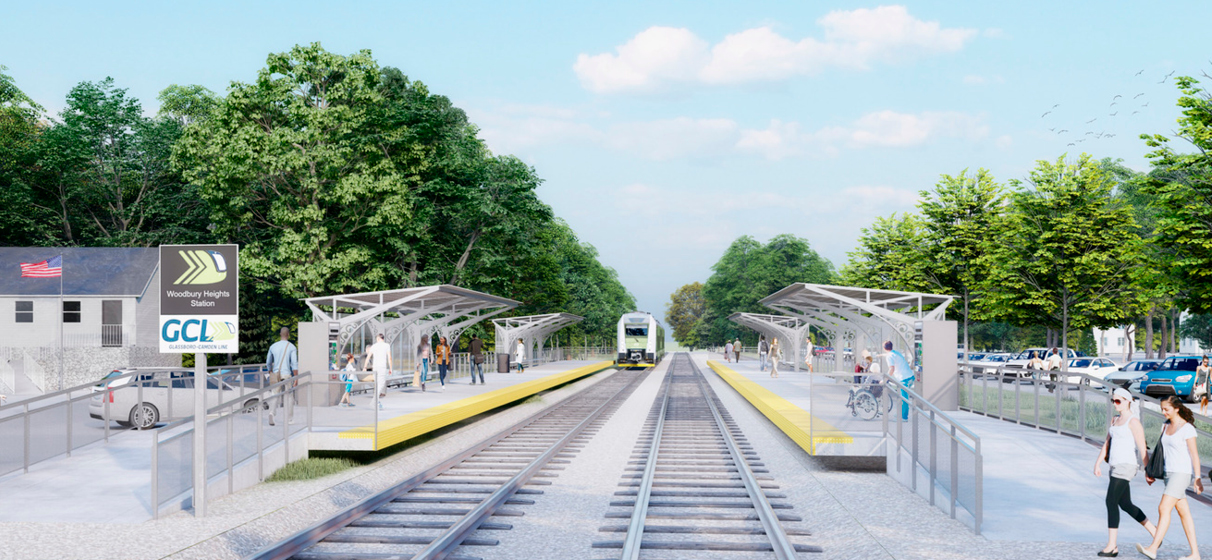
Transit is a huge part of the story, but it shouldn’t be the whole story. Camden already has the kind of access most cities would love to have. The bigger issue is what that access does for its downtown. When transit is supported by walkable streets, active public spaces, investable development sites and clearer connections between institutions, neighborhoods and the waterfront, it begins to shape how downtown functions day to day – how people move, where they spend time and whether investment feels viable.
In practice, that often comes down to how key corridors are designed, how public space is active and how easy it is to move between destinations that are already close to one another. That’s the distinction for me – it’s about using transit access to improve how downtown operates as a place, not simply where new development is located.
3. What does downtown Camden need in order to perform better as a whole?
It comes down to the quality of connections between destinations. Downtown has major destinations and transportation assets that are physically close to one another, but they don’t always read as one coherent environment.
There’s a real opportunity to improve the links between transit, institutions, the waterfront and surrounding neighborhoods and to pay attention to the spaces in between – underused land, fragmented edges, gateway conditions, limited evening activity and public-realm gaps that can weaken the overall experience. When those pieces start to reinforce one another, downtown becomes easier to navigate, easier to invest in and more active in everyday life.
4. How should success be measured in Camden’s next phase of growth?
I’d measure success by more than what gets built. The real question is who benefits from it. If this next phase of growth is going to mean something over the long term, it has to connect residents to jobs, education, entrepreneurship and civic life.
It also has to improve the day-to-day experience of downtown – how people move through it, what they can access and whether investment feels relevant to the people who are already there.
Organizations like Hopeworks, a Camden-based nonprofit focused on workforce development and youth opportunity, are a good reminder that the value of downtown investment isn’t just physical; it’s also about whether growth creates real pathways to opportunity. Physical redevelopment matters, of course, but the bigger test is whether it expands opportunity in a way that’s visible and tangible for Camden residents.
5. What is STV’s role in Camden, and what can other legacy cities learn from this approach?
Our role is to connect the dots across planning, engineering and implementation so that separate investments reinforce one another instead of operating in isolation. In Camden, that means bringing together infrastructure, land use, public-space improvements and redevelopment priorities into a more unified strategy, and aligning long-term planning with what actually gets delivered on the ground.
I think the broader lesson for legacy cities is that revitalization isn’t always about starting over. A lot of the time, it’s about recognizing where value already exists and being much more intentional about how you capture more of it locally over time.
If mobility, urban design, public realm and development strategy are aligned, a downtown can become more connected, more productive and more inclusive. And to me, that’s the real takeaway from Camden: the next chapter isn’t about creating momentum – it’s about making the most of the momentum that’s already there.