The I-Move Kentucky design-build program marks a milestone in the evolution of Kentucky’s transportation network – an achievement defined as much by innovation as by its scale.
As the largest design-build highway initiative in the Commonwealth’s history, the $180 million program reimagined 28 miles of Interstates 64, 71 and 265 in the Louisville region. Beyond its size and speed, I-Move Kentucky exemplifies a model for how engineering ingenuity, proactive collaboration and disciplined project delivery can transform a complex, congested corridor into a safer, more efficient system serving tens of thousands of travelers daily.
For STV and the Hall Contracting design-build team, our success was achieved through the development of creative solutions that enhanced safety, streamlined construction and maximized value within a fixed-cost framework. Through thoughtful engineering and a strong partnership with the Kentucky Transportation Cabinet (KYTC), the team introduced innovations – most notably several Alternative Technical Concepts (ATCs) – that delivered measurable performance improvements and set a new benchmark for future best-value projects.
Rethinking an Outdated Corridor
Before I-Move Kentucky, three of the Commonwealth’s busiest interstates converged in a maze of outdated cloverleaf interchanges and constrained lanes. Congestion and crashes were daily occurrences. KYTC recognized that piecemeal fixes would not suffice and instead consolidated four separate projects into one integrated corridor program – a bold move that set the stage for meaningful change.
As lead designer for the Hall Contracting team, STV was tasked with modernizing the corridor within a fixed $180 million budget, maintaining traffic throughout construction and maximizing improvements across multiple segments. Meeting those goals required not only engineering expertise but strategic innovation – delivering more within the same constraints.
Engineering the Alternative: How ATCs Drove Value
From the outset, STV’s design team identified opportunities to propose Alternative Technical Concepts that would enhance safety, performance and constructability. Working closely with KYTC and Hall Contracting, these concepts became defining features of the project.
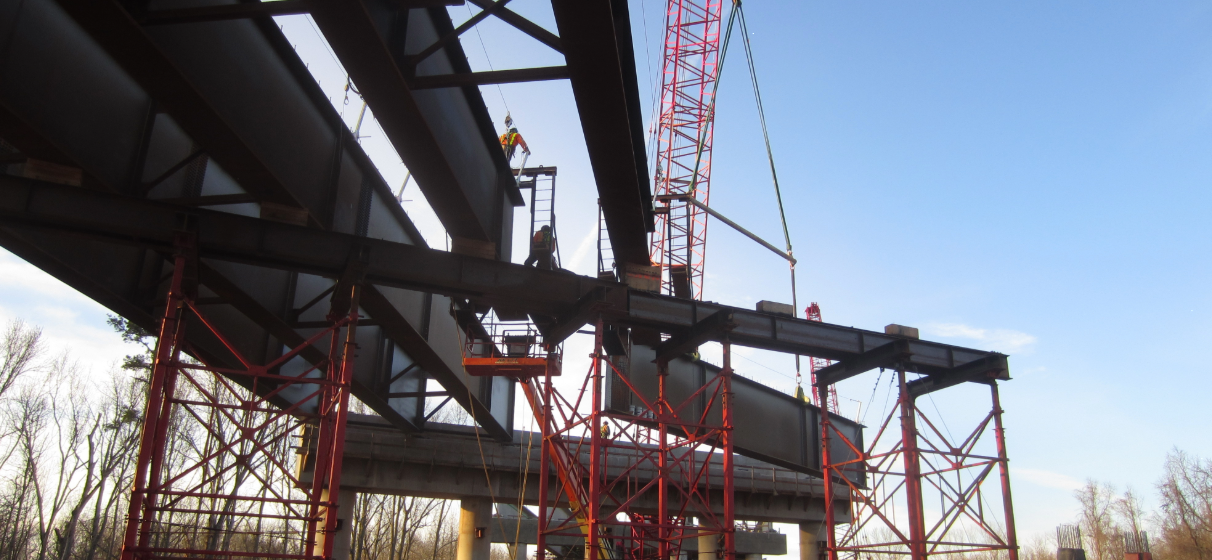
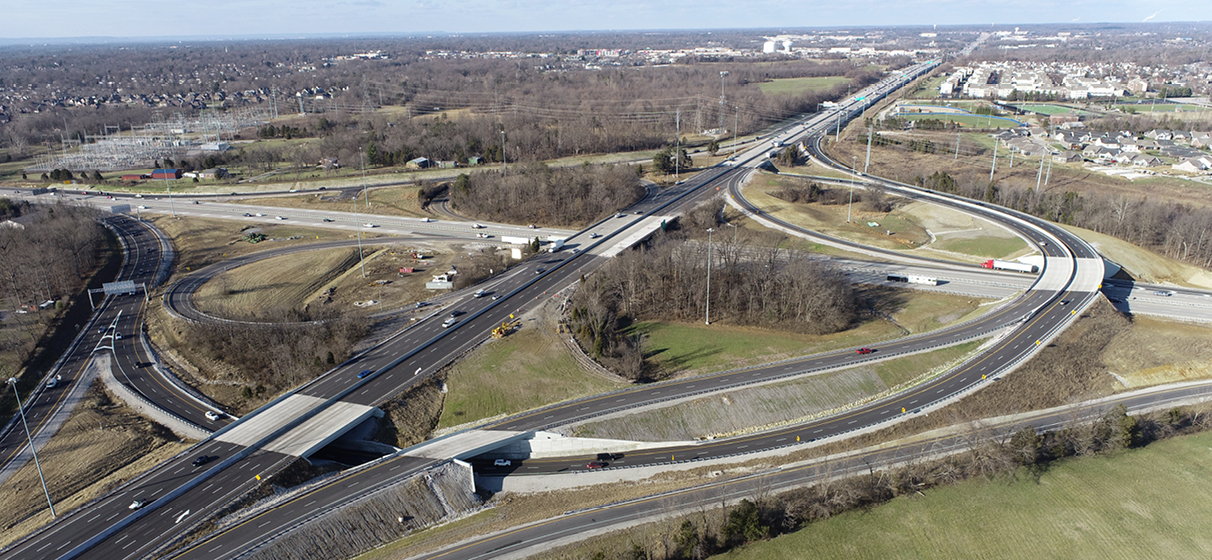
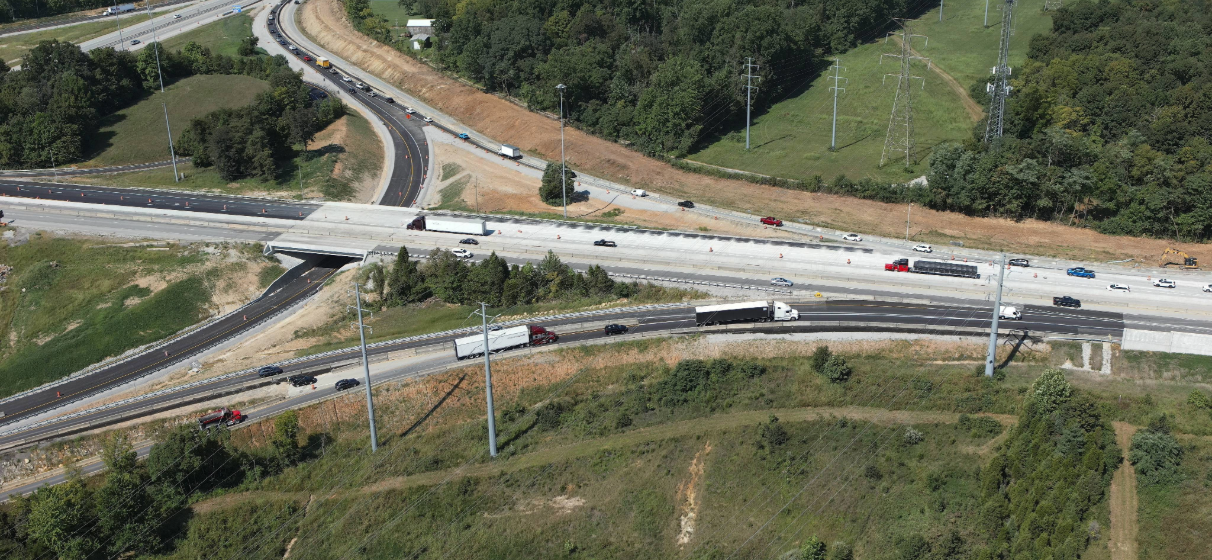
- Kentucky’s First Partial Turbine Interchange: The cloverleaf at I-265 / I-64 was notorious for weaving and congestion. STV’s ATC reimagined it as a partial turbine interchange – replacing tight loops with high-speed, directionally curved ramps that fit within the existing right-of-way. By combining bridge structures and sequencing construction to maintain live traffic, the team eliminated conflict points, improved safety and reduced costs simultaneously.
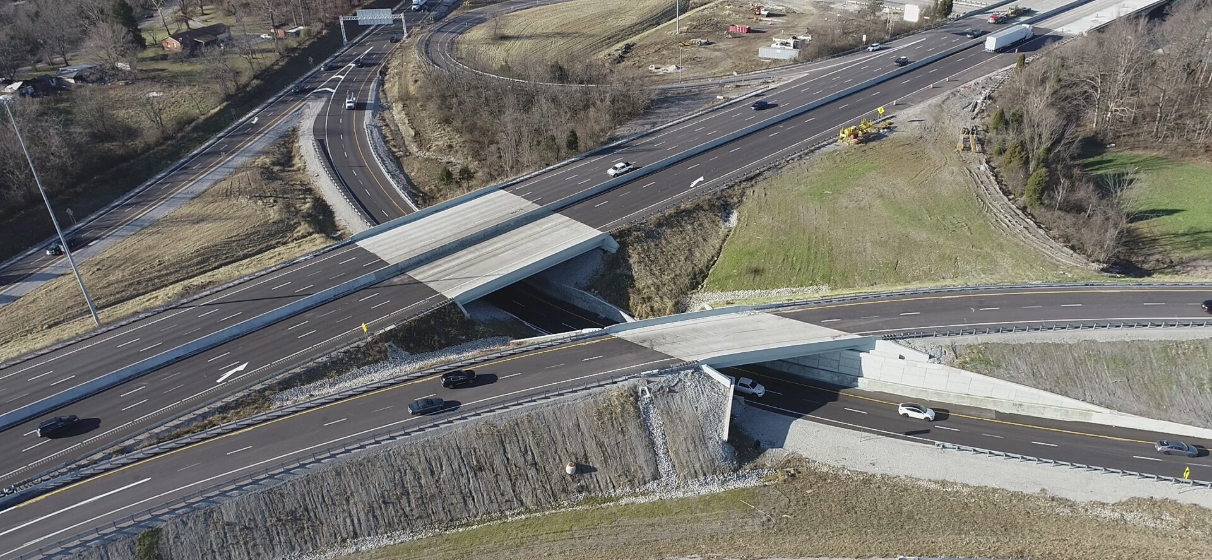
- Avoca Quarry Road Bridge Replacement: The original plan called for rehabilitating a deteriorating culvert. STV proposed a full bridge replacement instead – widening the underpass, improving freight mobility and reducing long-term maintenance. The change offered a higher-value, longer-life solution that better served the surrounding community.
- Optimized Shoulder Widths:
Another ATC refined shoulder dimensions along I-71 and connecting ramps. This adjustment met AASHTO safety standards while reducing material use, minimizing right-of-way impacts and improving cost efficiency.
Each ATC generated savings that were reinvested into added scope – ramp enhancements, safety features and nearly six miles of new noise barriers – without increasing the overall budget. The result was a tangible demonstration of how innovation creates value when collaboration is embedded in the design process.
The Digital Backbone of Design-Build Delivery
To coordinate four project scopes across nearly 30 miles of interstate, the team relied heavily on advanced digital workflows. Using Bentley OpenRoads Designer, STV developed comprehensive 3D models that guided both design and construction. These models were used directly for machine-controlled grading and construction staking, improving precision and reducing field rework.
Visualization tools enabled KYTC reviewers, contractors, and stakeholders to gain a better understanding of complex geometries and construction phasing. During the height of the COVID-19 pandemic, digital collaboration platforms also ensured seamless communication between multiple firms and disciplines – keeping design milestones on schedule and maintaining alignment across all segments.
Designing for Safety, Mobility and Continuity
Maintaining traffic flow on I-265 throughout construction was one of the project’s defining technical challenges. STV developed a phased Maintenance of Traffic (MOT) plan featuring temporary crossovers, dynamic lane shifts and staged bridge construction. Each phase was digitally modeled and simulated to test operational impacts before implementation, facilitatng safety and efficiency for both motorists and crews.
Today, those design choices have translated into measurable benefits: smoother travel times, fewer crashes and safer merging patterns across the corridor. More than 100,000 drivers experience the results of this engineering approach every day.
Setting a New Benchmark for Kentucky Infrastructure
For KYTC, I-Move Kentucky marked a series of firsts – the state’s inaugural best-value design-build procurement, its first partial turbine interchange, and a new model for integrated corridor delivery. The project demonstrated how innovation, collaboration, and data-driven design can stretch limited dollars further while maintaining the highest standards of safety and performance.
Beyond the physical improvements, I-Move Kentucky advanced the state’s capabilities in design-build delivery. The program established a repeatable framework – anchored in data-driven decision-making, 3D modeling, and early contractor collaboration – that KYTC and other agencies are now applying to future transportation initiatives. It shows how integrated design can modernize entire corridors while delivering measurable value to the public and creating a strong foundation for the Commonwealth’s next generation of infrastructure programs.