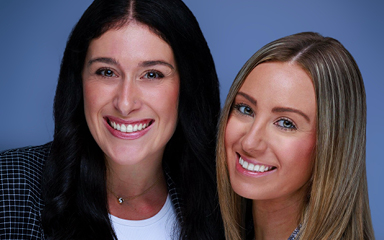
In today’s fast-evolving construction industry, mentorship is no longer just a top-down exchange of knowledge. It’s a dynamic, two-way relationship that bridges experience and innovation – where learning flows in both directions.
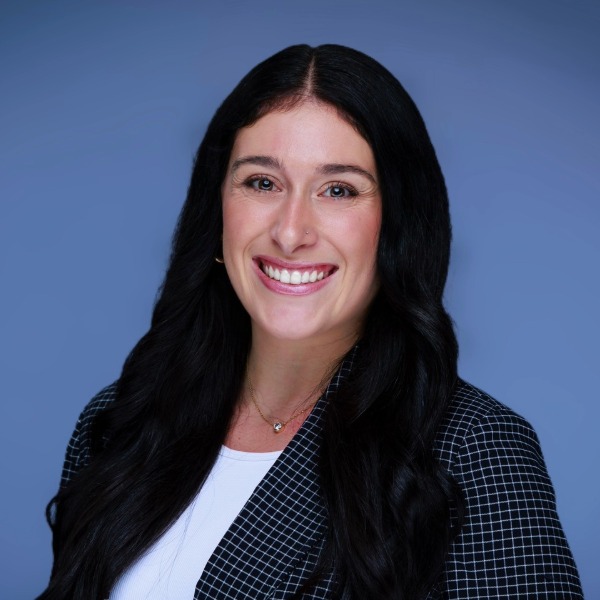
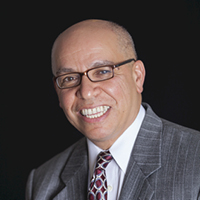
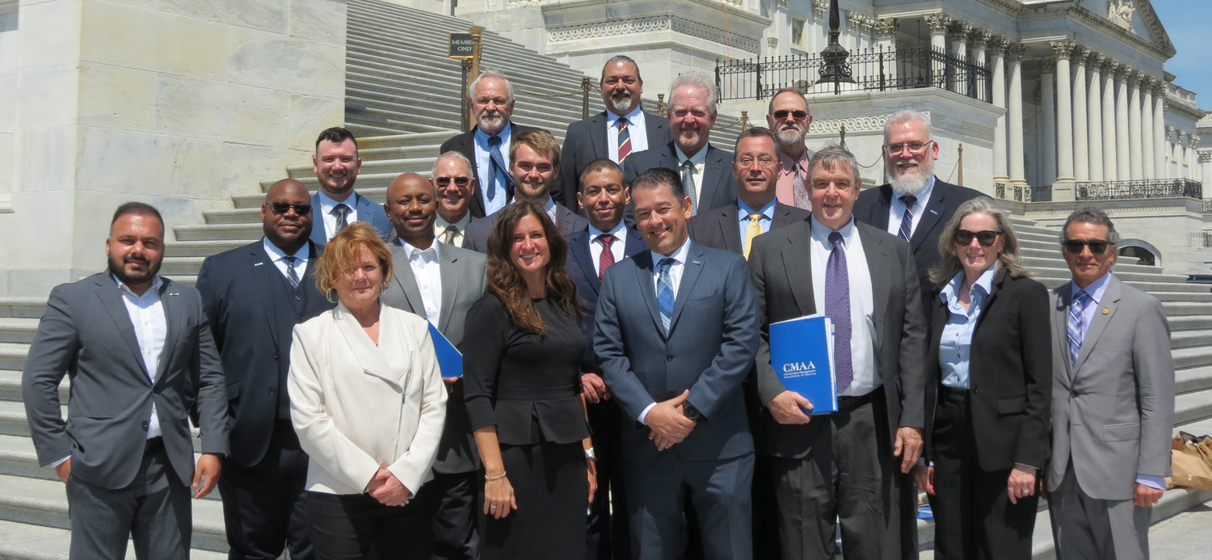
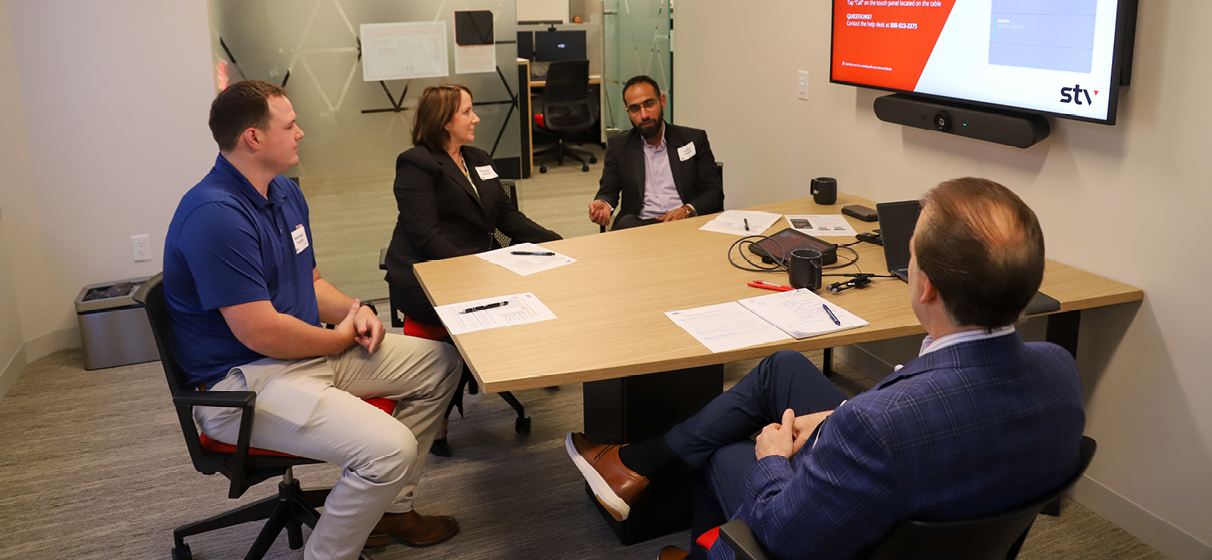
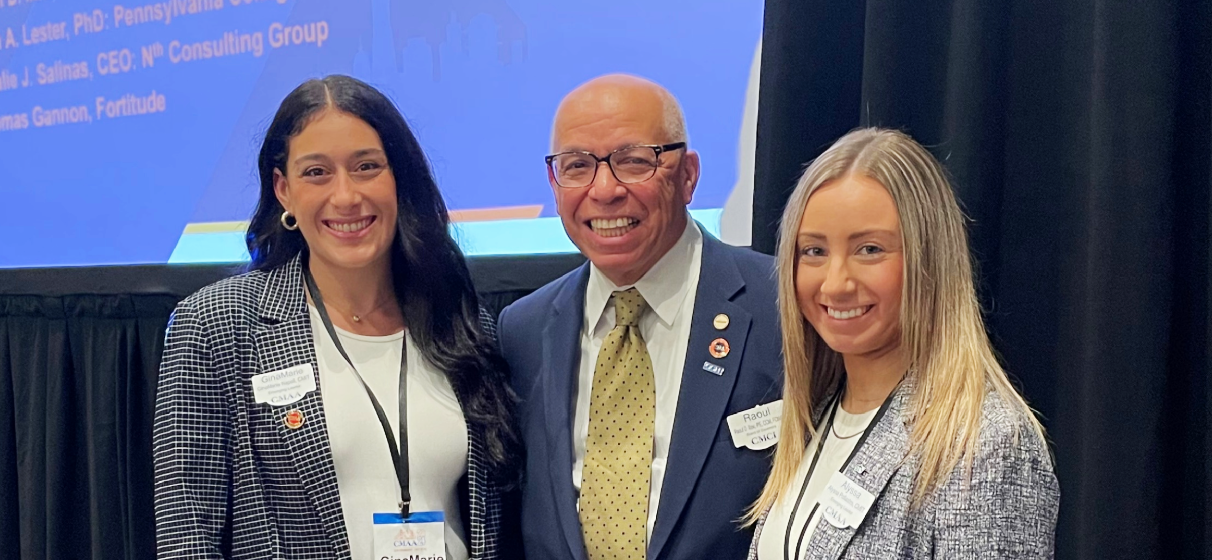
This modern approach to mentoring was recently captured by several members of STV’s team at the Construction Management Association of America (CMAA) 2025 Conference & Trade Show in Nashville, Tennessee. There, Raoul Ilaw, PE, CCM, DBIA, FCMAA, vice president and project executive; GinaMarie Napoli, CACM, project manager; and Alyssa Pollastro, CACM, assistant project manager, shared their insights across two different panels – Modern Mentoring: Sharing Knowledge and Building Bonds and Bridging Generations: Creating Opportunities for Emerging Leaders. These conversations, showcased on the national stage, demonstrated how the next generation of leaders – and those guiding them – are building a stronger, more connected industry.
Raoul, you’ve mentored many professionals throughout your career. How has your perspective on mentorship evolved?
Raoul Ilaw: The old model of mentorship was about transferring knowledge – a senior leader showing a junior employee the ropes. But the new model is more collaborative. I’ve learned just as much from the people I mentor as they have from me. I have been fortunate enough to mentor many early-career men and women and have always felt that I gained a deeper understanding of their dreams, desires and how passionate they are about succeeding in their careers. Emerging leaders bring fresh ideas, new tools and perspectives that challenged my assumptions. Modern mentoring is really about creating space for dialogue, not dictation and establishing that dialogue is the key to a successful mentoring relationship.
GinaMarie and Alyssa, you both completed CMAA’s Emerging Leaders Program last year — how did that experience shape your view of mentorship, and how do you define it today?
GinaMarie Napoli: Starting my career, I saw mentorship as traditional – a more experienced professional providing guidance and supporting my growth. The Emerging Leaders Program helped me realize that mentorship is mutually transformative. It’s about growth, networking, accountability and reciprocal value. Now, I see mentorship as a relationship where both mentor and mentee invest in each other’s development: the mentor provides insight, opens doors and challenges assumptions, while the mentee brings curiosity, initiative and a willingness to reflect. The cohort-based structure also emphasized the power of peer-to-peer mentorship – learning from other emerging professionals, sharing strengths and building each other up. Overall, the program reinforced that mentorship occurs in many directions.
Alyssa Pollastro: Through the CMAA’s Emerging Leaders Program, I learned about the impact of mentoring. Our cohort had the opportunity to meet and network with a variety of seasoned professionals in the industry by attending two of CMAA’s conferences (CMAA2024 and Focus25). Just by talking to these leaders, we gained invaluable knowledge and insights and were inspired to keep working hard and growing within the industry. A special highlight of the program was networking with our fellow cohort, where we learned from each other and have been resources for one another if we need advice or help. One year later, I can see how those lessons stuck with me. Mentorship isn’t just about learning from others – it’s about creating space for others to learn from you. It’s something we try to model in our teams at STV.
How did your paths cross and what have you learned from one another?
Alyssa Pollastro: Gina and I met in college when we were part of the same study group during our junior year. By chance and fate, we interned together at STV in the summer of 2019, on the same team under the same manager. Our paths to STV were different, but our internship experience is where our friendship really grew, and since then, we’ve been by each other’s side. Over the years, it’s been amazing to see Gina develop in her career, which motivates and inspires me to do the same. We hold each other to high standards, and in a way, we mentor one another to keep growing and moving forward, as we share similar experiences and goals. I know she is my biggest cheerleader, just as I am hers.
My paths crossed with Raoul in 2022 through Gina, who was Raoul’s mentee in an internal STV mentoring program. Since Gina and I were friends and shared similar goals and experiences, Raoul took me under his wing after the program. He has been an excellent resource and mentor, offering me opportunities within STV and CMAA that I wouldn’t have had without his mentorship and guidance.
GinaMarie Napoli: I’ve been fortunate to have two meaningful mentorship connections that have shaped my growth: my peer relationship with Alyssa and my STV mentor, Raoul.
Alyssa and I motivate each other to keep growing – whether it’s earning certifications, volunteering with CMAA or taking on larger responsibilities at STV. Having someone who understands my goals and is on a similar path has been incredibly impactful.
When I started working with Raoul, he encouraged me to gain more visibility and think more strategically about my career. What’s most meaningful is that our relationship didn’t end when the mentoring program finished – we still meet regularly, even if it’s just a quick call or catching up when he’s in New York. One of my favorite moments was when Raoul showed me a Continuing Care Retirement Community (CCRC) project he completed in Greenwich, Connecticut – it was inspiring to see his effort and passion for his projects.
The CMAA presentation, “Bridging Generations,” focused on learning across age and experience. What do you think each generation brings to that relationship?
GinaMarie Napoli: Younger professionals also bring curiosity – we ask “why?” a lot. That’s not to challenge authority but to understand the purpose behind processes. It keeps teams sharp.
Alyssa Pollastro: And in return, having mentors like Raoul helps us see the bigger picture. It’s easy to focus on the task at hand, but mentorship gives you context – the “why” behind the work.
Raoul Ilaw: Experienced professionals bring a deep understanding of the industry’s challenges – how to manage risk, relationships and expectations. But early-career professionals offer innovation, adaptability and an understanding of how technology can transform our work. When you combine these strengths, you develop teams that can overcome challenges more quickly and creatively. This is evident across STV – teams are built to successfully complete projects while teaching earlier career professionals effective techniques that they can use later in their careers.
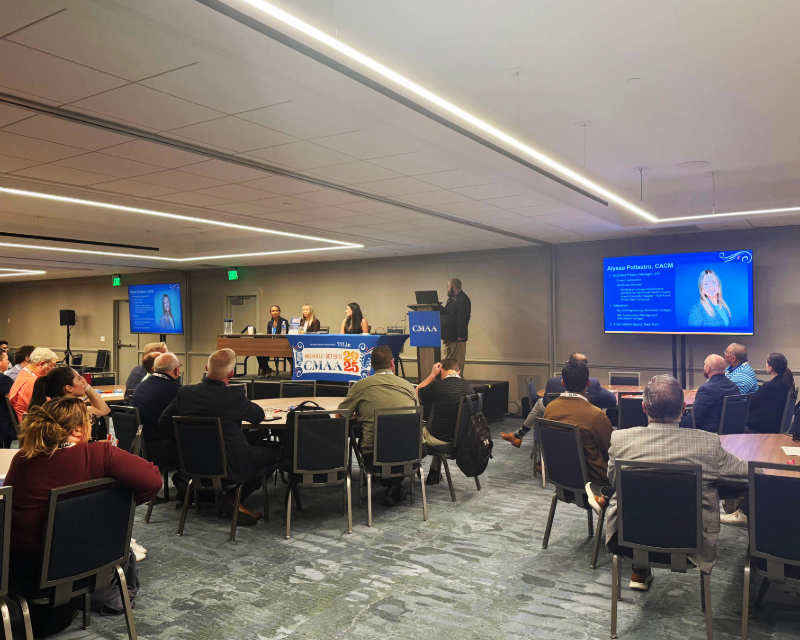
You all spoke about the “BUILD” model of mentoring – Break down, Understand, Identify, Look ahead, Deliver. How does that play out in real life?
Alyssa Pollastro: For me, “Look ahead” is key. Raoul often encourages us to think not just about today’s project but about where we want to be in five years. That future focus makes our day-to-day decisions more intentional.
Raoul Ilaw: And “Deliver” means removing barriers – giving emerging professionals the tools and trust they need to succeed. It’s about letting them take ownership, even when it means they might stumble a little, but it is important that the mentor remains involved to offer guidance That’s where growth happens.
GinaMarie Napoli: The “Understand” part is just as important. Everyone has their own communication style, motivation and learning pace. Great mentors – and mentees – take the time to understand that.
What’s a challenge you’ve faced, and how did mentorship help you navigate it?
GinaMarie Napoli: One challenge I faced was finding time to study for the CACM exam I recently passed in March. I needed to balance work, personal commitments, and the general “craziness” of life. Having Raoul as a mentor made all the difference – he encouraged me to prioritize my goal and held me accountable throughout. It was incredibly reassuring to have someone check in and support me as I navigated the ups and downs of pursuing a certification.
Alyssa Pollastro: A challenge I’ve faced is figuring out how to align my long-term goals with my current work. Knowing that those goals will only be achieved with time and experience, mentorship has helped me by connecting me with individuals who possess the knowledge and expertise, allowing me to learn from their experiences and lessons about how they reached their current positions. It has also helped me create an outline or pathway for achieving my goals further.
What advice would you give to organizations looking to build stronger mentorship cultures?
Raoul Ilaw: Make mentorship intentional, not informal. Pair people thoughtfully, provide structure, and offer mentor training because good mentorship is a skill. Both parties should be passionate about helping each other, but it is essential to develop trust at the start of the relationship as well as to continue to build that trust throughout the relationship.
Alyssa Pollastro: Create opportunities for visibility to help bridge the gap between emerging and seasoned leaders. Celebrate achievements and integrate mentorship into your company culture, not just as an extra. It’s also important to keep your emerging leaders engaged so they don’t feel disconnected from the organization. Since much of our work is client-focused, many colleagues work from client offices.
GinaMarie Napoli: And listen to your emerging leaders. They often have ideas that can help shape better programs. Mentorship should evolve as the workforce evolves.
How do you see mentorship evolving with AI?
GinaMarie Napoli: I see mentorship evolving as a way to supplement, not replace, human connection. AI can assist by providing quick access to resources, suggesting learning paths or offering reminders for accountability – but the guidance, encouragement and perspective a mentor offers can’t be duplicated by a machine.
Alyssa Pollastro: Traditionally, mentorship depends on accessibility – being in the right place, knowing the right people or having visibility within a network. AI can provide quick, 24/7 guidance on skills, career strategies or personal growth. However, AI can never replace the invaluable lessons learned from speaking face-to-face with a mentor in real time.
Raoul Ilaw: Using AI will be a game-changer. It will give both the mentor and mentee a chance to strengthen their relationship while offering new insights into specific challenges the mentee might face. I personally use various AI platforms to broaden my knowledge of many technical and non-technical topics, but I always verify responses to ensure they “make sense” and are helpful to the mentee.
What’s the most rewarding part of mentoring or being mentored?
GinaMarie Napoli: Having someone support you throughout your career is truly special. They get a front-row seat to your growth and can offer guidance, encouragement and a listening ear through both the highs and the challenges. That kind of relationship makes the journey, not just more manageable, but also more meaningful.
Alyssa Pollastro: The most rewarding part of being mentored is building connections with someone who has been in your shoes before. Being able to discuss my goals and ways to improve the industry, a mentor like Raoul can give me feedback and ideas on how to reach the next level. A mentor offers constructive criticism and feedback that help me become not only a better person but also a stronger leader in the industry. Having someone who can advocate for you, even when you’re not in the room, is incredibly impactful as well.
Raoul Ilaw: Mentorship is no longer about climbing the ladder – it’s about building bridges. As the next generation of leaders like GinaMarie and Alyssa step forward and mentors like me guide them with empathy and openness, one thing is clear: the construction industry’s future is being built on collaboration, inclusion and shared purpose.