For decades, Scranton residents depended on the Parker Street Bridge – a two-lane crossing over the Lackawanna River – to link the city’s Green Ridge neighborhood with North Main Avenue and Interstate 81. When structural deterioration forced lane closures and strict weight limits, what had long been a vital artery became a barrier, cutting off commuters, emergency responders and local businesses.
Now, thanks to an innovative partnership between the City of Scranton and the Pennsylvania Department of Transportation (PennDOT) – and with STV serving as lead designer – the new Parker Street Bridge stands as a model for how creative collaboration can restore essential infrastructure, strengthen resilience and reconnect communities.
A First-of-Its-Kind Partnership
To bring the project to life, Scranton entered into a unique ownership transfer with PennDOT – one of the first agreements of its kind in the state’s District 4 region. The arrangement allowed PennDOT to manage the design and construction phases on behalf of the city, streamlining delivery for a project that had been delayed for years.
“This project exemplifies how innovative partnerships can overcome obstacles that often slow local infrastructure renewal,” said Michael Grantner, PE, engineering director at STV and project lead. “By combining municipal initiative with PennDOT’s resources and oversight, we were able to deliver a long-needed community asset quickly, efficiently and to the highest technical standards.”
Engineering Within Tight Limits
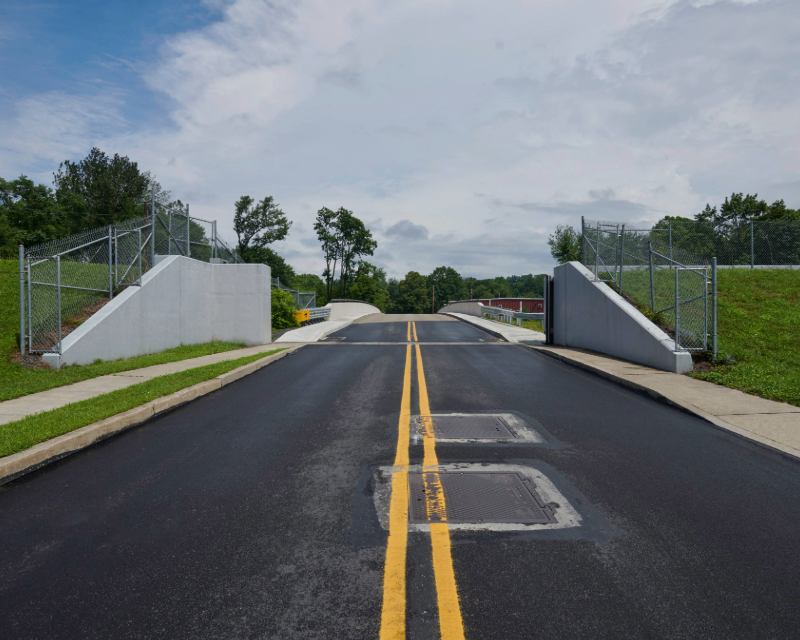
STV’s engineers faced an unusually complex challenge: the new bridge had to fit precisely within the U.S. Army Corps of Engineers’ flood-control levee opening, ensuring that the replacement structure would not impede river flow or affect the floodgate’s certification. Using advanced hydrologic and hydraulic (H&H) modeling, STV simulated the entire Lackawanna River system, incorporating FEMA datasets to verify that the bridge would not raise water-surface elevations.
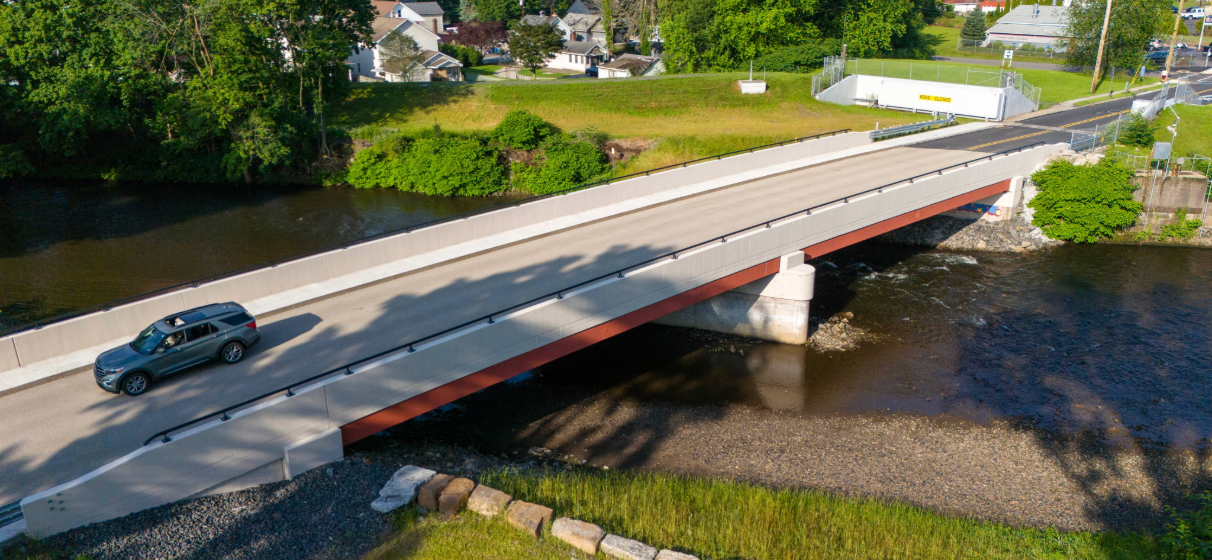
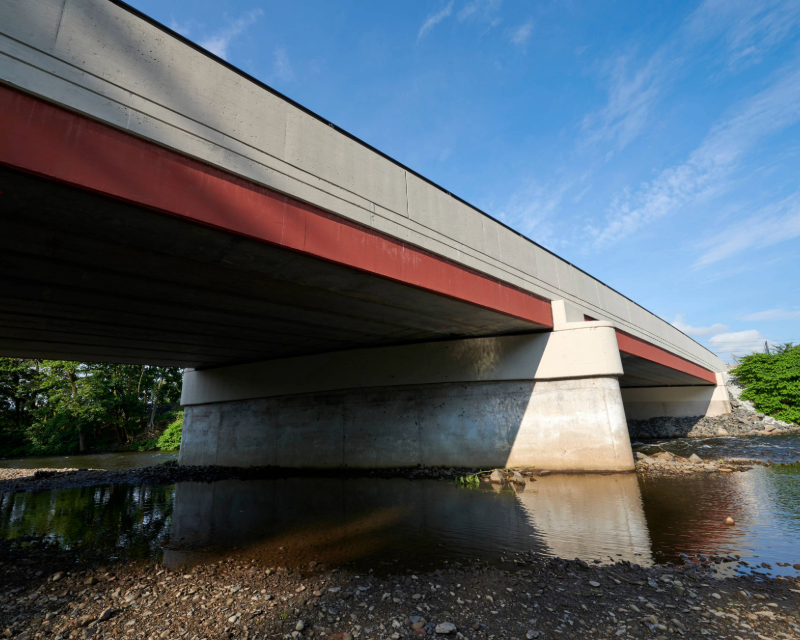
The design team developed a two-span, 150-foot adjacent box-beam bridge, providing two traffic lanes, new sidewalks, and upgraded drainage infrastructure. The bridge’s deck received one of District 4’s first epoxy overlay applications, improving durability and waterproofing, while the barriers and fascia beams were coated with epoxy resin in colors selected to complement the surrounding neighborhood.
“Designing within a flood-control envelope required precision and adaptability,” Grantner said. “Our modeling, detailing and coordination with the Army Corps verified that the new bridge met hydraulic and structural criteria without compromising flood protection.”
Innovation and Continuity During Construction
The COVID-19 pandemic added another layer of complexity. With in-person engagement restricted, STV led one of District 4’s first virtual public involvement campaigns, maintaining open communication with residents and stakeholders throughout design and construction.
To maintain public access to the Lackawanna River Heritage Trail, a popular local amenity, the team collaborated with the contractor to install a temporary 170-foot prefabricated truss bridge – creating a safe passage for pedestrians and cyclists during construction. Meanwhile, the project piloted PennDOT’s Utility Relocation Management System (URMS), improving coordination among utility owners and minimizing relocation conflicts.
Community Impact and Lasting Value
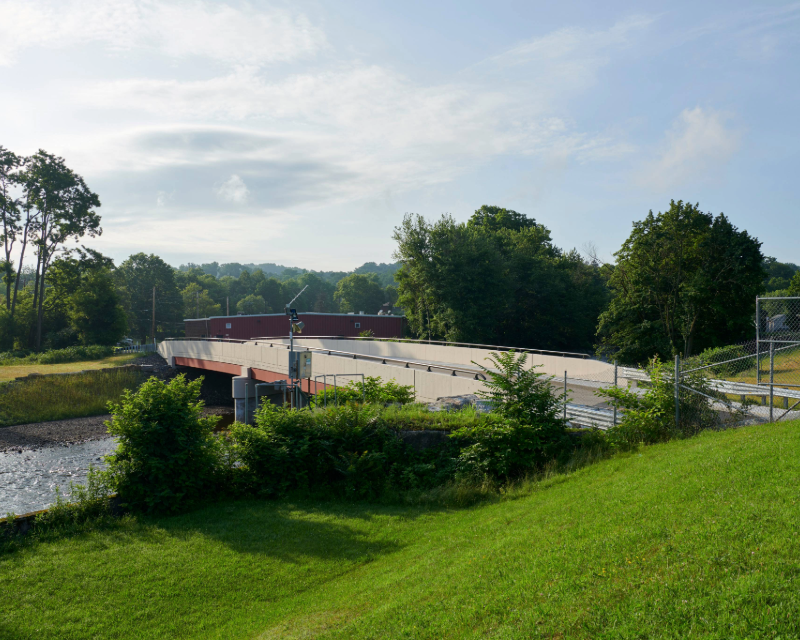
Completed in a single construction season and under budget, the Parker Street Bridge reopened earlier this year, restoring a direct link between Scranton’s neighborhoods and business districts. The structure improves access for emergency services, local freight and residents, while enhancing pedestrian safety and integrating seamlessly with the city’s planned riverfront redevelopment.
Beyond its technical success, the bridge serves as a replicable model for small municipalities facing similar infrastructure challenges. The project demonstrates how shared ownership, precise engineering and digital collaboration can accelerate delivery without sacrificing quality or safety.
“The Parker Street Bridge is proof that smart partnerships and innovative engineering can make communities stronger,” Grantner said. “It’s the kind of success story that reminds us why we do what we do.”