At Union Road and Butner Road in South Fulton, Georgia, a skewed intersection with a history of crashes presented a familiar challenge facing communities nationwide: how to improve safety while accommodating future growth and minimizing impacts to surrounding properties and residents.
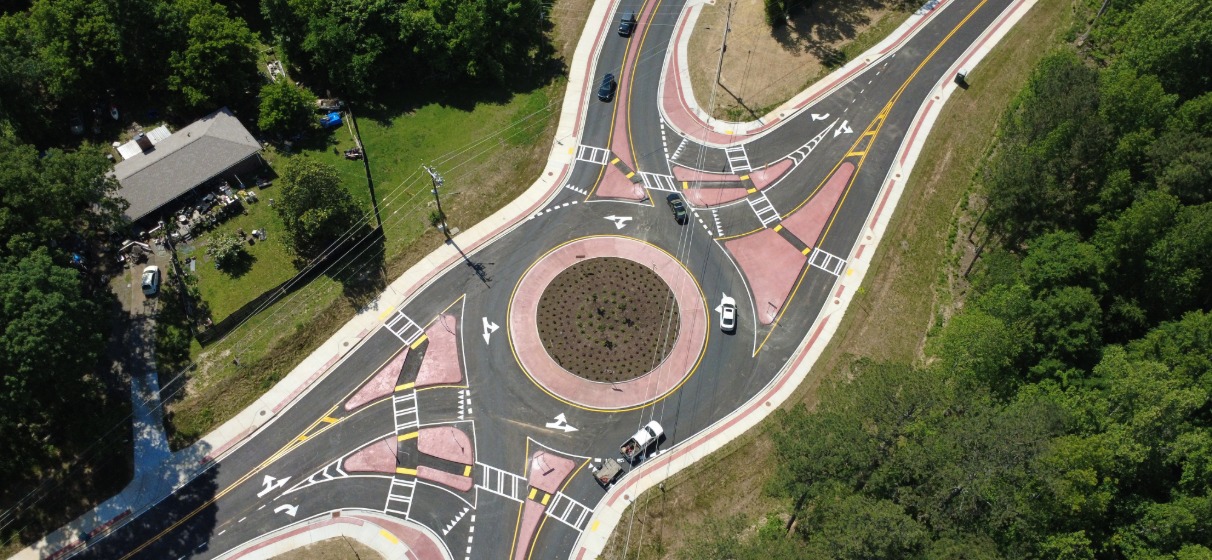
As communities increasingly recognize modern roundabouts as a proven safety countermeasure, the City identified a single-lane roundabout as the preferred solution to improve operations and reduce opportunities for severe crashes at the intersection.
STV served as roadway design engineer and provided project management support. Opened to traffic in 2025, the completed project – which was recently honored by the American Society of Civil Engineers Georgia Chapter – also added five-foot sidewalks, pedestrian accommodations, enhanced lighting, new storm drainage and a landscaped central island featuring native plants.
“This project began with a practical question: How do we make an intersection with a difficult crash history safer and more intuitive for everyone who uses it?” said Rhandi Gallegos, vice president and Georgia area manager at STV. “The answer wasn’t simply selecting a roundabout. It was designing a solution that responded to the site’s unique conditions while supporting the City’s long-term transportation goals.”
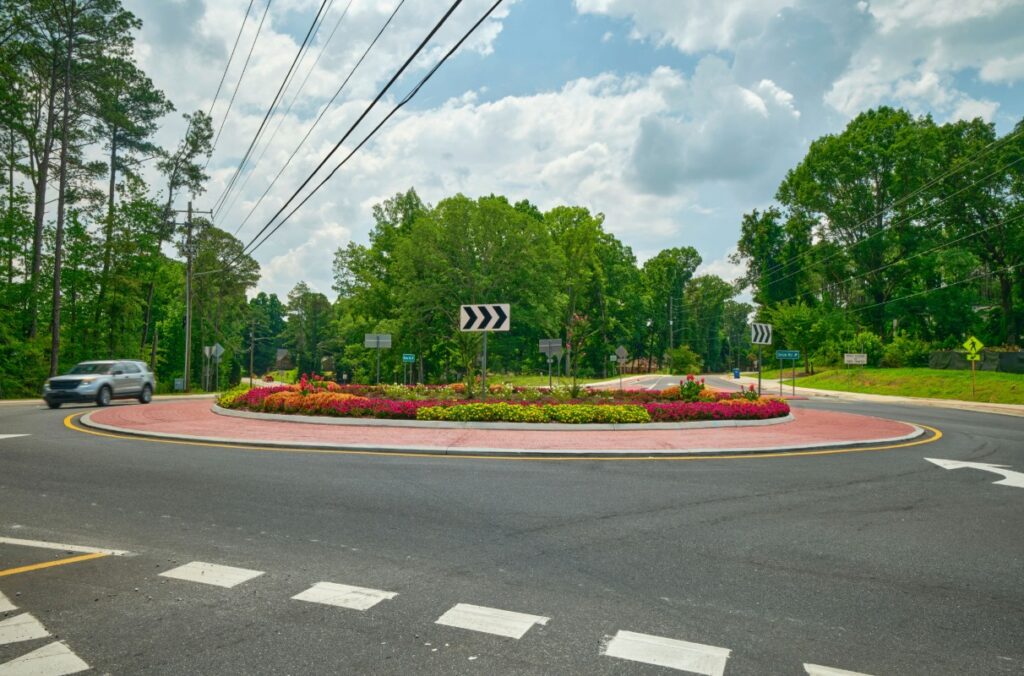
Designing a Roundabout for Local Conditions
Every modern roundabout must be tailored to its surroundings, and at Union Road and Butner Road that meant addressing far more than vehicle movements.
At the intersection, curved approaches, controlled entry speeds and one-way circulation replaced crossing and turning movements with lower-speed merging movements, reducing the opportunity for severe angle collisions.
The design team evaluated how the existing roadway skew, adjacent properties, drainage conditions, pedestrian movements and local access requirements would influence the final configuration. The result was a roundabout designed not only to improve safety, but also to fit the realities of the surrounding community.
Research demonstrates why these configurations have become an important safety option. According to the Federal Highway Administration, modern roundabouts can reduce fatal and serious injuries at intersections by up to 82%. A U.S. study cited by the Insurance Institute for Highway Safety found a 38% reduction in crashes overall and a 76% reduction in injury crashes at 24 intersections converted from stop-sign or traffic-signal control to modern roundabouts. Results vary by setting and design, but the findings illustrate the potential value at locations with severe crash patterns.
“The safety value comes from creating a more controlled environment,” Gallegos said. “Good roadway design influences behavior. By simplifying vehicle interactions and naturally lowering speeds, the roundabout reduces the conditions that often contribute to the most severe crashes.”
Lighting and visibility improvements reinforced the physical cues built into the roundabout, while sidewalks, enhanced drainage and pedestrian accommodations ensured the project delivered broader community benefits beyond vehicular operations.
Because roundabouts represent a significant change for many roadway users, STV leveraged simulation and visualization tools to help stakeholders understand how the intersection would operate before construction began.
These tools helped build confidence in the preferred alternative while supporting discussions around safety, access and long-term functionality.
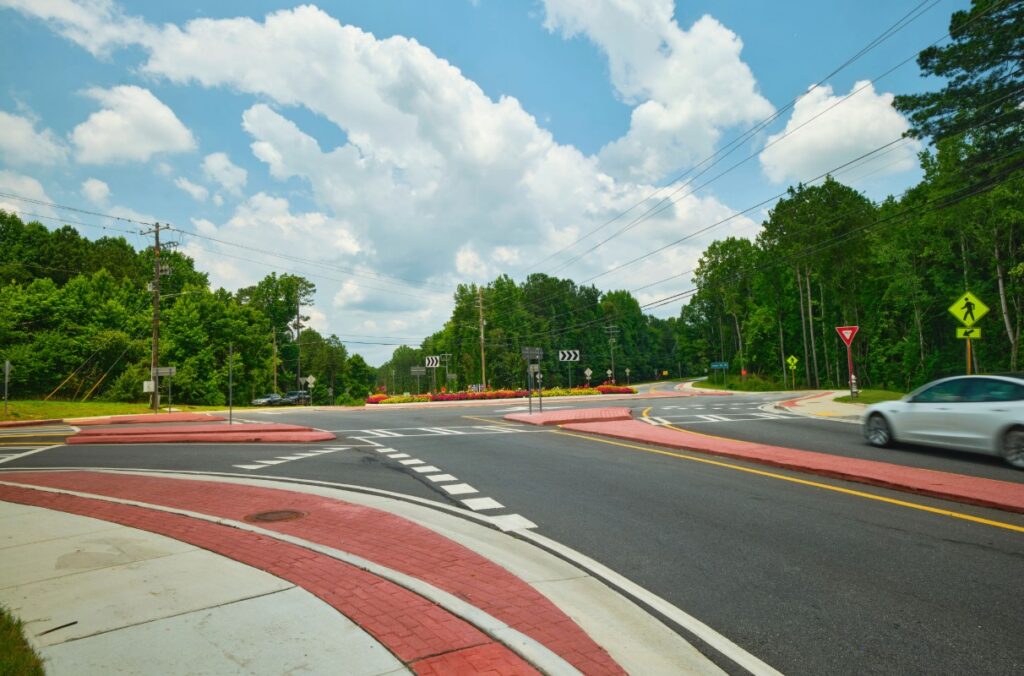
Maintaining Access and Building Community Confidence
The project was delivered through a traditional design-bid-build process, with construction beginning in March 2024. Implementing a new traffic pattern required careful coordination long before the intersection opened. The approximately 15-month construction period included phased work, temporary bypasses and a 60-day closure of Union Road during primary roundabout construction in early 2025.
That closure increased the importance of communication. STV supported the City’s outreach efforts through visualization tools, project communications and stakeholder engagement strategies designed to help residents understand the changes before the intersection opened.
The approximately $4.4 million construction cost was funded through voter-approved Transportation Special Purpose Local Option Sales Tax revenues. Throughout construction, close coordination among project partners helped address weather and site constraints while maintaining progress toward project completion.
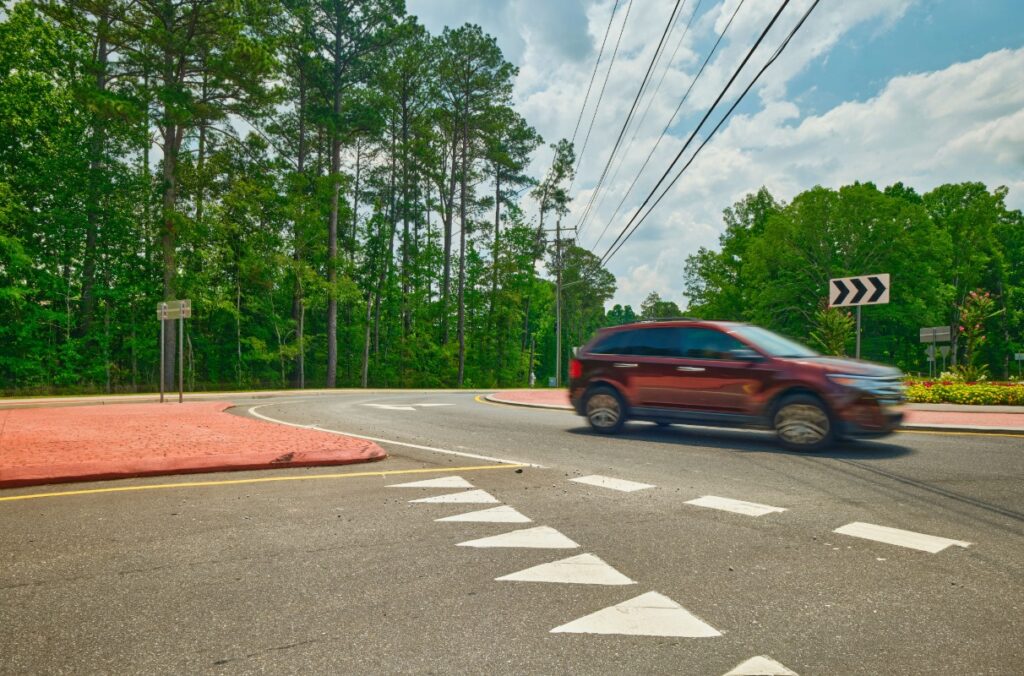
Why More Communities are Turning to Roundabouts
The South Fulton project reflects a broader shift in intersection design.
The Federal Highway Administration reports that the United States has more than 11,000 roundabouts and identifies them as a proven safety countermeasure aligned with the Safe System Approach.
As agencies look for ways to improve safety while accommodating future growth, roundabouts are increasingly being evaluated alongside traditional signalized intersections. Their ability to reduce conflict points and encourage lower operating speeds has expanded their application across urban, suburban and rural settings.
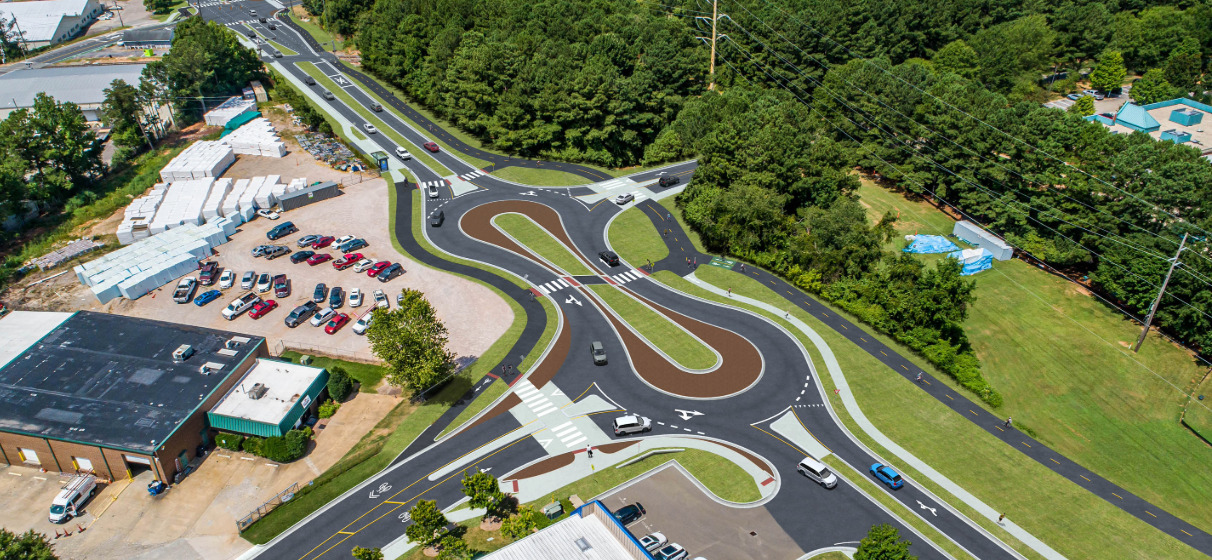
STV is applying the same context-sensitive approach elsewhere in the Southeast. The team has designed about 30 roundabouts in Georgia alone, including several that have been similarly honored by the industry. Additionally, in Raleigh, North Carolina, the firm designed the city’s first peanut-shaped roundabout for a constrained corridor; in Union County, North Carolina, it designed a five-legged roundabout near Parkwood High School; and in Anderson County, South Carolina, a roundabout near the S-75/Cherokee Road Bridge reduced right-of-way needs and potential environmental impacts compared with a signalized alternative.
Together, these projects demonstrate that successful roundabouts are not defined by a standard template. They are shaped by local transportation needs, community priorities, environmental considerations and long-term operational goals.