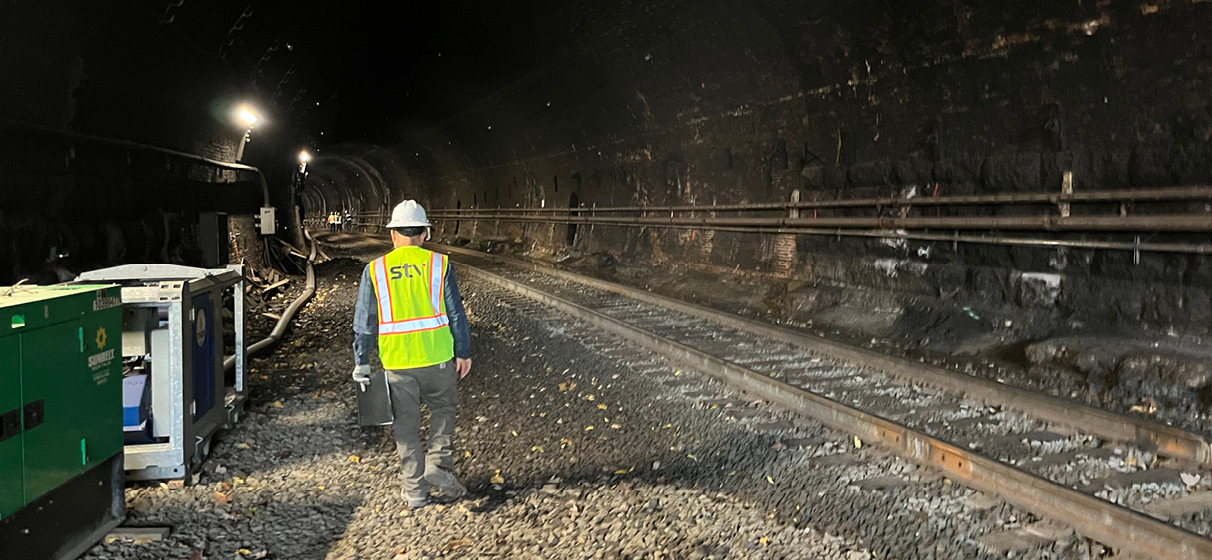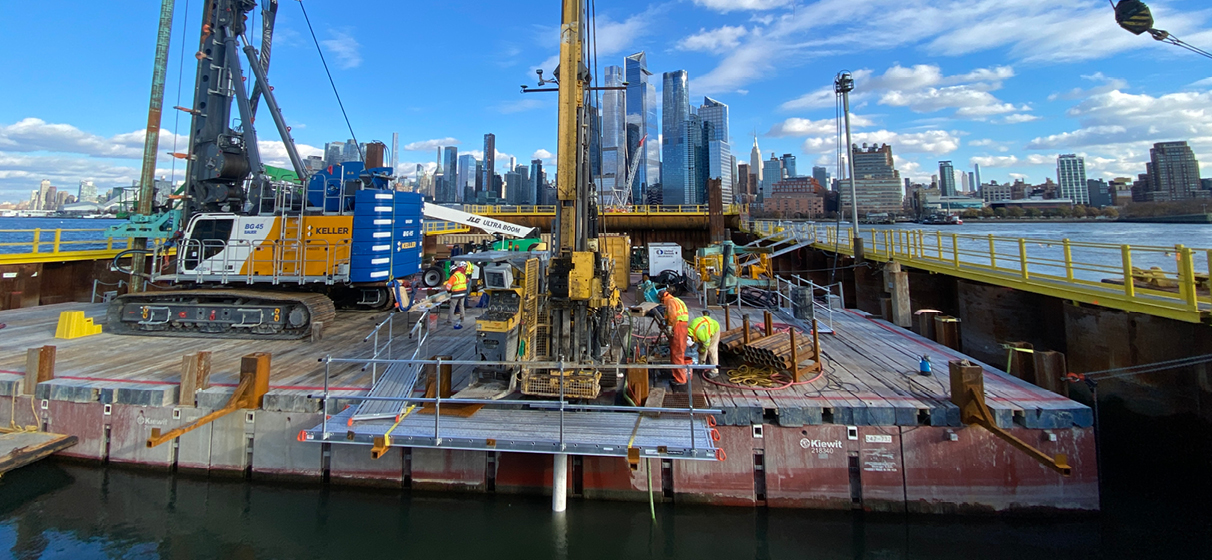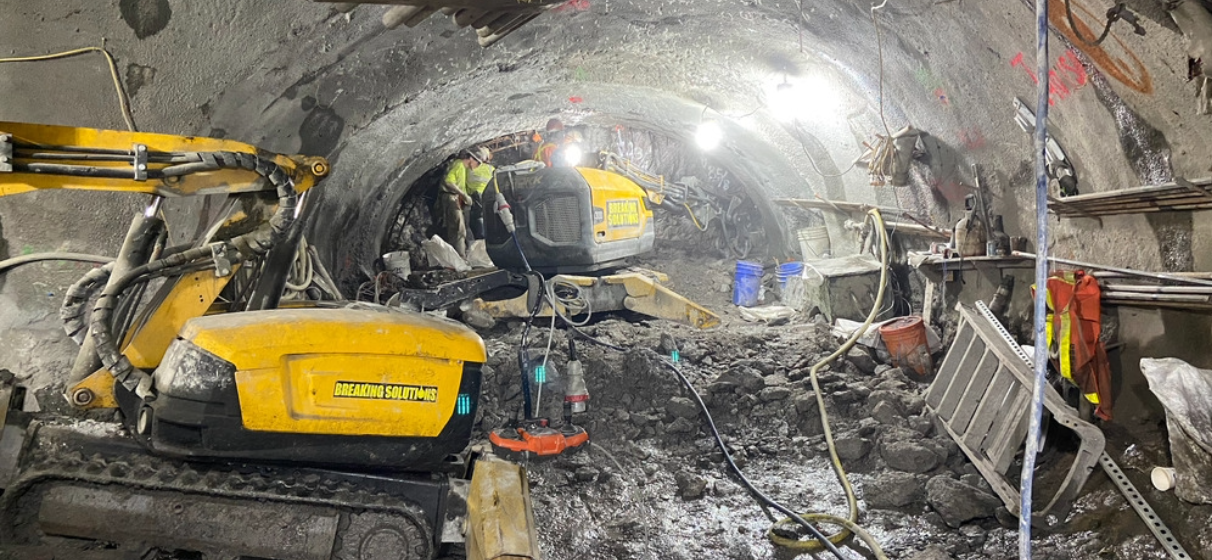
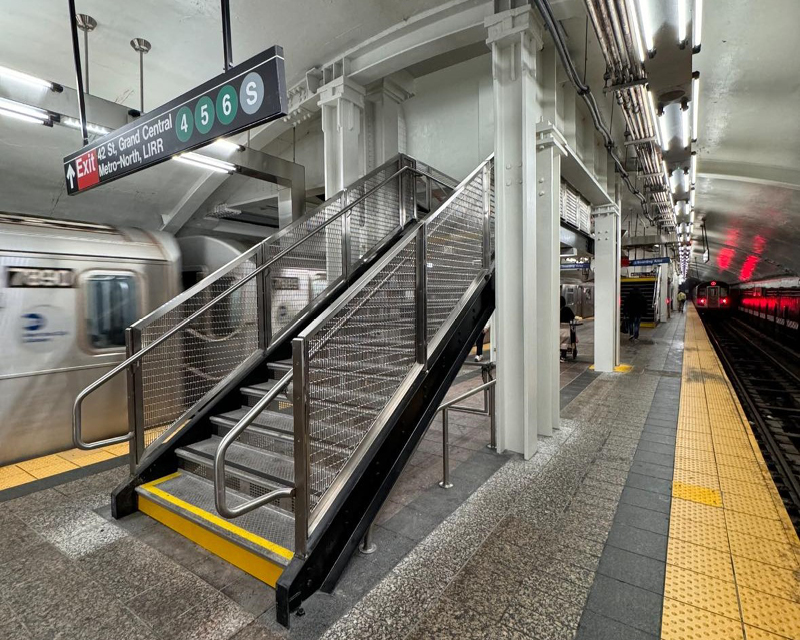
In the heart of Midtown Manhattan, beneath East 42nd Street and Lexington Avenue, STV helped reshape one of the country’s busiest transit corridors. As the designer- and engineer-of-record on the design-build team led by Skanska, STV recently delivered a new subterranean passageway that directly connects the Flushing (No. 7) Line’s 42nd Street Station to Grand Central Terminal.
With roughly 33.5 million annual passengers, this short but technically complex tunnel is part of an extensive effort to strengthen mobility, ease congestion, and create a safer, more intuitive experience for travelers moving through Grand Central, an achievement recognized with the 2026 ACEC New York Diamond Award for Engineering Excellence in Structural Systems.
In this roundtable, STV’s tunneling and geotechnical leaders Kevin Moon, vice president, geotechnical and tunneling engineering director; and Barrie Roberts, vice president and engineering chief discuss the engineering breakthroughs and community-centered decision-making that brought this complex project to life.
What makes this new passageway so important to New York City Transit (NYC Transit) and the surrounding community?
Barrie Roberts: This area sees massive foot traffic, and the existing routes between the No. 7 Line, the Lexington Avenue Line and Grand Central Terminal were congested. By creating a dedicated, modern tunnel, we increased ingress and egress capacity and reduced overcrowding on the subway platforms, making a century‑old system more accessible and intuitive for residents, commuters and visitors who rely on safe, efficient connections every day.
Kevin Moon: The No. 7 Line’s 42nd Street Station dates back to 1927, and layers of upgrades have accumulated over the decades. Our challenge was designing a tunnel within one of the densest and most sensitive underground environments in the city – adjacent to active tracks and station operations, a major utility corridor and iconic structures. The project may be short in length, but in terms of engineering, it demanded the full depth of our geotechnical and tunneling expertise to deliver a solution that protects critical infrastructure while enhancing mobility for generations to come.
Let’s talk about those engineering challenges. What were the most defining aspects?
Kevin Moon: The most significant was extremely shallow rock cover. In some areas, we had as little as five feet of rock supporting 30 to 34 feet of soil above the crown of the tunnel. That meant every excavation decision (advance length, support type, spiling, shotcrete thickness) had to be calibrated precisely to safeguard the street, utilities and structures above while maintaining public service continuity.
To address this, we ran additional borings and low‑angle probing during both design and construction to refine our understanding of the ground conditions.
Barrie Roberts: On top of that, the existing infrastructure at the site was incredibly challenging. We were threading a passageway between the Mobil Building and the No. 7 Line and Lexington Avenue Line stations through a three-dimensional intersection of multiple tunnels. This required comprehensive, complex numerical modeling to support construction and the long-term stability of the new tunnel and adjacent structures.
Sequential Excavation Method (SEM) tunneling played a central role here. Why was it the preferred approach?
Kevin Moon: Under 42nd Street and Lexington Avenue, we were excavating beside historic structures and adjacent to active subway operations. The specialized SEM tunneling technique enabled us to tailor each round of excavation to day‑by‑day ground behavior, managing risk, protecting the existing system and keeping transit moving.
Our instrumentation team collected real-time data on vibration, noise, settlement and convergence, enabling us to adjust excavation sequencing as needed to maintain subway service.
Barrie Roberts: High-quality geotechnical data is everything. Supplemental explorations, probing and field validation were critical to aligning our support system with actual ground behavior. With SEM tunneling, strong communication between designers and field construction crews is critical to safely delivering a project in such a constrained environment.
Kevin Moon: Every decision, from excavation methods to monitoring systems, was made with the well-being of workers, the public and the surrounding community in mind. This tunnel is a testament to how thoughtful engineering and data-driven decisions can shape the future of urban mobility.