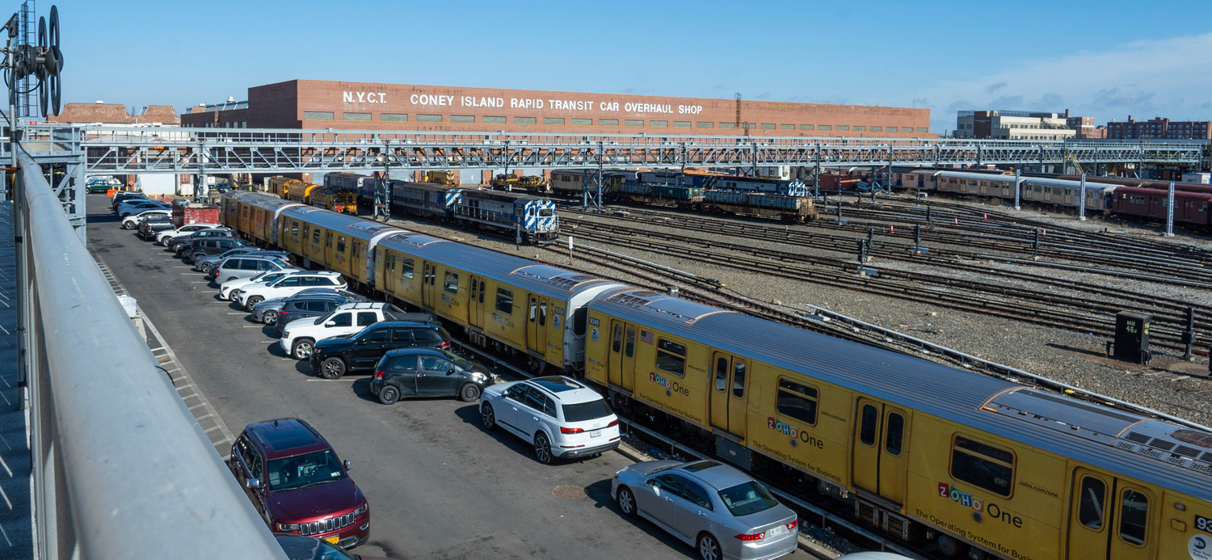
As the frequency and intensity of extreme weather events continues to climb, infrastructure owners are addressing a new financial reality: the cost of disruption is outpacing the cost of prevention.
In 2024 alone, 27 separate billion-dollar weather events caused widespread infrastructure damage and service interruptions, adding to a decade-long total of more than $1.4 trillion in losses.
Transportation networks, ranging from roads and railways to airports and marine ports, are at the heart of this challenge. They represent nearly 40% of annual global infrastructure losses, underscoring the vital yet vulnerable nature of these systems to local economies and community connectivity.
At the same time, the nation will face a $2 trillion funding gap in transportation investment for the 2024-2033 period. The question isn’t whether we can afford to plan for long-term resilience, but whether we can afford not to.
Moving from Reactive Spending to Strategic Investment
Traditionally, risk has been managed through post-event recovery funding or broad vulnerability assessments; however, these reactive approaches often lack the precision needed to guide targeted, cost-effective investments.
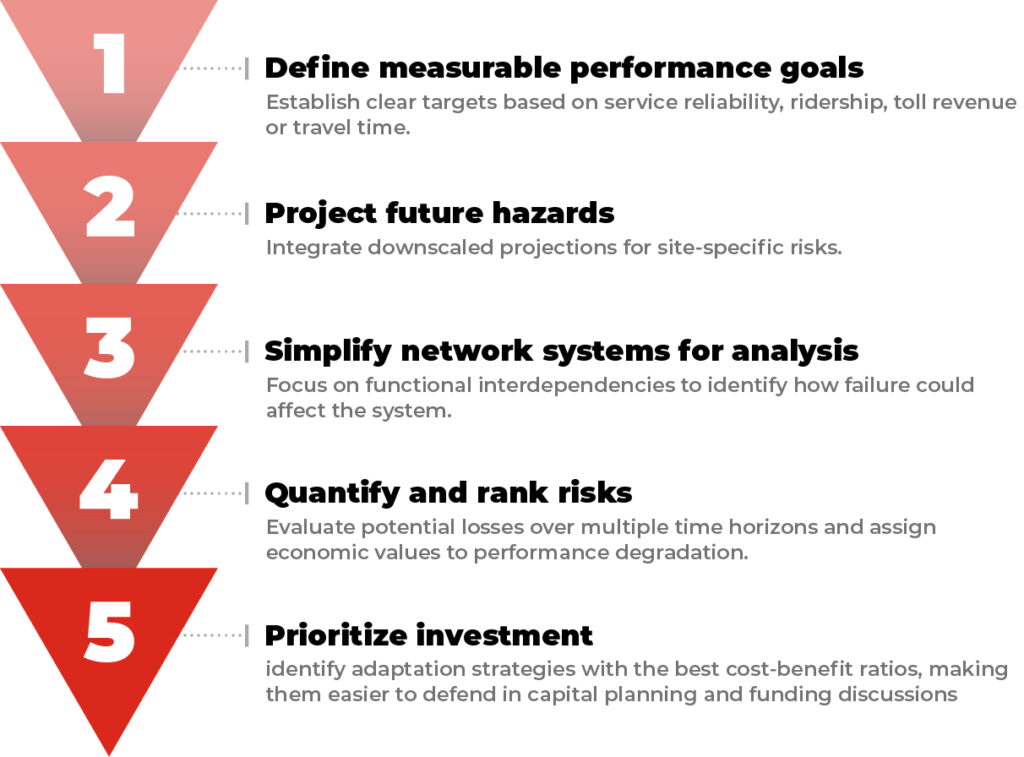
STV’s climate risk assessment methodology helps bridge that gap by translating complex climate data into actionable, economically grounded insights. Adapted to transportation owners and operators, our tool quantifies how potential hazards, like stormwater flooding, extreme heat or coastal storm surges can affect service, revenue and long-term asset performance.
These results provide a data-driven foundation for prioritizing which adaptation projects deliver the greatest economic return, both for the owner and the operator of the infrastructure or campus, as well as for the broader community benefit.
A Framework That Connects Engineering and Economics
By connecting engineering data with financial logic, STV’s methodology turns risk maps into investment roadmaps – a practical way for agencies to allocate funds and achieve measurable returns.
Making Every Dollar Work Harder
STV’s climate risk assessment tool is designed for scalability.
By linking resilience metrics with economic indicators, it supports a bespoke funding strategy, combining traditional and novel streams, from federal and state resilience programs to resilience bonds, insurance incentives and innovative partnerships.
The outcome is not only better-protected infrastructure, but more predictable budgets, fewer service disruptions and faster recovery times: all of which directly translate into community and economic stability.
Investing in Long-Term Value
Studies consistently show that every $1 invested in preparedness saves between $6 and $13 in future losses. For communities driven to deliver results that manage taxpayer dollars wisely, that’s an opportunity too significant to ignore.
By embedding resilience into everyday decision-making alongside planning, maintenance, operations and capital improvements, transportation owners can prioritize the protection of their long-term asset value, ensuring their systems continue to deliver economic and social benefits for decades to come.
STV’s climate-smart methodology offers a clear path forward: a way to quantify risk, justify investment and design transportation systems built for lasting value.