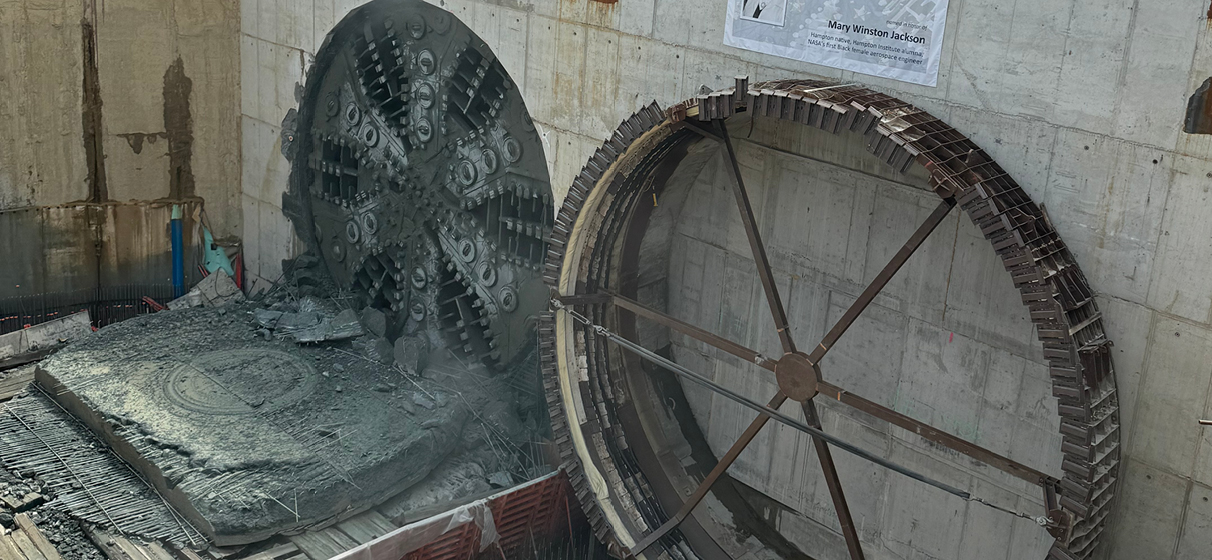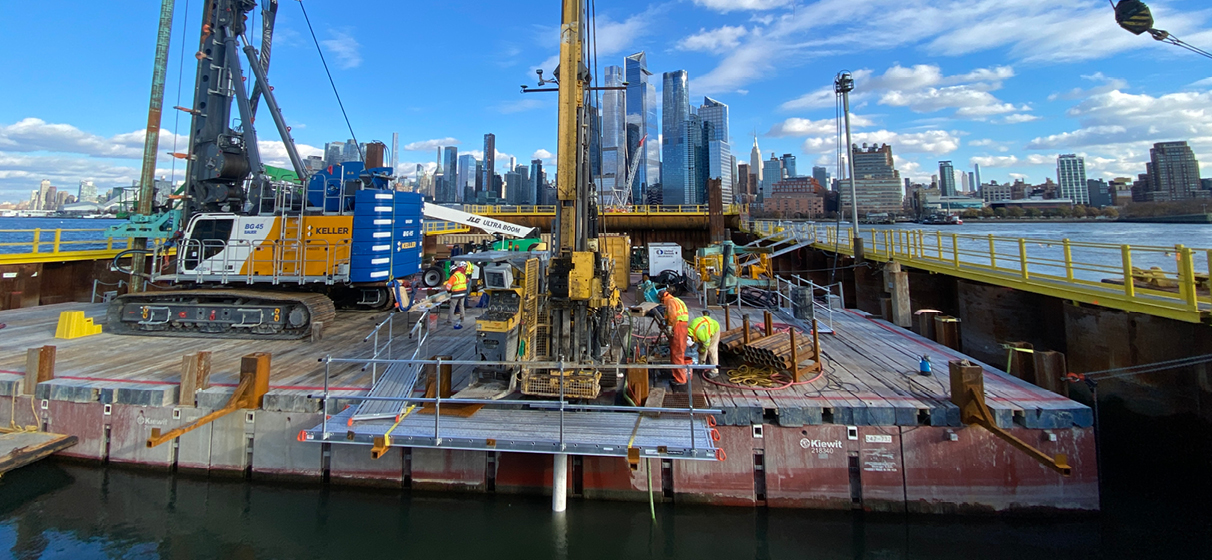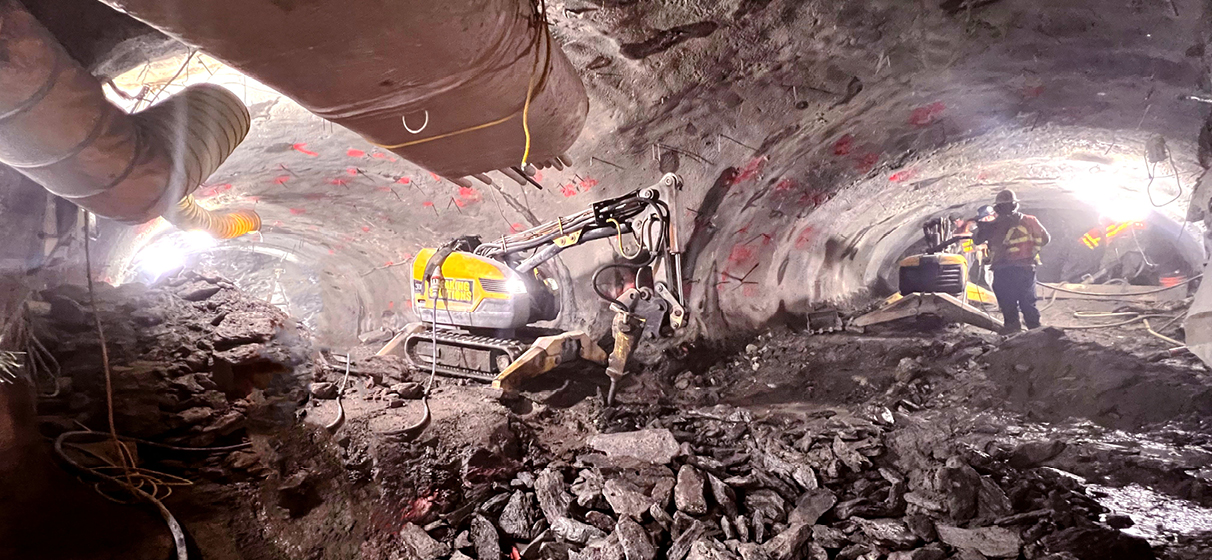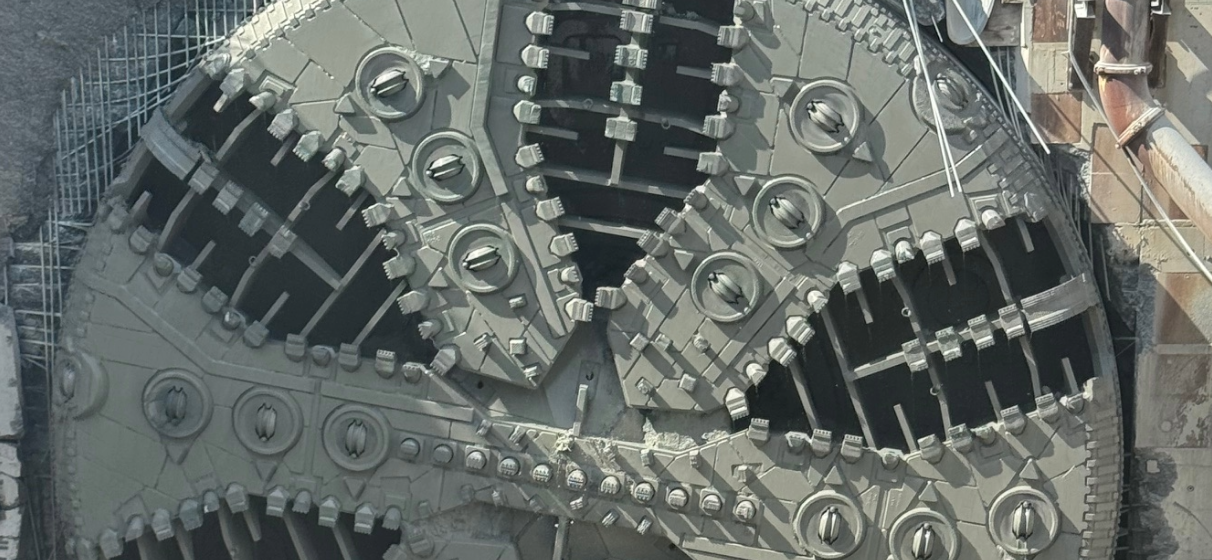
The Hampton Roads Bridge-Tunnel (HRBT) Expansion, a transformative infrastructure project that will reshape travel across the I-64 corridor between Norfolk and Hampton, Virginia, has achieved another historic milestone: “Mary,” the project’s tunnel boring machine (TBM), has completed her second and final tunnel, marking the end of a remarkable three-mile journey beneath the Hampton Roads Harbor.
STV is providing quality assurance (QA) oversight for the bored tunnel section of the $3.9 billion HRBT program – the largest infrastructure project in Virginia’s history. The expansion will increase capacity, reduce congestion and enhance reliability along 10 miles of I-64 by widening existing four-lane segments with new twin tunnels.
Throughout construction, STV’s team has conducted inspection, testing and documentation oversight to ensure the work meets the Virginia Department of Transportation’s (VDOT) rigorous standards.
“This milestone represents the culmination of years of collaboration, precision, and persistence,” said Harshad Pandit, vice president and engineering director at STV. “Our team has been deeply involved in every stage of this effort: from monitoring the TBM and slurry treatment plant to confirming each tunnel lining segment meets exacting quality requirements. We’re proud to support VDOT in achieving this historic success.”
Named after pioneering NASA engineer Mary Winston Jackson, Mary broke through the tunnel headwall after beginning her second excavation in October 2024. Along her journey, she reached depths of 173 feet and achieved several world-class feats, including constructing more than 366 feet of tunnel in a single week: a record for a TBM of her size.
“This project is a testament to what’s possible through innovation and teamwork,” said Rosmar Gonzalez, tunnel QA leadm at STV. “This accomplishment reflects state-of-the-art tunneling technology and the dedication of everyone involved in making this project a success.”
In the weeks ahead, STV will continue to support the final phase of the boring process as crews complete the last tunnel lining rings and begin disassembling Mary and the slurry treatment plant. Work will then transition to outfitting both tunnels with roadway, ventilation and safety systems in preparation for opening in early 2027.
“The HRBT Expansion demonstrates how advancements in TBM technology and skilled oversight are redefining what’s possible in modern tunneling,” said Frank Pepe, PE, senior vice president and national director of tunneling and geotechnical engineering. “This isn’t just a milestone for the Commonwealth: it’s a milestone for the entire tunneling industry.”