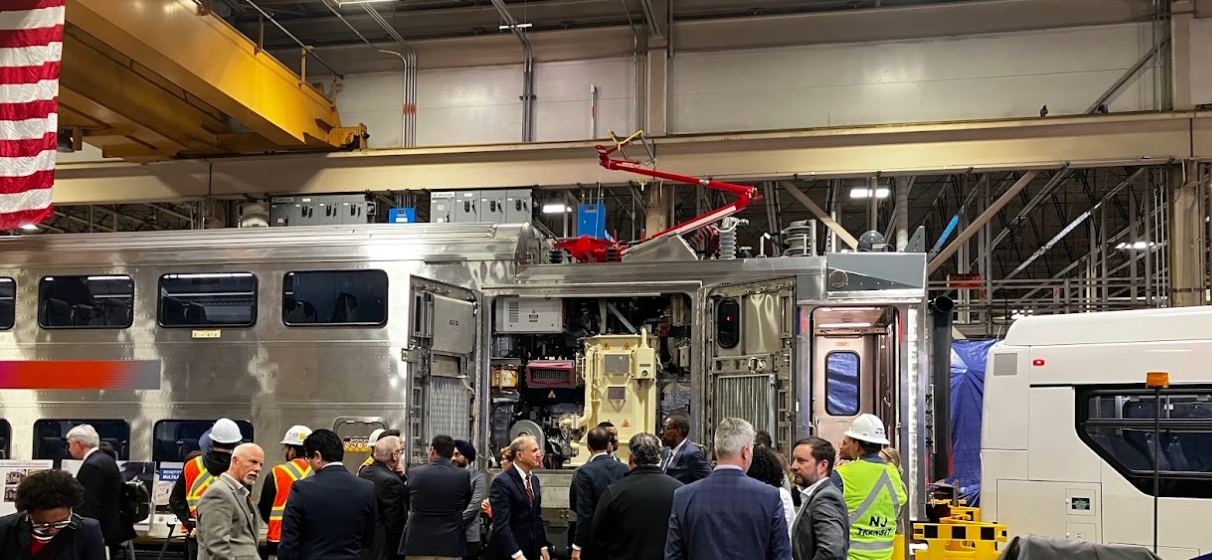
Representatives from STV recently joined NJ TRANSIT leaders, transit partners from across the industry and public officials to mark the arrival of the first new Multilevel III rail car – a key step in NJ TRANSIT’s long-term efforts to modernize its rail fleet and strengthen service for riders statewide.
“The arrival of the first Multilevel III rail car marks a meaningful transition for this program – from years of planning into visible progress,” said James Martin, PE, PMP, senior vice president and head of the vehicles group at STV. “It reflects the sustained collaboration required to modernize a system of this scale and the importance of carrying that work forward with discipline as the fleet moves closer to service.”
The power cars are among the first of their kind operating in the United States. Unlike traditional cars – which are equipped with a cab – power cars are coaches equipped with propulsion equipment and traction motors, which then propel two passenger cars. This configuration enables faster acceleration and more efficient performance than locomotive-hauled trainsets, helping reduce delays and improve schedule reliability.
As NJ TRANSIT’s engineering consultant, STV has supported the program as it moved from early planning into delivery – helping maintain continuity as the investment advances toward service. The new rail car is the first of 374 next‑generation multilevel vehicles that will replace rolling stock dating back to the 1970s – improving reliability, accessibility and the overall passenger experience for hundreds of thousands of daily riders.
The Multilevel III rail cars will now undergo several months of testing and commissioning across New Jersey before entering passenger service later this year. Once deployed, they will offer greater seating capacity, enhanced accessibility, onboard information displays, USB charging and significantly higher mechanical reliability.
“For riders, these new vehicles translate into a more dependable and comfortable commute,” Martin said. “For the region, they represent rail infrastructure that is better positioned to meet demand – not just today, but as New Jersey’s transportation needs continue to evolve.”