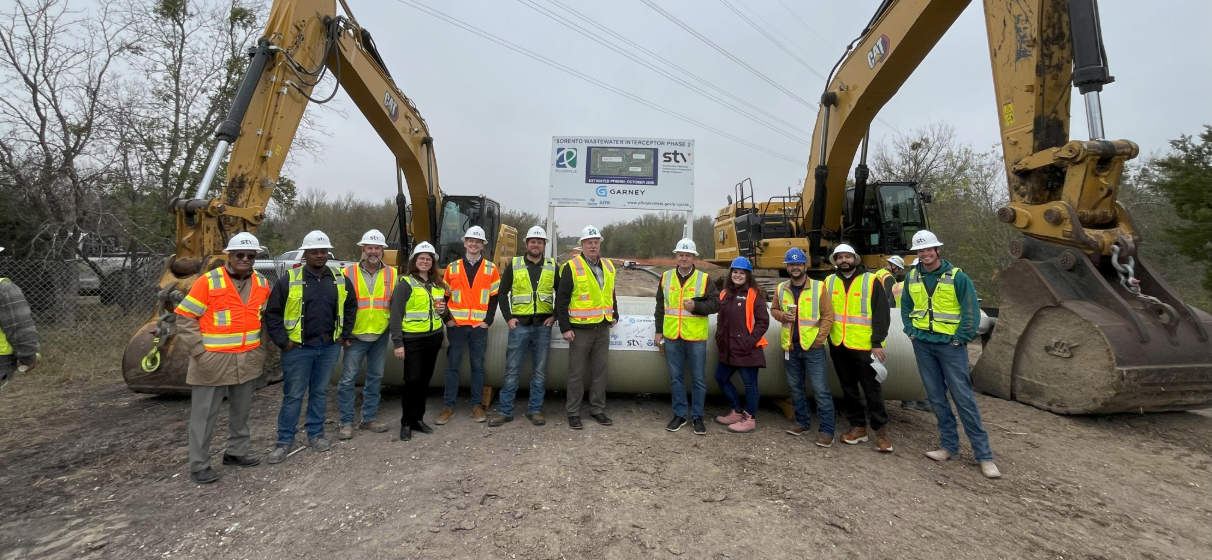
STV and the City of Pflugerville in Texas marked a significant milestone with the groundbreaking of Phase 2 of the Sorento Wastewater Interceptor, a $9.2 million wastewater pipeline project that will substantially expand the city’s wastewater conveyance capacity.
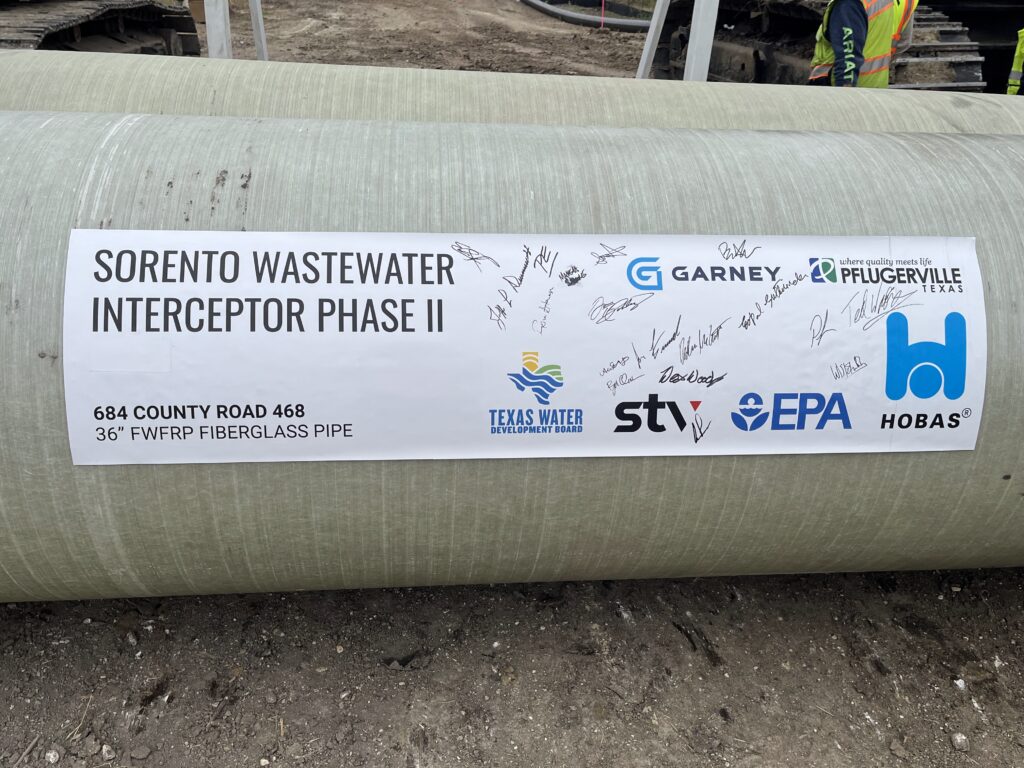
STV’s team joined city leaders, utility staff and project partners at the ceremony, where participants commemorated the onset of construction by signing the first pipe being used on the 36-inch gravity interceptor.
“The start of construction marks another meaningful step in building Pflugerville’s future,” said Ryan Owen, vice president at STV. “Working alongside the City, our team is proud to help deliver the interconnected pipelines, treatment systems and infrastructure that will strengthen this community’s foundation for many years ahead.”
The Sorento Interceptor will use gravity to divert flows away from two existing lift stations and direct them toward Pflugerville’s new Wilbarger Creek Regional Wastewater Treatment Facility through the installation of over 10,000 feet of wastewater line.
The current construction phase extends the new gravity system further south, utilizing large-diameter pipelines and a new flow-diversion system that will enable the city to ultimately retire two large lift stations. As one of the earliest construction projects in the city’s Wilbarger Wastewater Program – a $500 million, five-year wastewater capital improvement program – the interceptor sets the pace for a complex sequence of improvements that must come online together to support continued growth across the region.
A Cornerstone Project in Pflugerville’s $500M Wastewater Program
STV has played a key role in supporting the Sorento Wastewater Interceptor from the project’s early planning phases through this construction launch. The firm served as the design engineer, as well as environmental and funding support lead, guiding all environmental investigations and coordinating with state and federal resource agencies as required under the Texas Water Development Board and the Environmental Protection Agency’s funding process. In addition to environmental leadership, STV supported the city through critical early design coordination, alignment evaluation and funding documentation that shaped the final scope.
The city’s capital improvement program addresses one of the nation’s fastest-growing service areas. As the city anticipates its population doubling over the next decade, the plan focuses on expanding the wastewater collection network, increasing treatment capacity and minimizing reliance on lift stations to ensure long-term reliability. The Sorento Interceptor is a vital part of this larger effort since it creates a new gravity route between existing neighborhoods and the regional wastewater facility, lowering operational costs and improving service for rapidly developing areas.
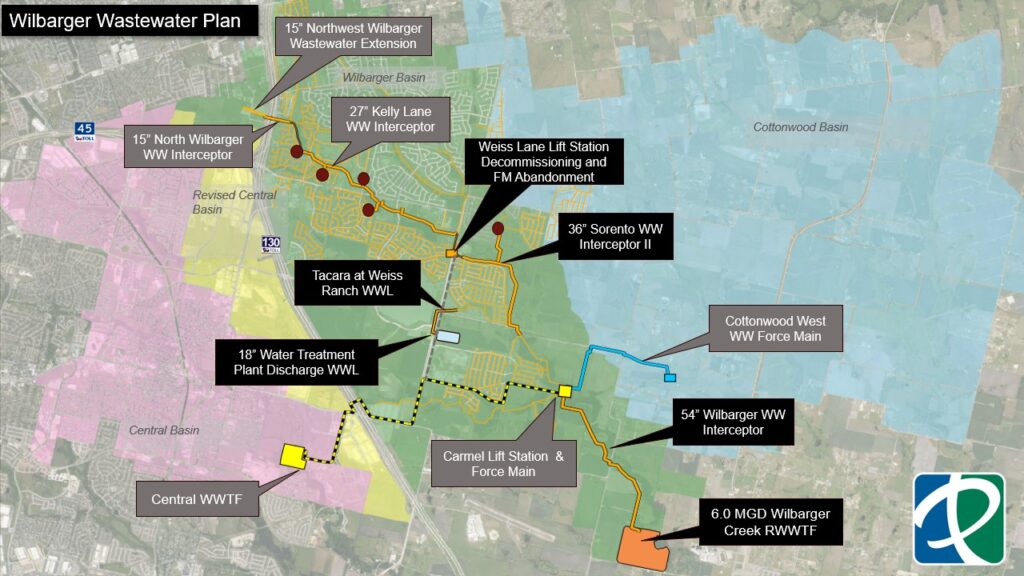
Additional projects within the program include building a new regional wastewater treatment facility, starting with a first phase of 6.0 million gallons per day (MGD) and designed to expand up to 24.0 MGD, along with the construction of new large-diameter interceptors and the decommissioning of existing lift stations. Timing is crucial, as each component must be operational to support the facility’s launch and the city’s continued growth.
STV’s Broader Partnership with the City of Pflugerville
STV is providing comprehensive support across the city’s water and wastewater initiatives, acting as owner’s representative for the new treatment facility and three interceptors. This includes overseeing construction management, regulatory coordination, scheduling and compliance with state and federal funding requirements.
Notably, through funding strategy efforts with the Texas Water Development Board and EPA Water Infrastructure Financing and Innovation Act (WIFIA) financing, STV has helped Pflugerville secure over $683 million in funding critical to accelerating project delivery for both its wastewater and water initiatives
In addition to funding support, STV is responsible for designing interceptors, wastewater master planning, advancing water line improvements and managing the expansion of raw water resources through the Secondary Colorado River Raw Water Line program.