PORTLAND, OR – STV today announced completion of design for the first six traction power substations under TriMet’s Banfield Type 1 Substation Replacement Project, which also received Issued for Construction (IFC) approval. The milestone is a significant step toward modernizing the MAX Blue Line’s power infrastructure, one of the oldest components of the region’s light rail system.
Originally installed in 1983, TriMet’s 12 Type 1 traction power substations along the MAX Blue Line are nearing the end of their service life. The 12-year replacement program will introduce state-of-the-art traction power equipment, improve equipment access and safety, reduce long-term maintenance costs and minimize the risk of service disruptions for riders. Over the past 18 months, STV led the structural, civil, electrical and systems design for six substations along the Banfield corridor and is providing overall project management, leading a team of eight consultants.
“This is a foundational investment in the reliability and resilience of the region’s transit system,” said Ja-Mie Luey, P.E., vice president and West Coast rail and transit systems lead at STV. “STV is modernizing the critical infrastructure upgrades that strengthen the backbone of MAX service today while building capacity for future improvements that directly benefit riders and the communities they connect.”
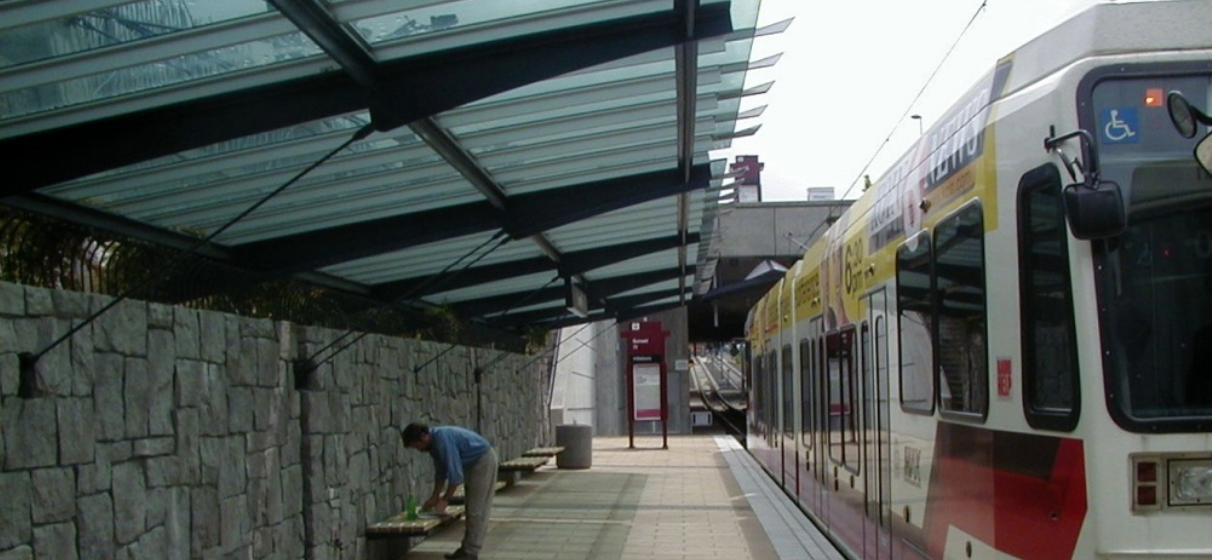
The MAX Blue Line is TriMet’s longest light rail route, spanning approximately 33 miles and serving 48 stations between Hillsboro and Gresham.
“Maintaining our transit system in a state of good repair is one of TriMet’s top priorities,” said Jamie Snook, executive director of capital project delivery at TriMet. “Through our partnership with STV, we’ve advanced the replacement of our original light rail substations that are more than 40 years old, which is vital to keeping our region and our world-class light rail system moving and reliable for our riders and the Portland metro area.”
Construction of the first six substations is anticipated to begin in 2026 and continue through 2028.STV is also scheduled to begin designing four additional Banfield substation sites in July 2026.
STV’s national systems practice provides comprehensive engineering design and support services for railroad and transit systems across the U.S. and Canada. As a leader in all aspects of rail systems design, operation, and maintenance, STV has become a trusted resource for some of the largest railroad and transit systems in North America. STV has supported system reliability and safety for Amtrak, Long Island RailRoad, Bay Area Rapid Transit and Metra and Sound Transit, among others.
STV has a strong local presence in the Pacific Northwest with two principal offices in Portland and Seattle and decades of experience collaborating with TriMet, Sound Transit and the Washington State Department of Transportation (WSDOT) to help create better transportation networks. STV’s signature projects in the region include the Tilikum Crossing, Burnside Bridge, Sound Transit’s East Link, Northgate Link and Lynnwood Link extensions and Cascadia Ultra-High-Speed Rail.