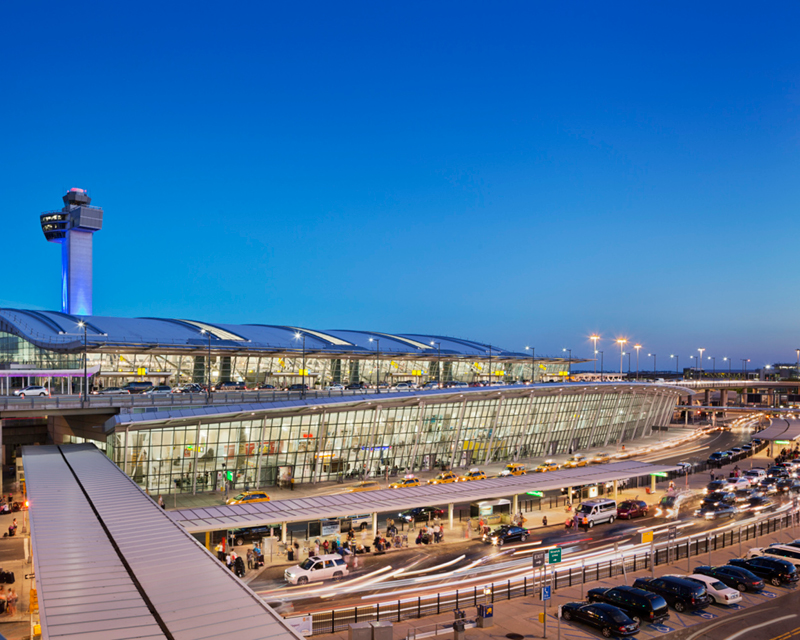
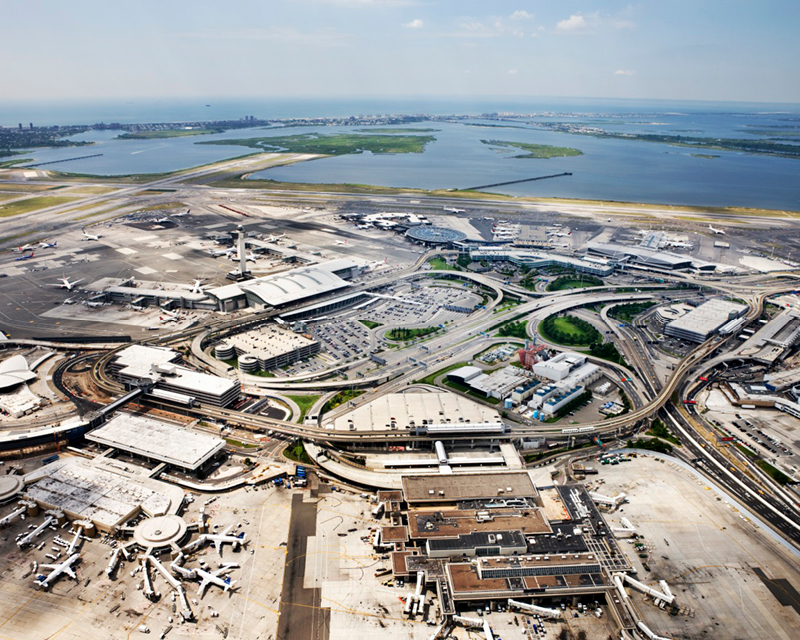
AirTrain JFK is the first new rail line built in New York City in more than 40 years, creating a vital connection between the Long Island Rail Road, the New York City subway system and John F. Kennedy International Airport. One of the world’s busiest aviation hubs, JFK required a dependable, high‑capacity transit link to improve regional mobility and reduce roadway congestion. As lead designer for the AirRail Transit Consortium, STV delivered full architectural and engineering design, environmental review and construction support services under a design–build–operate–maintain contract.
What challenges did STV address?
The project required developing a modern, elevated fixed‑guideway system within dense urban corridors and airport property, while maintaining uninterrupted operations across critical transportation infrastructure. The team needed to design long-span structures, integrate complex systems, and accommodate climate-controlled stations, all while adhering to the Port Authority of New York and New Jersey’s operational, aesthetic and resilience requirements.
What solutions did STV deliver?
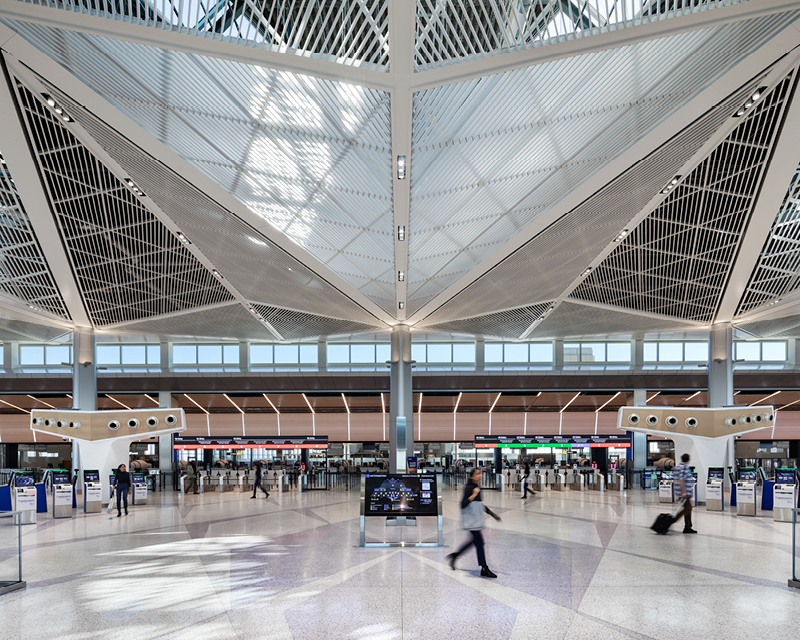
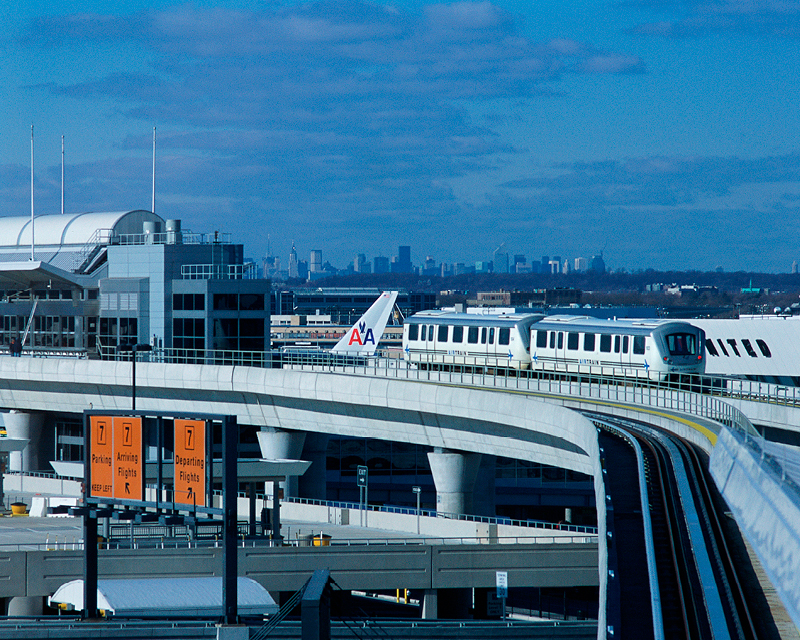
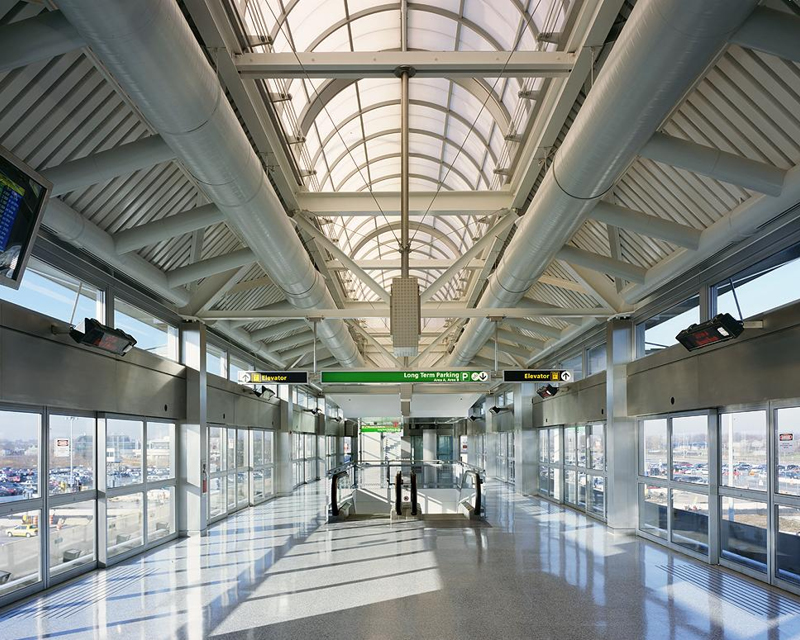
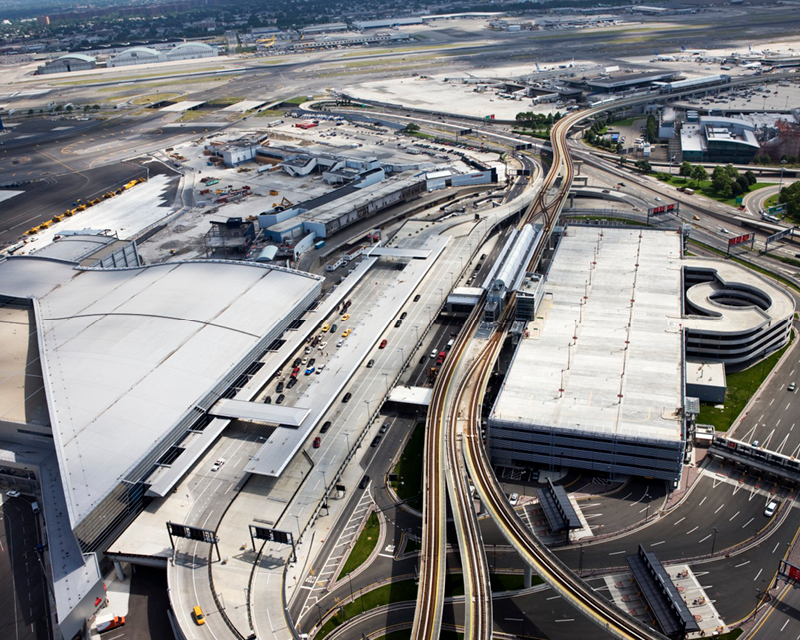
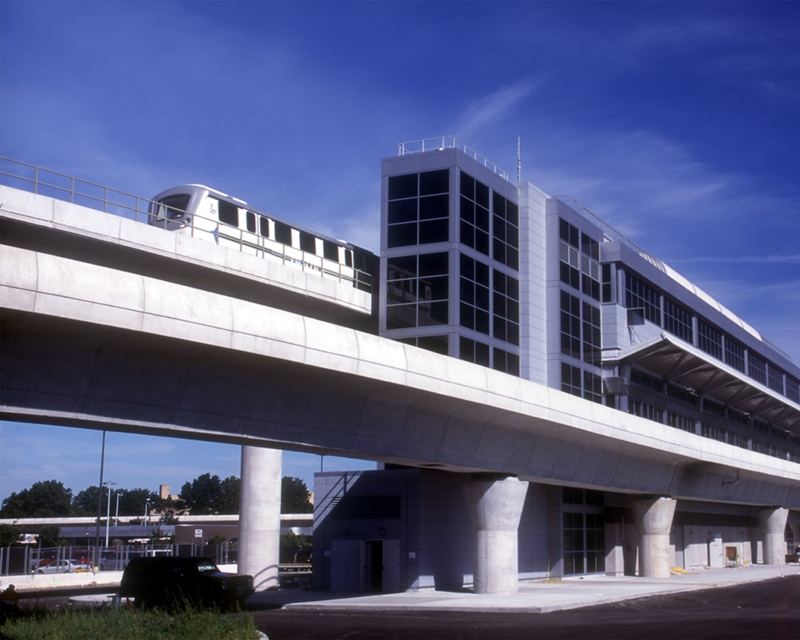
STV designed the system’s innovative six‑mile elevated guideway, a precast box girder structure supported by cast‑in‑place columns. More than 5,400 precast segments formed what was, at its debut, the longest precast segmental bridge in the United States. STV also designed 10 award‑winning climate‑controlled stations and a comprehensive operations, maintenance and storage facility. The firm provided multidisciplinary engineering across civil, structural, mechanical, electrical and architectural disciplines.
How does this project benefit the region?
AirTrain JFK strengthens regional connectivity by offering reliable rail access to the airport, reducing traffic congestion and supporting economic activity across New York City. The system improves travel time, enhances passenger experience and creates a seamless link between air and rail travel.
Key stats and accolades
- First new rail line built in New York City in more than 40 years
- Six‑mile elevated guideway with precast segmental structure
- More than 5,400 precast segments
- 10 climate‑controlled stations
- Longest precast segmental bridge in the United States at time of completion