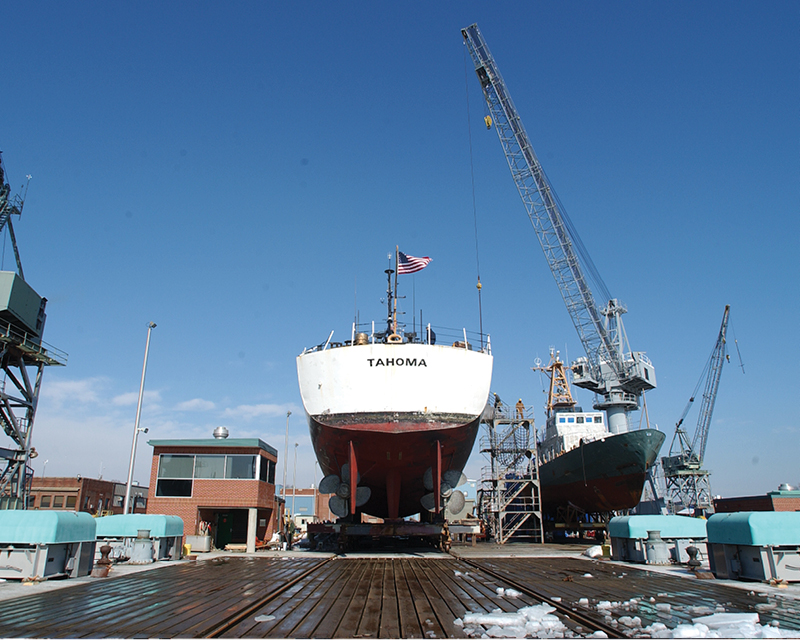
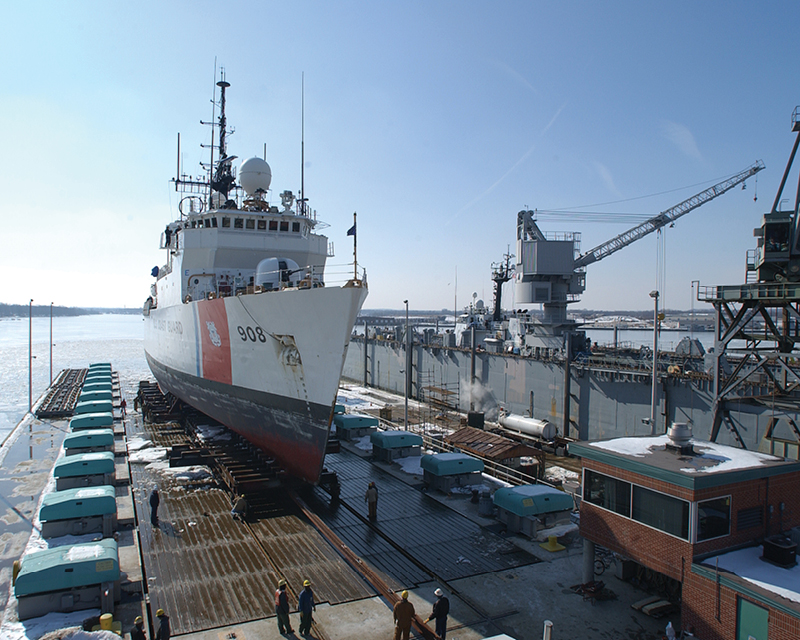
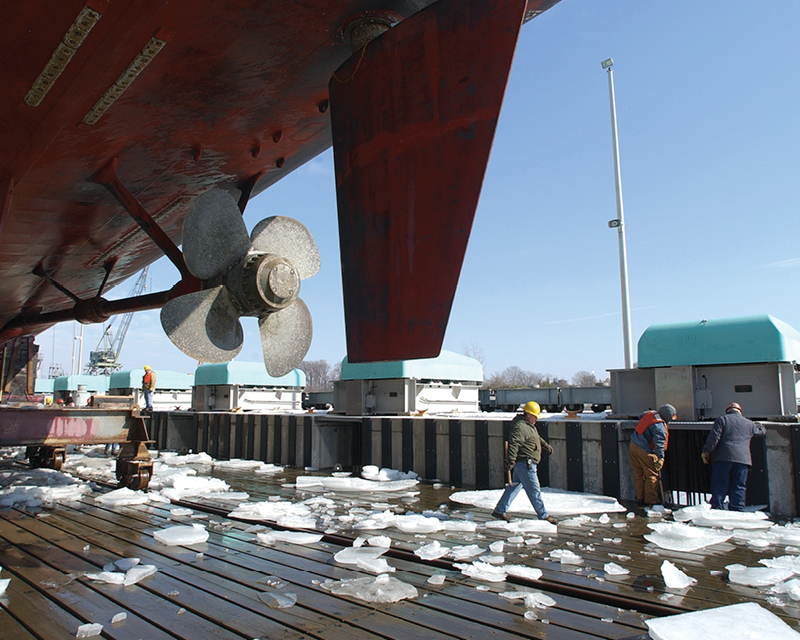
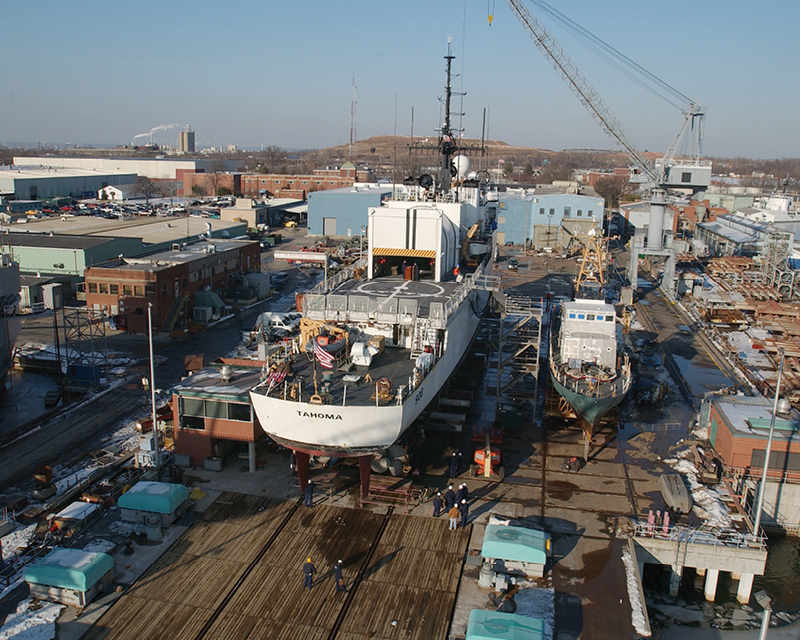
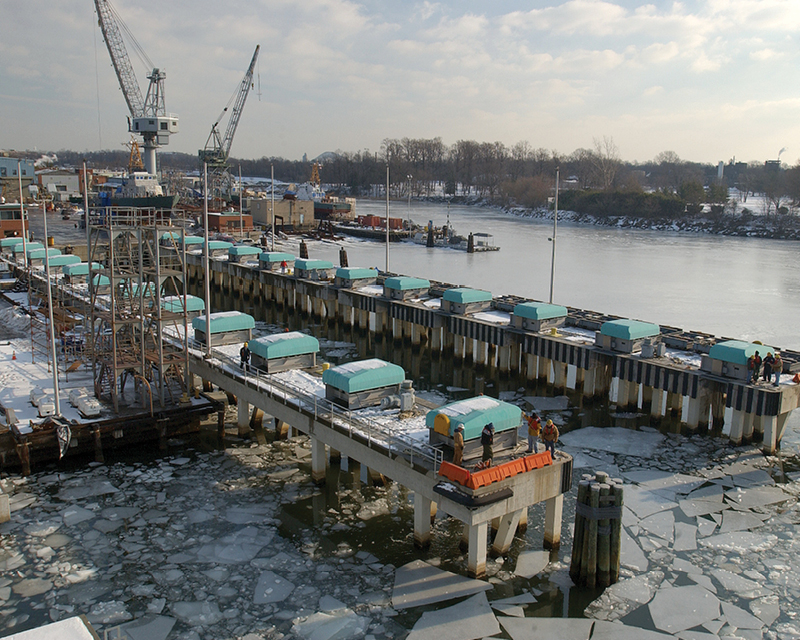
The U.S. Coast Guard’s historic Curtis Bay Yard in Baltimore, MD, is a critical hub for vessel maintenance and repair, supporting mission readiness across the fleet. To strengthen this capability, the Yard underwent an extensive $22 million redevelopment of its land-based ship-handling facility – an essential system that lifts vessels from the water and transports them to onshore workstations. STV provided the conceptual design for the upgraded facility, including topographic surveys, assessments of existing bulkhead conditions and subsurface investigations, ensuring safe, reliable and long-term ship-handling operations.
What challenges did STV address?
The project team needed to modernize a decades-old facility while maintaining operations within an active shipyard environment. Environmental impact was a major consideration, requiring mitigation strategies for both air and water quality. The upgraded facility also needed to support increasingly large and complex Coast Guard vessels, while integrating seamlessly into the site’s limited waterfront footprint.
What solutions did STV deliver?
STV developed the conceptual design for a vastly improved ship-handling system capable of accommodating vessels up to 378 feet in length. Key facility components include two 334‑foot piers, a 270‑foot vessel lift platform, a marginal wharf and new onshore workstations. STV also created environmental mitigation strategies to address air and water quality concerns and ensure the long-term sustainability of shipyard operations.
How does this project benefit the region and community?
By equipping the U.S. Coast Guard with modern, efficient repair infrastructure, the upgraded facility enhances fleet readiness, supports maritime safety and strengthens the Coast Guard’s ability to serve coastal communities. The project also preserves vital industrial operations and environmental stewardship along Baltimore’s working waterfront.
Key stats and accolades
- Supports vessels up to 378 ft long
- 334‑ft piers and 270‑ft lift platform
- Environmental mitigation for long-term sustainability
- Enhanced operational efficiency for USCG ship maintenance