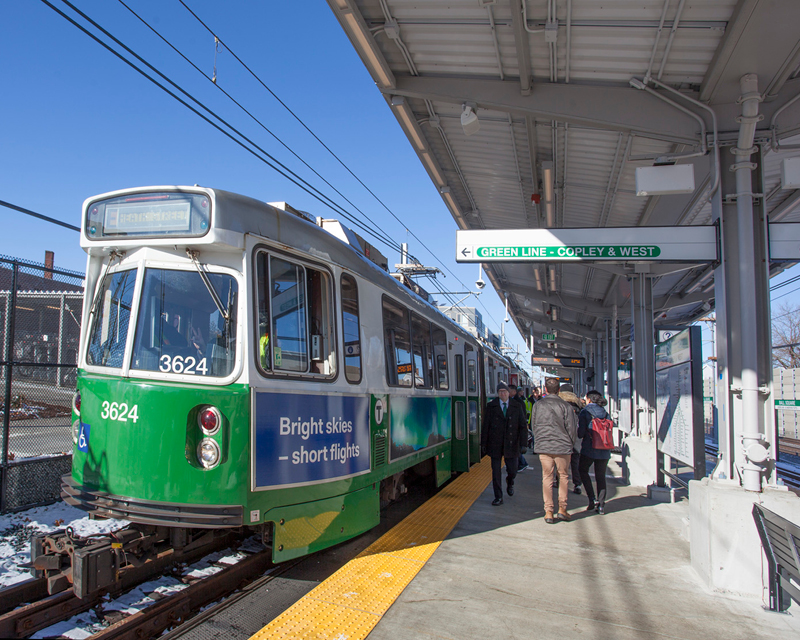
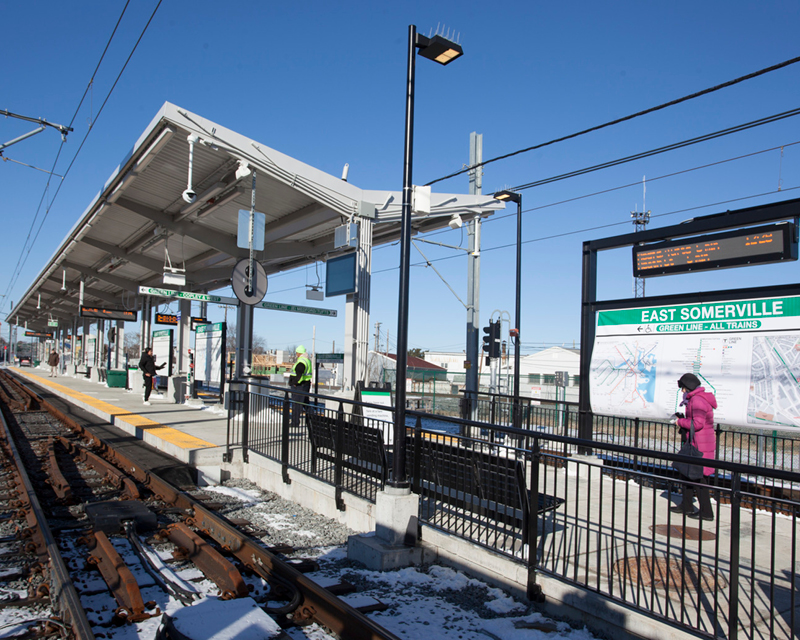
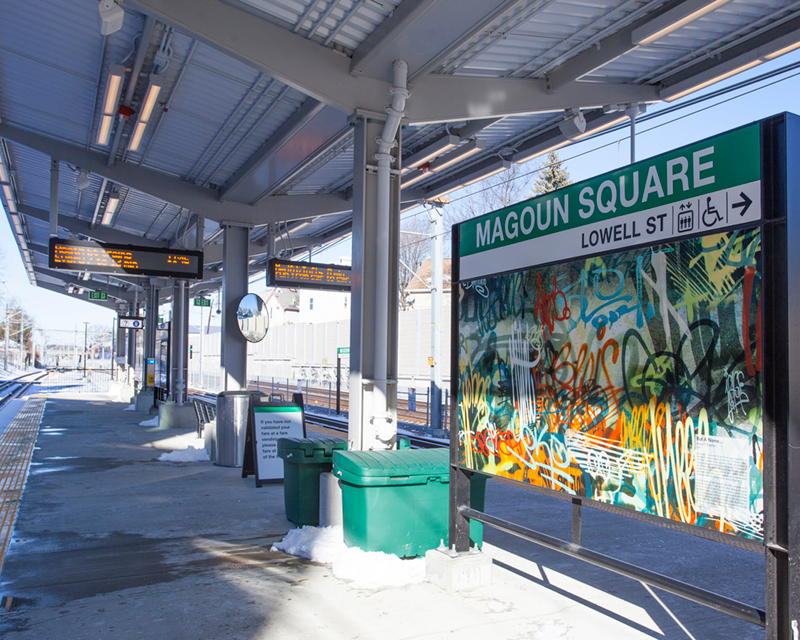
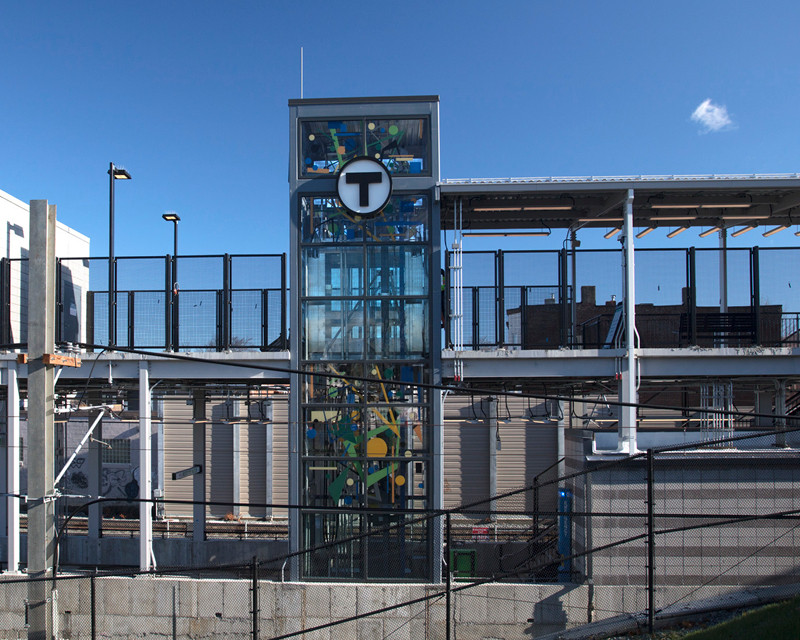
The $2.3 billion Massachusetts Bay Transportation Authority Green Line Extension expands the existing Green Line by 4.3 miles, providing a one‑seat ride from the communities of Cambridge, Somerville and Medford to downtown Boston. As the lead designer for the design-build team, STV supported GLX Constructors – a joint venture of Fluor Corporation, Middlesex Corporation, Herzog Contracting Corp and Balfour Beatty – in delivering one of the most significant transit investments in the Commonwealth’s recent history. The program introduced new light rail service, improved multimodal access and advanced a major regional mobility initiative.
What challenges did STV address?
Implementing an extension through dense urban neighborhoods required innovative engineering and careful coordination to manage right-of-way constraints, maintain community connectivity and deliver the project within a complex, fast-paced design–build framework. The program needed to accommodate new stations, structures and systems while minimizing impacts on adjacent communities and supporting long-term transit growth.
What solutions did STV deliver?
STV led the design of a comprehensive suite of project elements, including a new vehicle maintenance facility, an administrative building, a viaduct with 50 spans, seven stations, six bridges and a community path with a pedestrian bridge. The firm provided multidisciplinary engineering – from civil and structural to systems, signals and traction power – working collaboratively with the contractor team to meet aggressive milestones and achieve an integrated, high‑quality final design.
How does this project benefit the region?
The extension strengthens transit access for thousands of residents in Cambridge, Somerville and Medford, reducing traffic congestion and improving air quality. The MBTA anticipates a reduction of 26,000 regional daily vehicle miles traveled and expects daily ridership at the new stations to reach 45,000 by 2030. The project supports equitable mobility, expands sustainable transportation options and enhances quality of life in growing communities.
Key stats and accolades
- $2.3 billion program
- 4.3‑mile light rail extension
- Seven new stations and six bridges
- 50‑span viaduct
- New vehicle maintenance facility and administrative building
- Expected 45,000 daily riders by 2030
- Anticipated reduction of 26,000 daily vehicle miles traveled