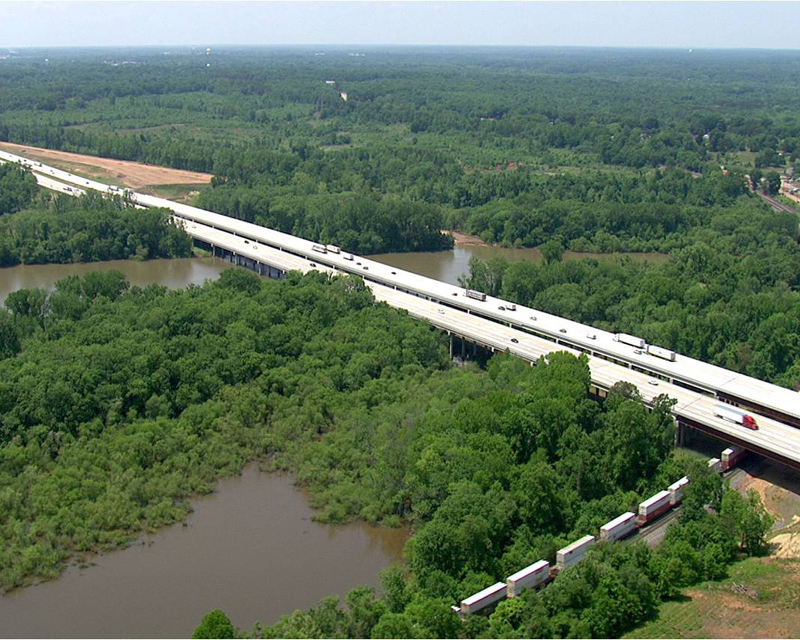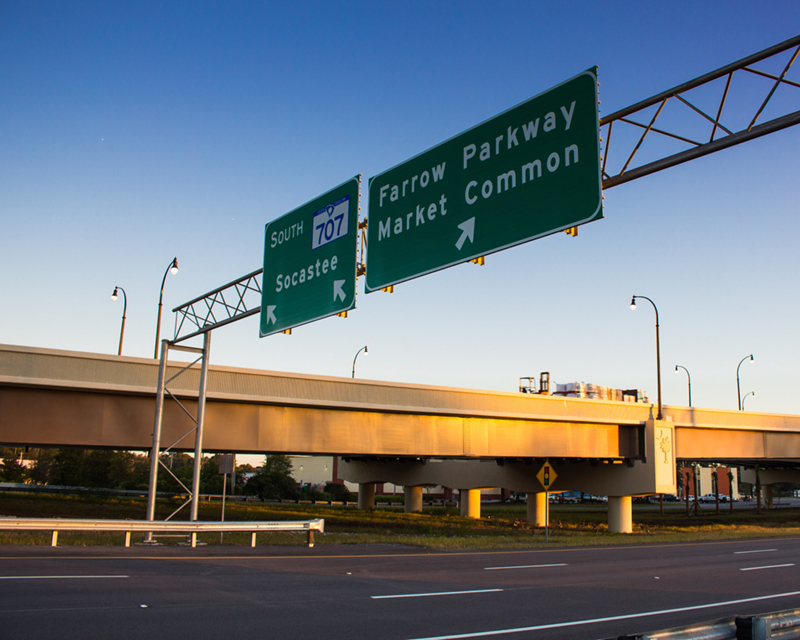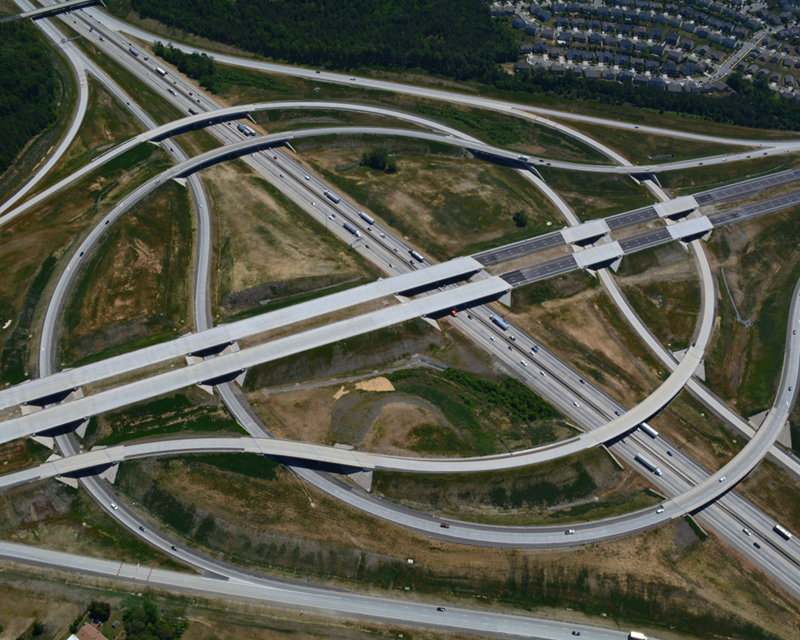
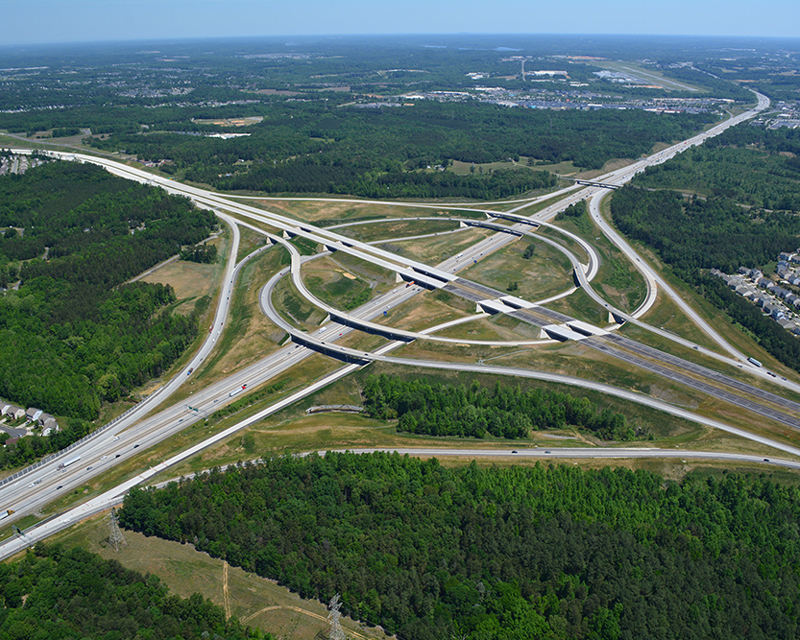
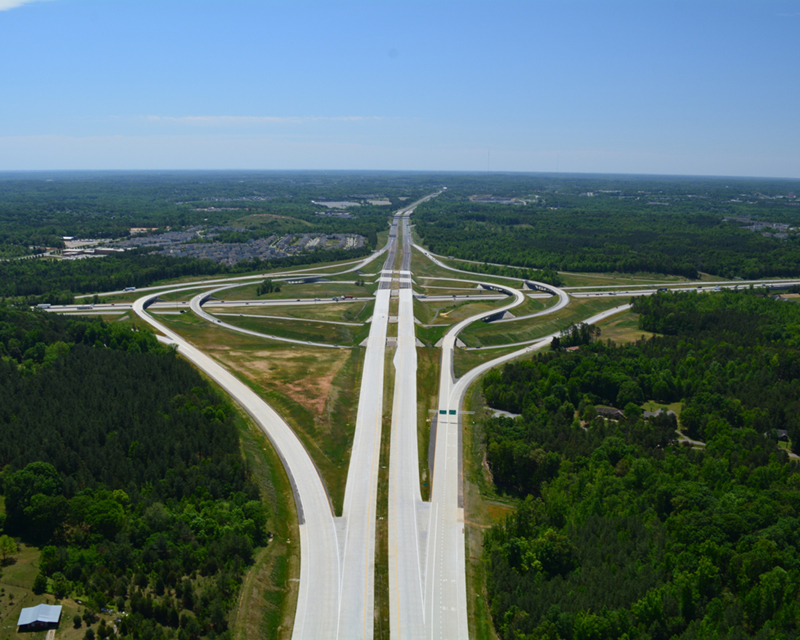
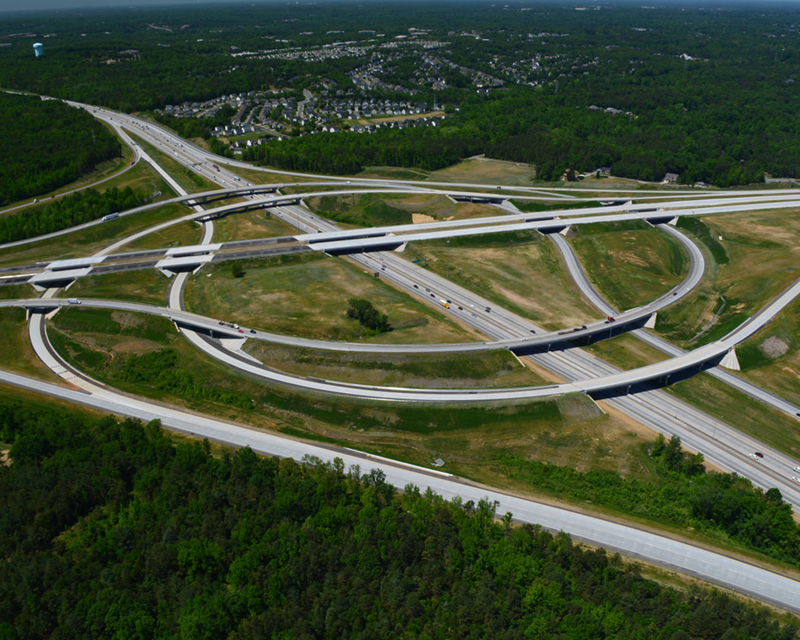
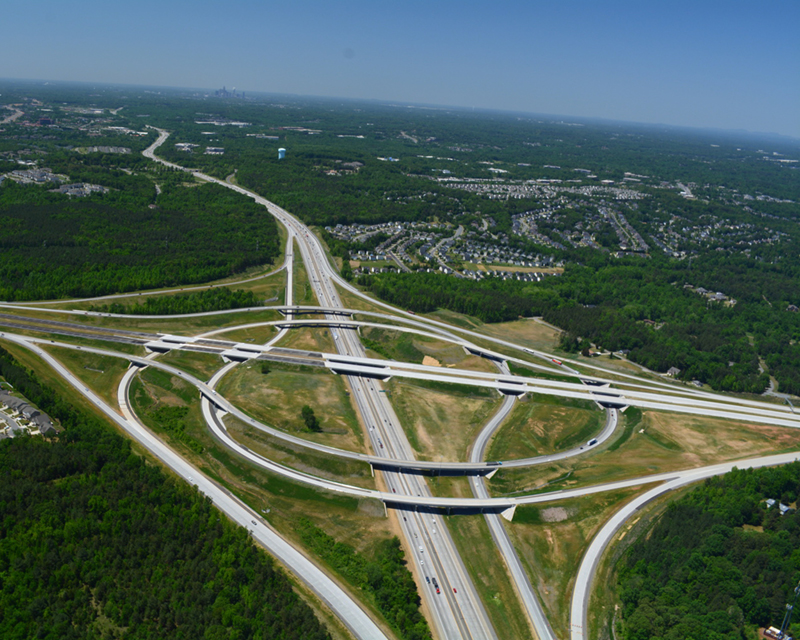
The transformation of the I‑485/I‑85 interchange into a fully directional turbine interchange serves as the final link in completing the 67‑mile circumferential loop around Charlotte, North Carolina. As traffic volumes in the region continue to grow – projected to reach 180,000 daily motorists by 2035 – the North Carolina Department of Transportation (NCDOT) turned to innovative solutions to improve safety, enhance mobility, and reduce long-term maintenance needs. The resulting turbine interchange marks the first design of its kind in the state, positioning the corridor for future-focused operational efficiency.
What challenges did STV address?
NCDOT sought to replace a complex and costly four‑level stack interchange with a more efficient configuration that would reduce construction risk, improve safety for travelers and workers, and deliver significant cost savings. The project required widening both I-85 and I-485 to accommodate growing traffic volumes while ensuring seamless integration with existing infrastructure and maintaining traffic flow throughout construction.
What solutions did STV deliver?
As part of the design-build team led by Lane Construction Corporation, STV proposed converting the planned stack interchange into a two‑level turbine configuration. The re-envisioned design improved traffic flow, reduced structural complexity and enhanced safety. The project included widening 2.5 miles of I‑85, constructing or widening 1.5 miles of I‑485 and delivering a turbine system consisting of eight ramps/loops and 19 bridges – ultimately saving NCDOT $50 million.
How does this project benefit the region?
The turbine interchange enhances mobility for the Charlotte metropolitan area by reducing congestion, improving traffic flow and creating safer, more intuitive travel patterns for motorists. This final link in the city’s outer loop strengthens regional connectivity, supports economic growth and provides long-term resilience for one of North Carolina’s most heavily traveled corridors.
Key stats and accolades
- $50 million in project cost savings
- 67 miles of completed circumferential loop around Charlotte
- 180,000 projected daily motorists by 2035
- First turbine interchange of its kind in North Carolina
- Recipient of a National Award of Excellence from the Design‑Build Institute of America