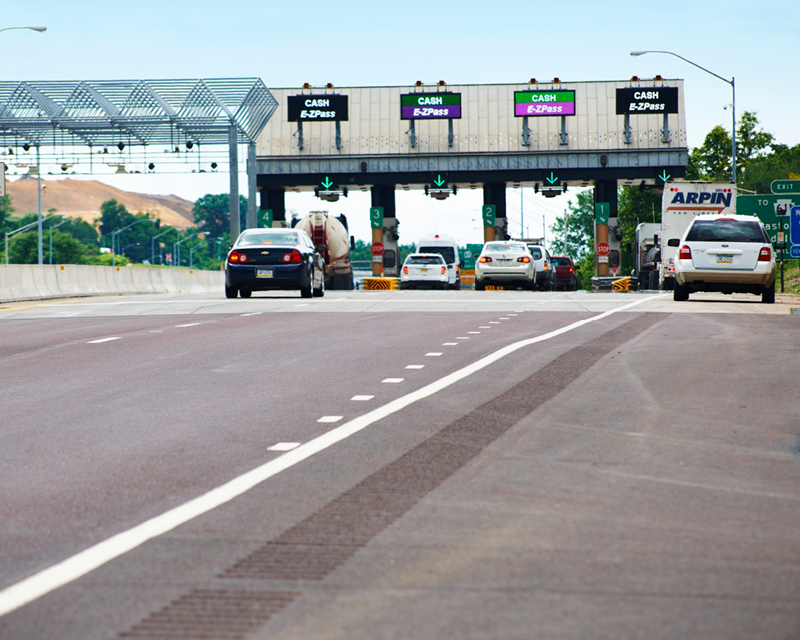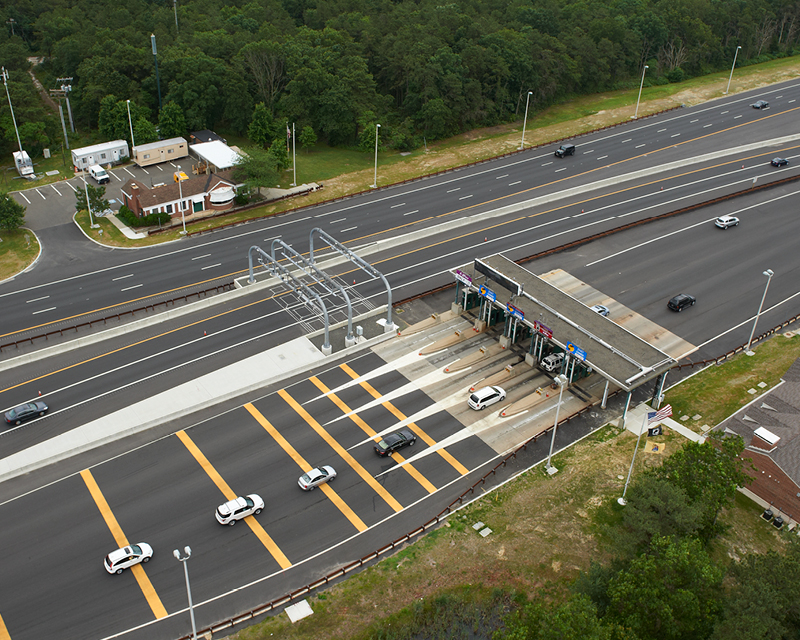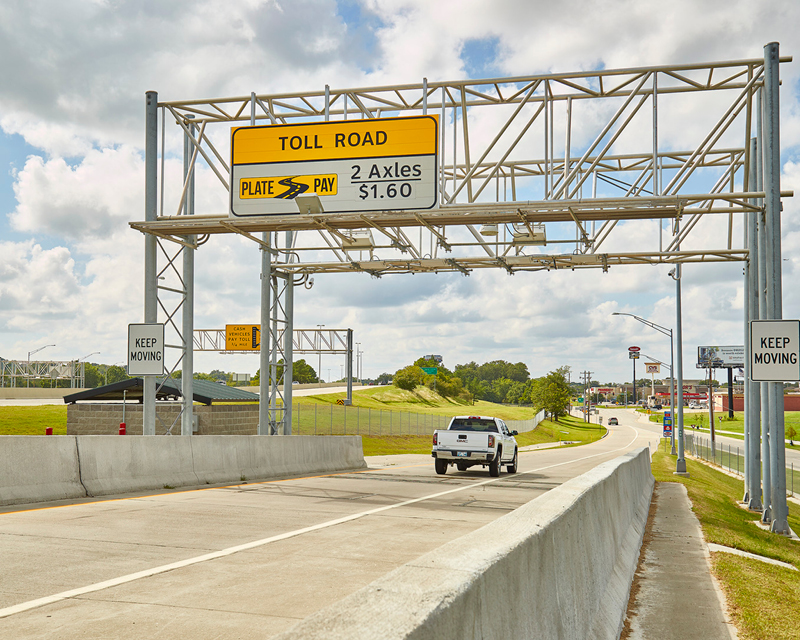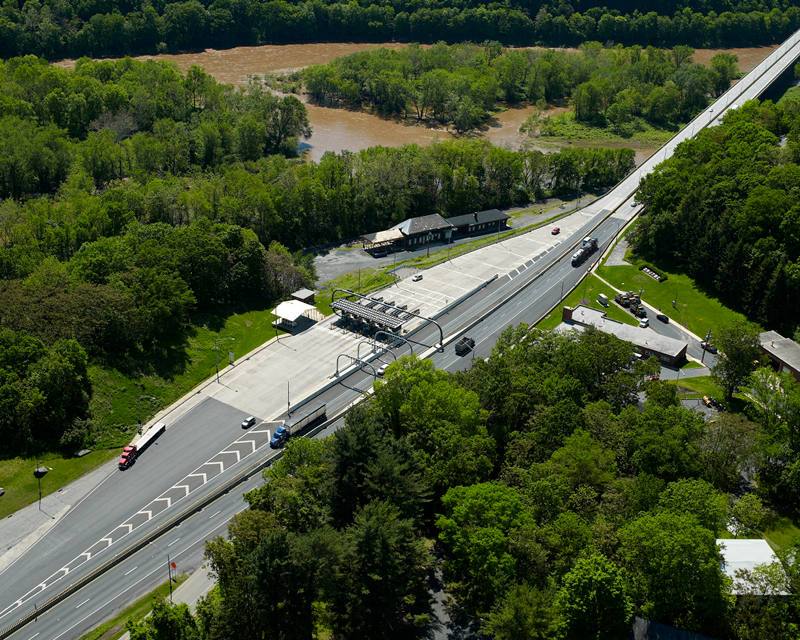
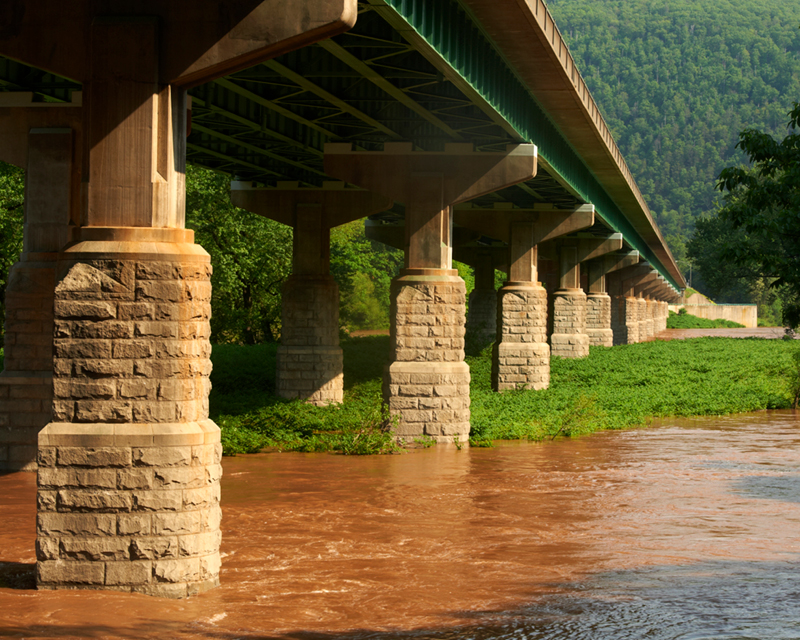
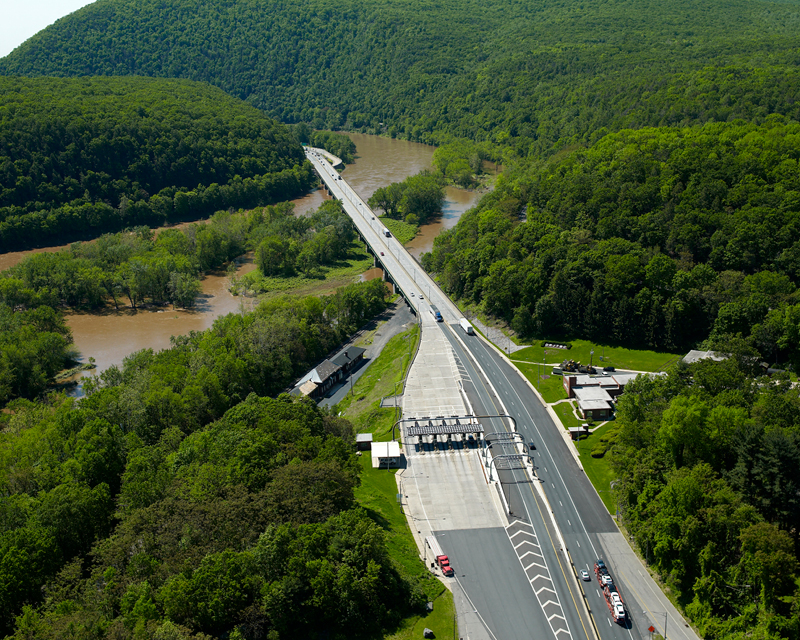
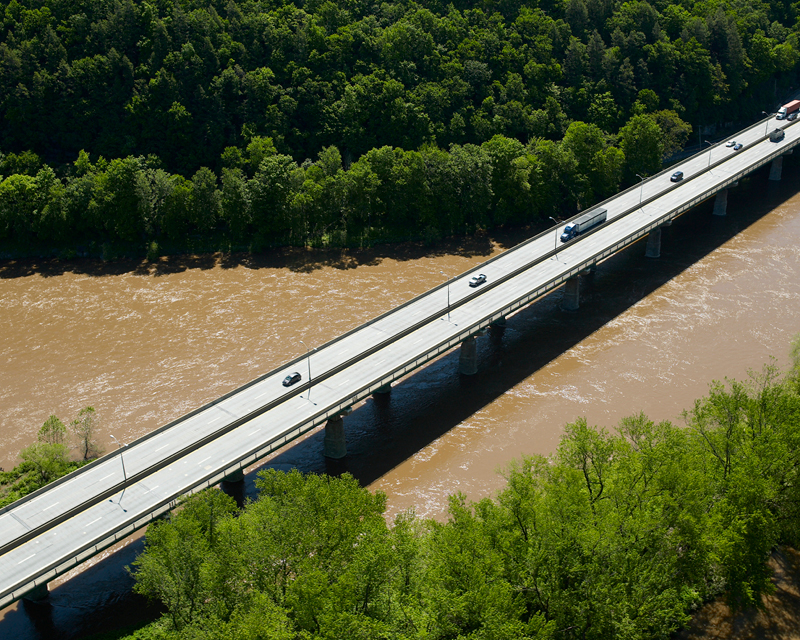
As part of the Delaware River Joint Toll Bridge Commission’s transition to a fully cashless system, the I‑80 Delaware Water Gap Toll Plaza underwent major upgrades to integrate open road tolling (ORT) and improve mobility for motorists traveling between Pennsylvania and New Jersey. STV served as a subconsultant, preparing an engineering study, feasibility analysis, conceptual design and final design for the improvements. The redesigned approach supports seamless ORT operations while minimizing environmental and community impacts along this heavily traveled corridor.
What challenges did STV address?
To determine the feasibility of ORT at the existing plaza, STV evaluated multiple lane configurations that could accommodate both a refurbished facility and the possibility of a new toll plaza. The team assessed roadway and toll plaza conditions and identified environmental constraints that would shape design decisions. Implementing ORT required working within a fast‑track schedule while coordinating with the New Jersey Department of Transportation to ensure consistency with its design standards.
What solutions did STV deliver?
STV developed conceptual alternatives that minimized environmental impacts while supporting future ORT operations. Following concept selection, the team advanced full design services for fast‑track ORT implementation, including traffic signing, striping, maintenance and protection of traffic, construction staging and erosion control plans. STV also coordinated binational design reviews to ensure the New Jersey portion of the work remained compliant with NJDOT’s design manual.
How does this project benefit the community?
The upgraded toll plaza improves safety, reduces congestion and enhances mobility along a crucial east–west connection. Open road tolling eliminates queueing, shortens travel times and supports more reliable regional travel for commuters, freight haulers and visitors accessing the Delaware Water Gap.
Key stats and accolades
- Feasibility and conceptual alternatives for open road tolling
- Engineering study, environmental assessment and final design
- Traffic signing, striping, MPT and staging plans delivered
- Coordination with NJDOT for cross‑state design compliance