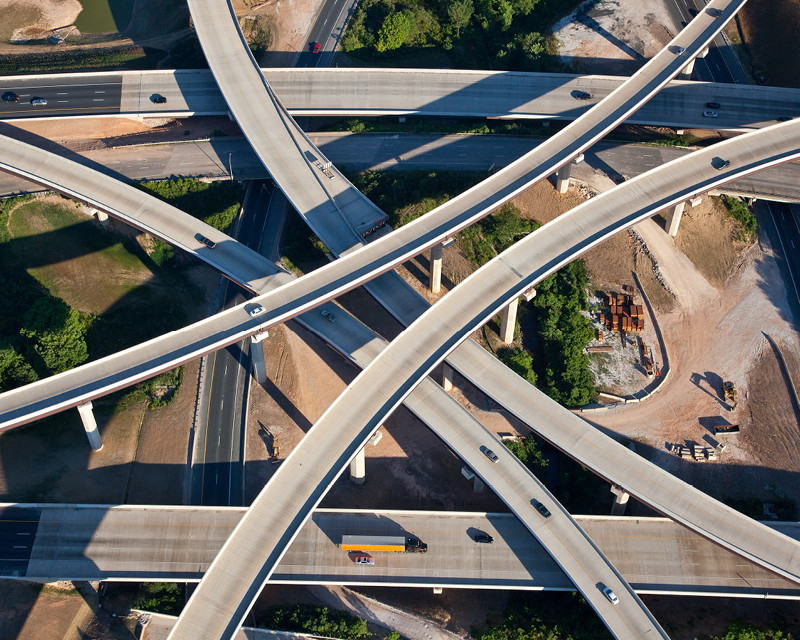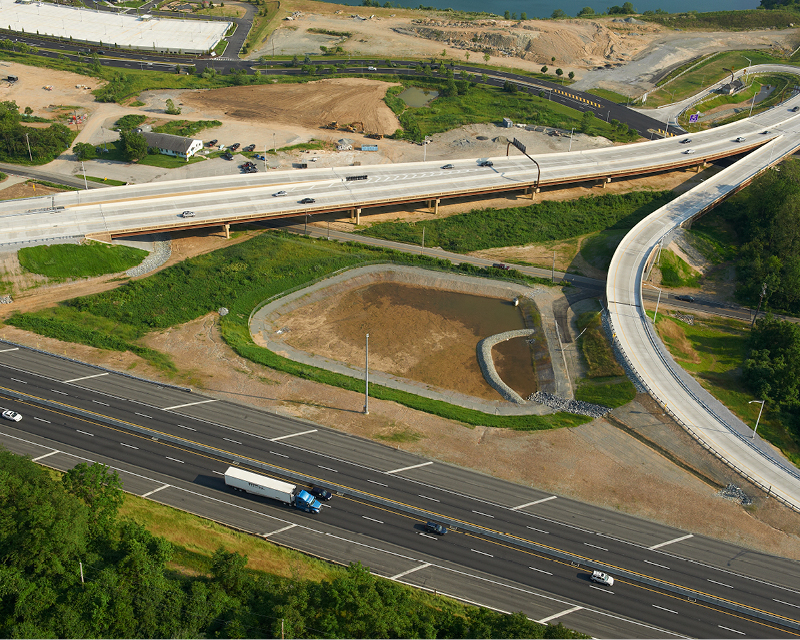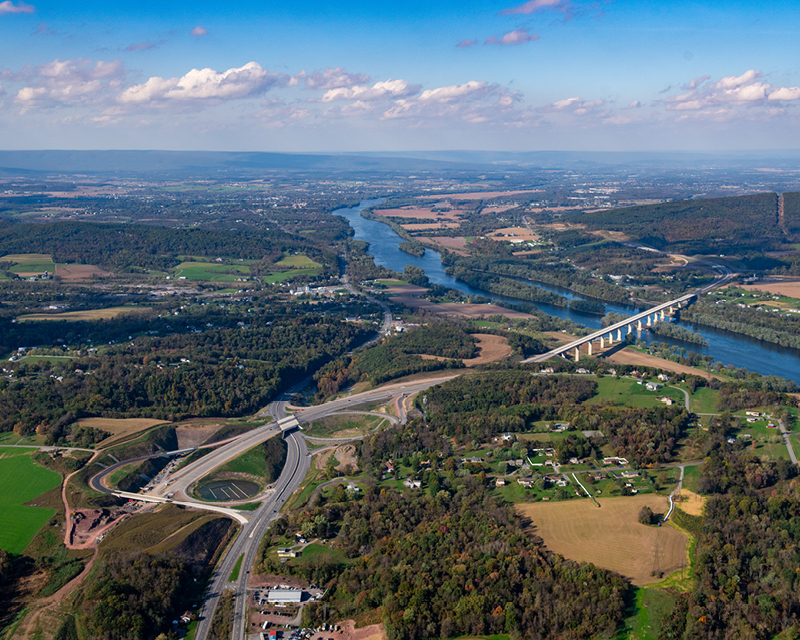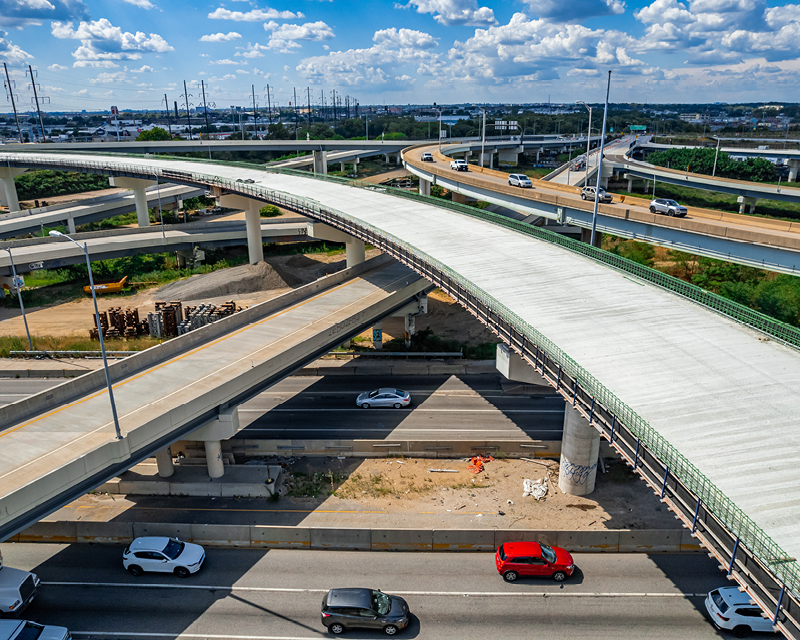
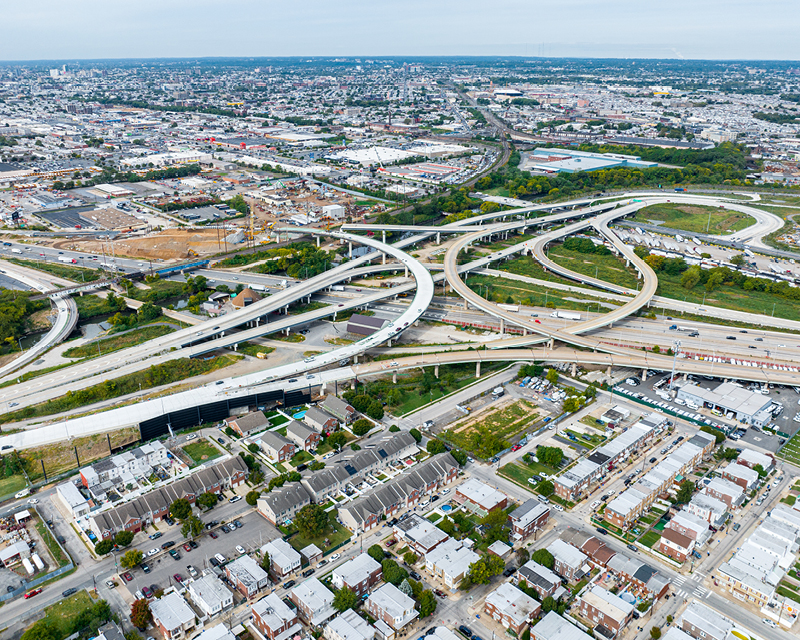
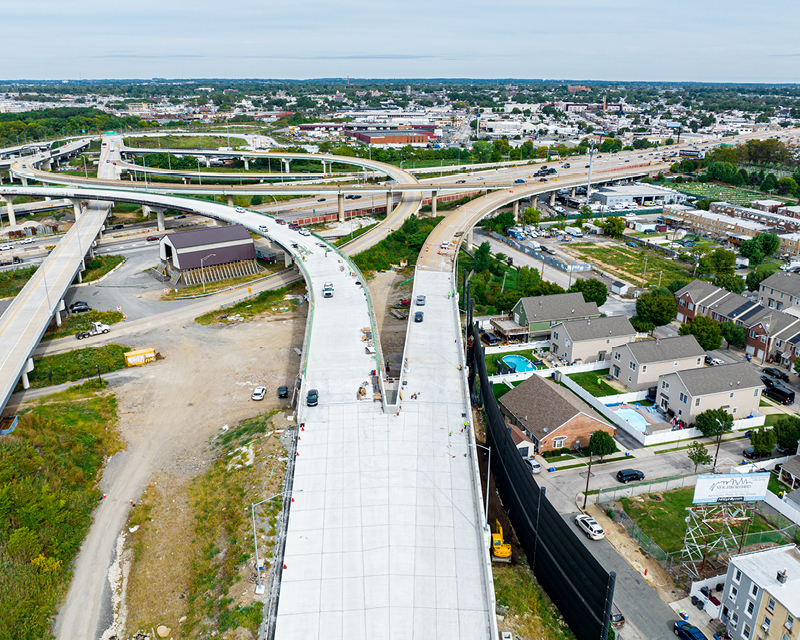
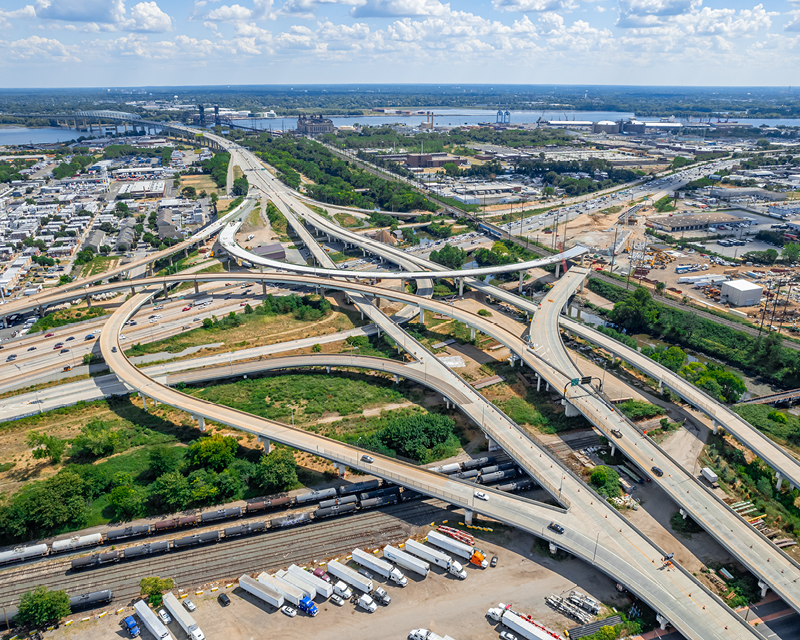
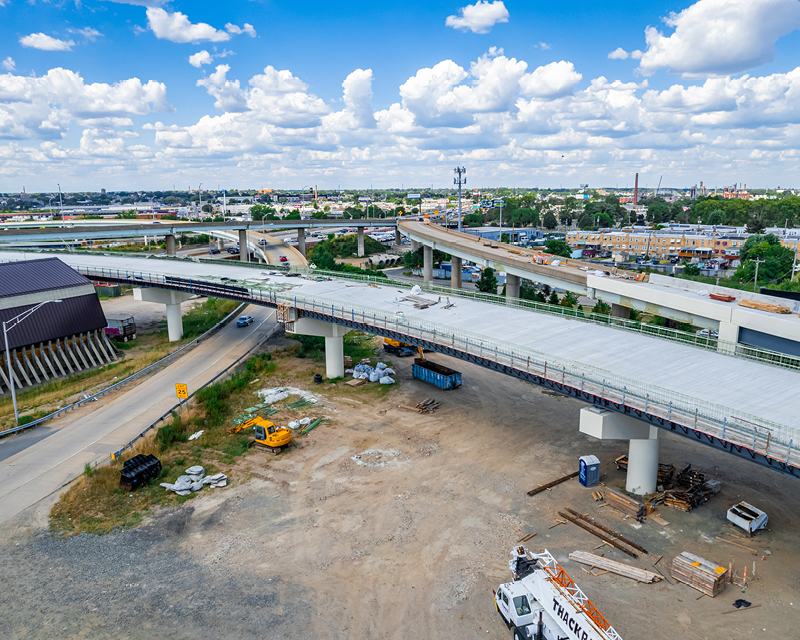
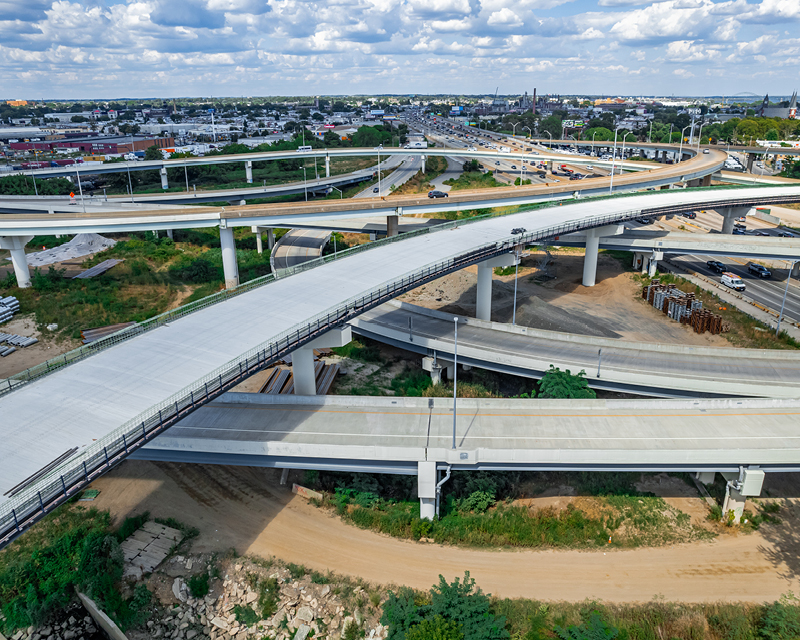
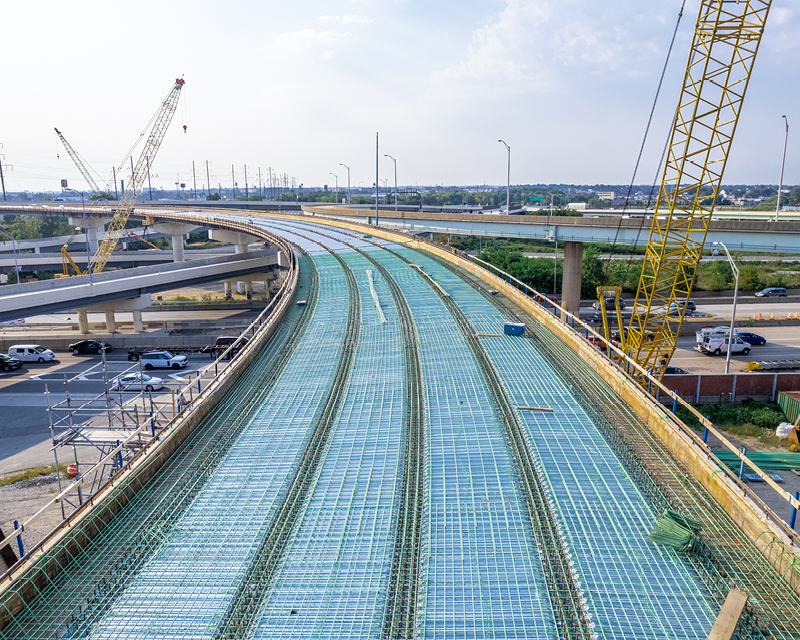
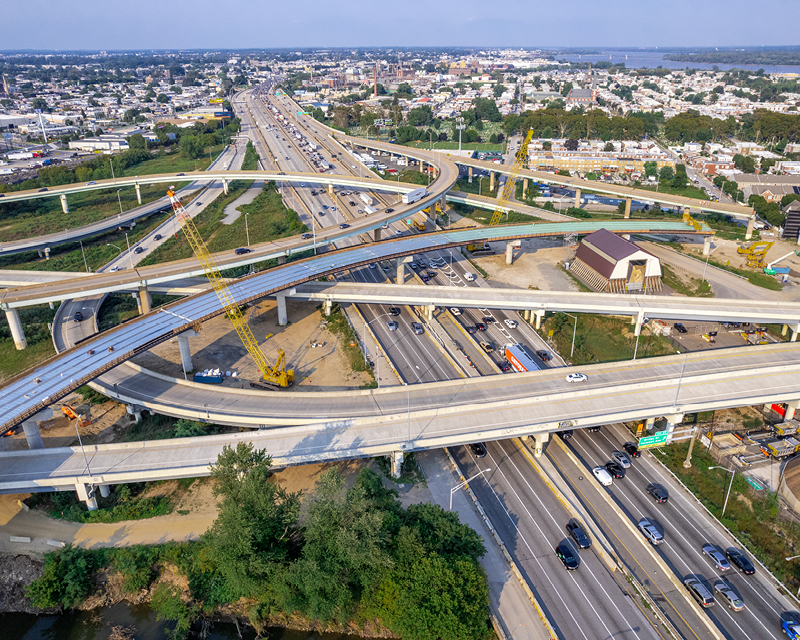
The Betsy Ross Interchange is a critical node in the extensive reconstruction and revitalization of I‑95 in Pennsylvania – one of the largest highway improvement programs in the northeastern United States. Located in Philadelphia, the interchange forms a complex, multitiered network of ramps, bridges and connector roadways that link regional travelers to the interstate. To modernize this essential infrastructure, the Pennsylvania Department of Transportation (PennDOT) advanced an $880‑million, multi-stage reconfiguration and rehabilitation program, selecting STV to deliver a broad suite of environmental, engineering and construction-related services.
What challenges is STV addressing?
The interchange’s aging structures, high traffic volumes and constrained urban environment required a holistic approach to safety, capacity and long-term reliability. Complex site conditions – including geometry, utilities and existing traffic operations – also created opportunities for innovation in structural design. PennDOT sought solutions that would improve mobility while enabling a phased, multi‑year delivery strategy with minimal disruptions to travelers.
What solutions is STV delivering?
PennDOT and STV spearheaded a pilot initiative that produced the nation’s first steel curved tubular flange girder, addressing the site’s unique geometric challenges. STV provided preliminary engineering across each construction phase, including field surveys; right-of-way investigations; drainage and erosion control plans; hydrologic and hydraulic analyses; pavement, lighting and signage design; geotechnical investigations; utility coordination; public involvement programs; and preparation of a Categorical Exclusion Evaluation. The team also supported construction stages to facilitate safe, efficient delivery.
How will this project benefit the region?
The reimagined Betsy Ross Interchange strengthens mobility along one of the nation’s busiest corridors, improving safety, reducing congestion, and enhancing long‑term infrastructure resilience. By delivering modern structural solutions and supporting PennDOT’s broader I‑95 revitalization efforts, the project benefits commuters, freight movement, and the surrounding Philadelphia communities.
Key stats and accolades
- First steel curved tubular flange girder in the United States
- 50‑foot highest precast T‑Wall built in Pennsylvania
- 160,000 vehicles move through the interchange daily
- Part of PennDOT’s $880‑million I‑95 corridor improvements