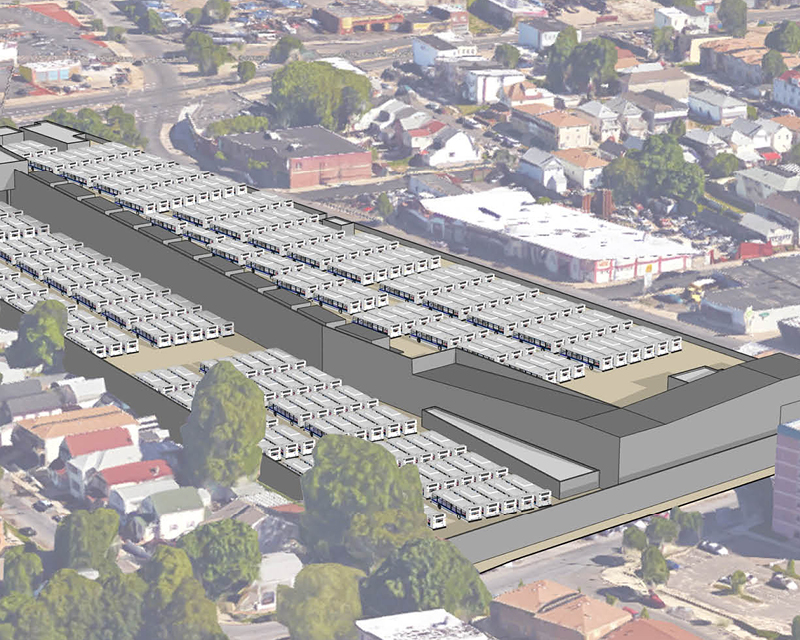
As a crucial operations hub for several Queens bus routes, the Jamaica Bus Depot plays a central role in New York City Transit’s (NYC Transit) ability to deliver reliable service to the community. The facility currently stores, maintains and services nearly 200 buses – yet its limited footprint forces approximately 50 buses to park on surrounding neighborhood streets. To support NYC Transit’s major reconstruction and expansion effort, STV prepared the environmental documentation needed to evaluate future capacity, operational needs and infrastructure modernization for this essential facility.
What challenges did STV address?
NYC Transit required a path forward to expand and modernize the depot while minimizing impacts on surrounding residents and businesses. The project needed to address on‑street bus storage, support a growing and evolving fleet and evaluate potential impacts on traffic, air quality, noise and local land use. A comprehensive environmental review was essential to determine the best alternative for accommodating up to 300 buses, including articulated and electric vehicles, while meeting future service demands in Queens.
What solutions did STV deliver?
STV prepared a full Environmental Impact Statement (EIS) evaluating three candidate alternatives and identifying measures to mitigate potential environmental impacts. The team developed a methodology to guide NYC Transit’s design selection and supported the agency through air permit documentation and environmental analyses. STV is now serving as lead designer for the new depot and parking lot as part of a design‑build team led by Skanska.
How does this project benefit the region?
The project will significantly reduce neighborhood congestion by eliminating on‑street bus parking, strengthen transit reliability and support NYC Transit’s transition to a modern, sustainable bus fleet. The expanded depot creates capacity for future service needs, including electric bus charging infrastructure, improving air quality and mobility for communities across Queens.
Key stats and accolades
- EIS evaluating three build alternatives
- Future capacity for up to 300 buses, including articulated and electric
- Addresses traffic, air quality and noise considerations
- Supports modern fleet deployment and future Queens service growth