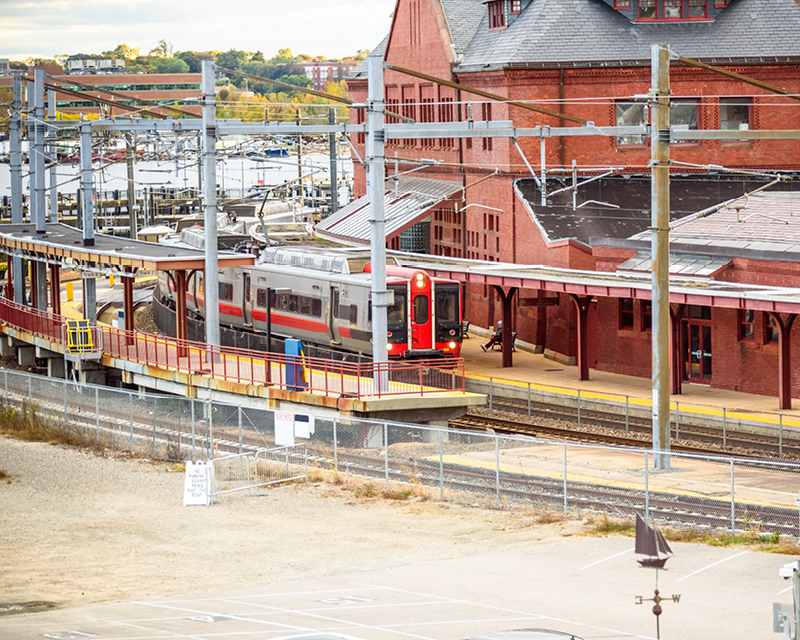
Metro‑North Railroad’s New Haven Line is one of the busiest commuter rail corridors in the United States. Much of its communications network relies on aging copper circuits that are no longer supported by service providers and cannot meet the demands of modern rail operations. To ensure long‑term reliability, the Connecticut Department of Transportation (CTDOT) launched the New Haven Signals and Communications Program – a four‑phase initiative to replace copper circuits with new fiber‑optic infrastructure at all 22 stations. STV supported this effort through funding and grants advisory services to secure critical federal investment.
What challenges did STV address?
Replacing outdated communications circuits across a high‑traffic, multi‑agency commuter rail corridor required substantial capital support. The program needed dedicated funding to complete its final phase, which will enable modern signaling, train control, passenger information display systems and security enhancements. Identifying and securing competitive federal grants was vital to advancing the work.
What solutions did STV deliver?
STV’s funding and grant experts partnered with CTDOT to secure a $15.4 million Federal Railroad Administration Northeast Corridor Federal‑State Partnership grant. This investment will help deliver the final phase of the fiber‑optic upgrade program and support the modernization of data networks essential for safe, efficient rail operations. The grant strengthens CTDOT’s ability to implement systemwide communications improvements and meet current and future passenger service needs.
How does this project benefit the community?
Upgrading data and signaling infrastructure improves reliability, enhances operational safety and supports more accurate passenger information systems. Riders benefit from fewer service disruptions, better communication and improved system resiliency along one of the nation’s busiest commuter rail lines.
Key stats and accolades
- 22 stations receiving new fiber‑optic communications
- $15.4 million FRA Federal‑State Partnership grant secured
- Supports signaling, train control and passenger information systems
- Modernizes infrastructure on a nationally significant commuter corridor