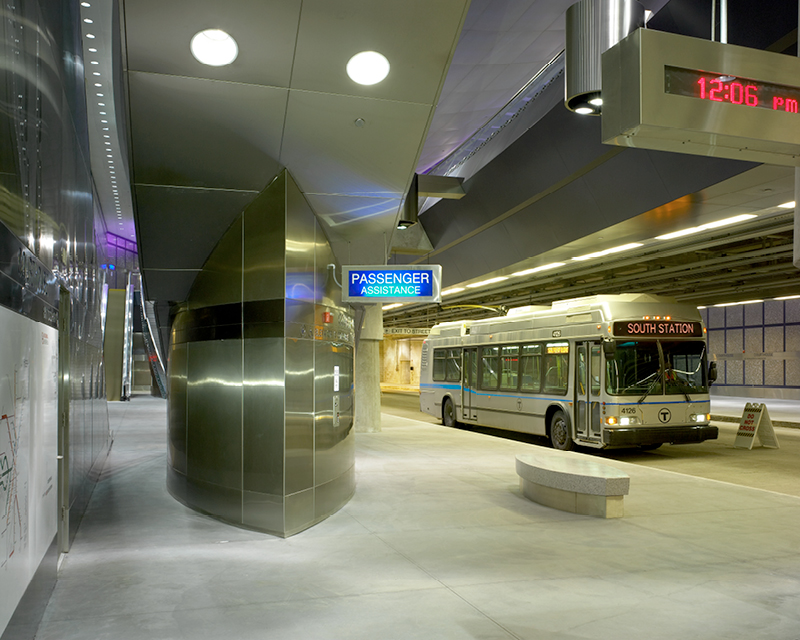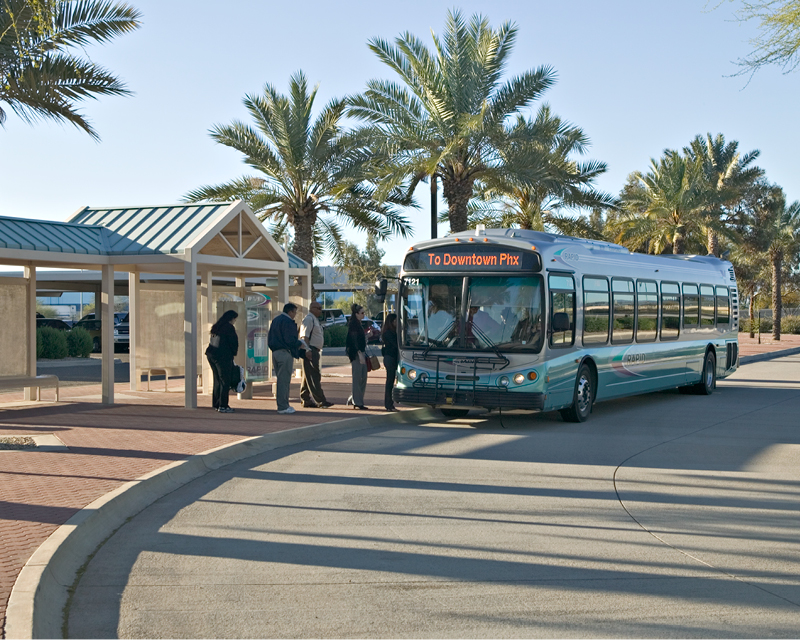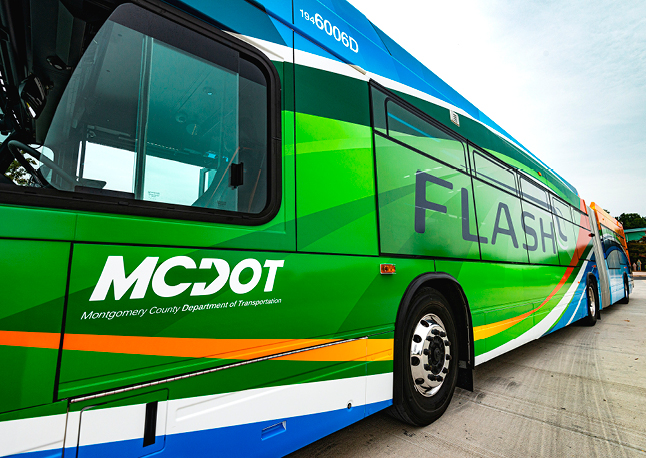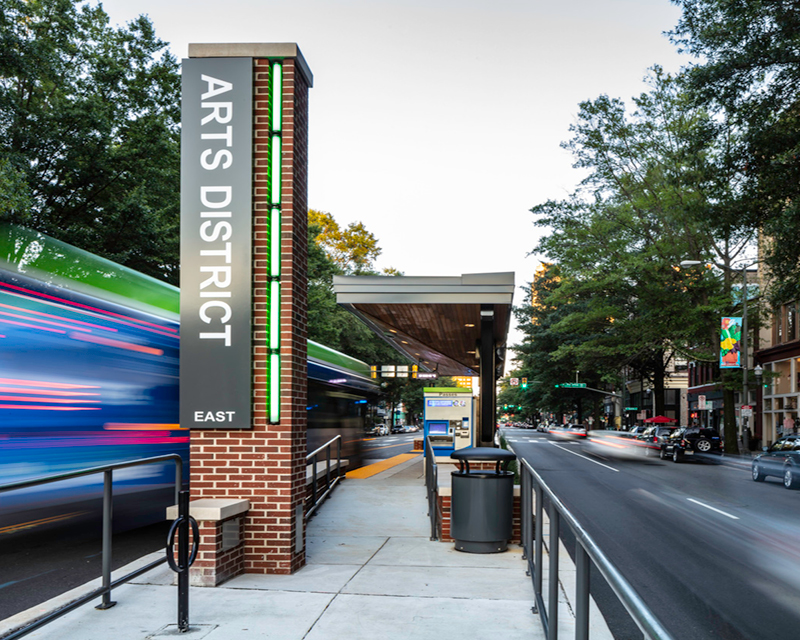
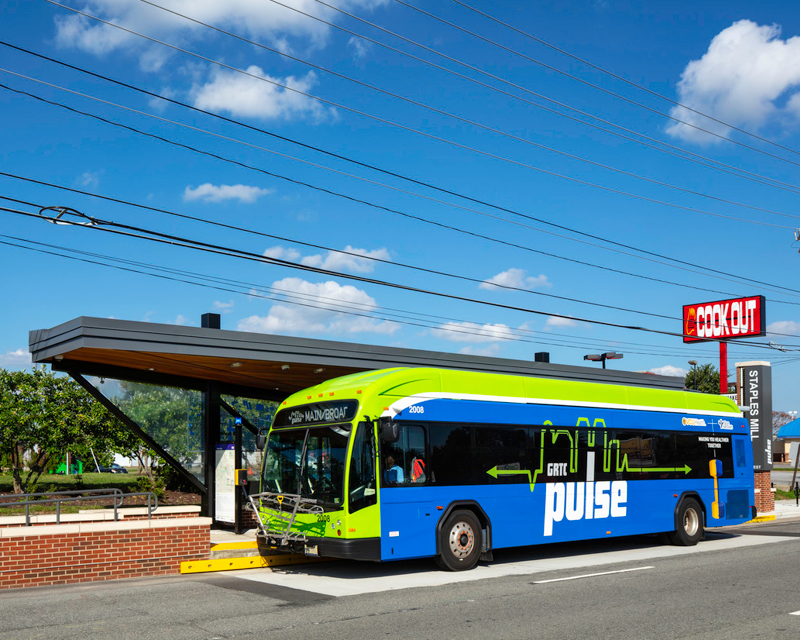
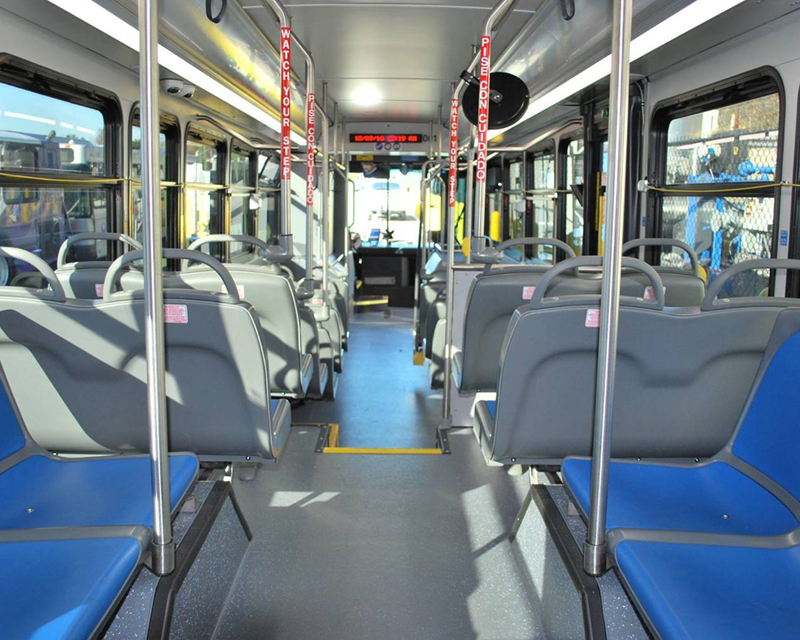
As federal investment in bus rapid transit (BRT) grows nationwide, Richmond’s Pulse BRT system has emerged as a national model for successful implementation. Since launching service, the Pulse exceeded expectations with more than 30,000 riders in its first week, demonstrating strong demand for fast, reliable transit along one of the region’s most heavily traveled corridors. The 7.6-mile, high-capacity BRT line connects some of the most populated and transit-dependent neighborhoods in Virginia’s capital city with key commercial areas, schools and medical centers.
What challenges did STV address?
Richmond needed a transit solution that could reduce traffic congestion, improve mobility and better link communities as the city continued to grow. The corridor required dedicated space for buses, new stations and safe, accessible pedestrian connections – all within a constrained roadway network. Developing an integrated system that supported reliable service while minimizing disruption to existing traffic was a core challenge of the project.
What solutions did STV deliver?
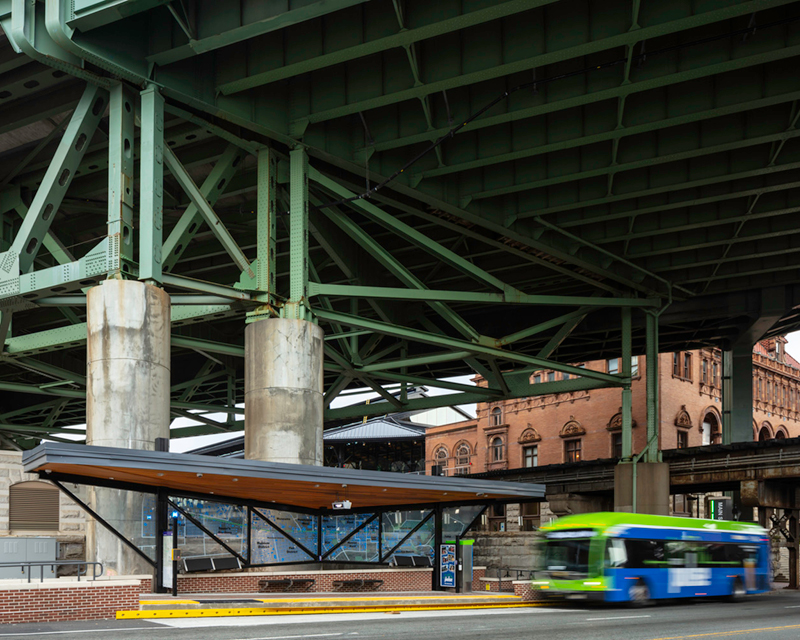
Under a design‑build contract led by the Lane Construction Corporation, STV served as lead designer for the Pulse system. The firm provided roadway design for nearly 2.3 miles of dedicated bus lanes along the 7.6‑mile corridor and delivered full architectural and engineering services for the system’s stations and platforms – including five median stations and nine curbside stations among the 26 total platforms. STV’s solutions improved transit speed, reliability and user experience through streamlined corridor design and thoughtfully designed station infrastructure.
How does this project benefit the region?
The Pulse BRT system enhances mobility, reduces travel times and offers a safe, efficient alternative to driving. By encouraging transit use and supporting economic development along the corridor, the project strengthens access to jobs, education and healthcare across Richmond. Its success has positioned the Pulse as a model for BRT expansion throughout the Mid-Atlantic region.
Key stats and accolades
• 7.6‑mile BRT corridor
• 2.3 miles of dedicated bus lanes
• 26 stations and platforms
• DBIA Award of Merit
• ACEC Virginia and National Engineering Excellence Awards