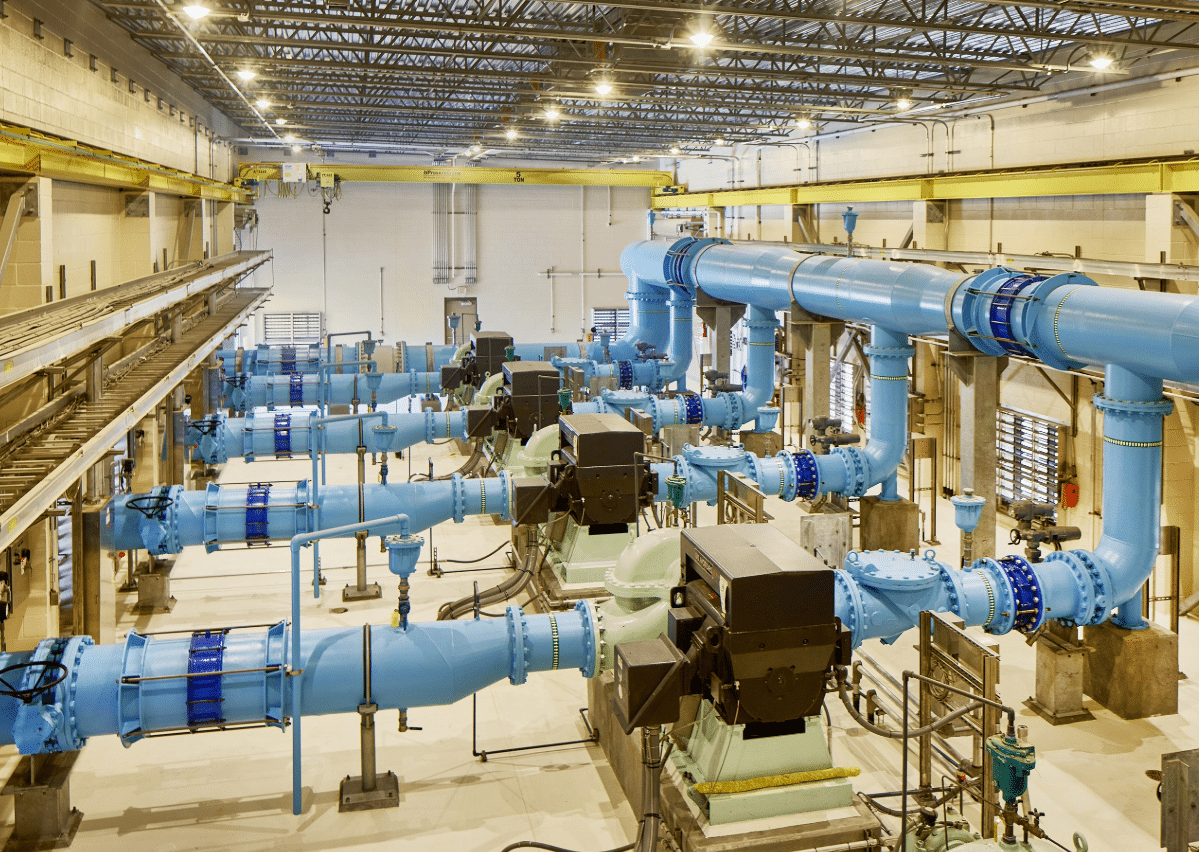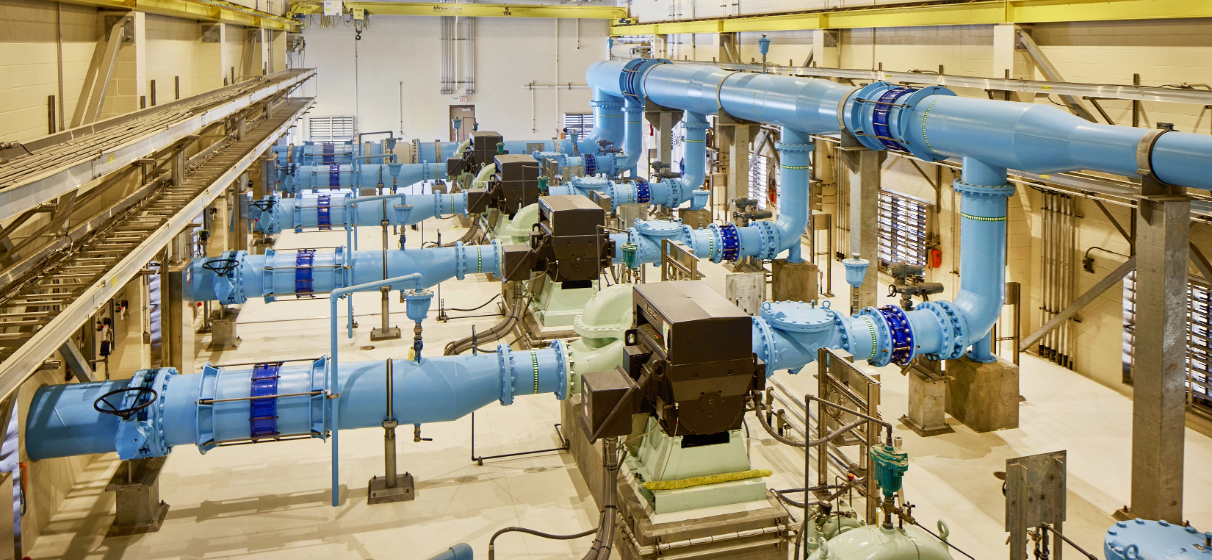
Delivering reliable potable water to a growing metropolitan region requires infrastructure that can adapt to new demands, new pressures and new engineering realities.
In northwest Dallas, the Walnut Hill Pump Station had long been a vital link in the city’s distribution system – but its aging facilities, constrained site and unusual hydraulic conditions presented challenges that conventional pump station replacement approaches couldn’t solve.
As engineer‑of‑record on the progressive design‑build program, STV addressed these technical hurdles head‑on. The team needed to design a modern, high‑capacity pumping facility within a tight footprint, maintain uninterrupted water service throughout construction, and resolve complex hydraulic behaviors – namely, surge pressures occurring on the suction side of the system, an atypical and potentially damaging condition. At the same time, STV had to help Dallas Water Utilities (DWU) meet strict regulatory requirements despite the site’s inability to accommodate a ground storage tank, a feature normally mandated by the Texas Commission on Environmental Quality (TCEQ).
“From day one, we knew this wasn’t a typical replacement project,” said Swaroop Puchallapali, vice president and national water quality director for STV’s water team. “The physical constraints, the hydraulics and the regulatory environment meant we had to rethink nearly every aspect of the design. Our role was to bring clarity, data and creativity to a problem that didn’t have an off‑the‑shelf solution.”
Through innovative modeling, close client collaboration and a rigorous approach to system reliability, STV’s design transformed the Walnut Hill site into a resilient, efficient pumping facility that strengthens the surrounding community and sets a benchmark for water system upgrades across Texas.
A First‑of‑Its‑Kind Variance and a Complex Hydraulics Challenge
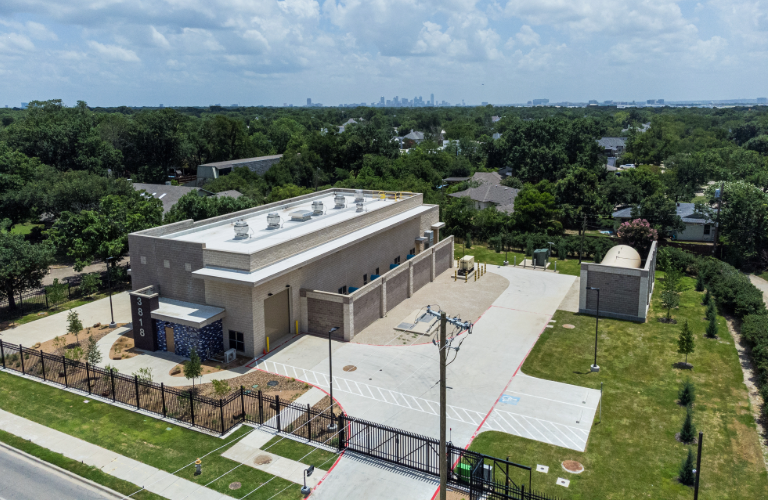
One of the project’s most significant engineering hurdles centered on the site itself. Typical pump station design in Texas requires a ground storage tank on the suction side to provide hydraulic buffering between pressure zones – an approach mandated by TCEQ. But at Walnut Hill, the footprint was too constrained to accommodate such a structure.
To address this, STV partnered closely with DWU to request a variance from TCEQ, supported by several layers of technical analysis. The team installed temporary pressure sensors alongside DWU’s permanent instrumentation and developed comprehensive hydraulic models to demonstrate that the system could operate safely without the buffer tank.
“Eliminating a ground storage tank isn’t something you can do lightly,” Puchallapali said. “We needed to show, with real system data and robust simulations, that the new pumping strategy wouldn’t create negative pressure events. It required precision modeling and absolute confidence in the results.”
TCEQ required an additional year of operational pressure data after startup to validate long‑term performance – something STV helped DWU plan and prepare for.
Managing Surge Pressures in an Unusual Operating Environment
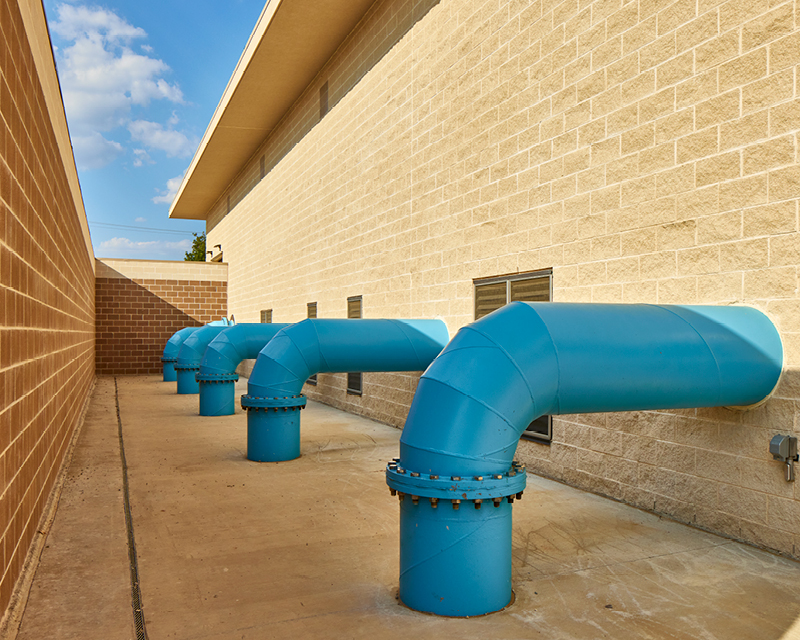
The hydraulic conditions at Walnut Hill were far from typical. Instead of surge occurring on the discharge side of the pump station, where it is usually encountered, DWU had historically experienced surge‑related pipe failures on the suction side. Multiple upstream pumping facilities changed the hydraulic profile, creating an atypical surge environment that required specialized analysis.
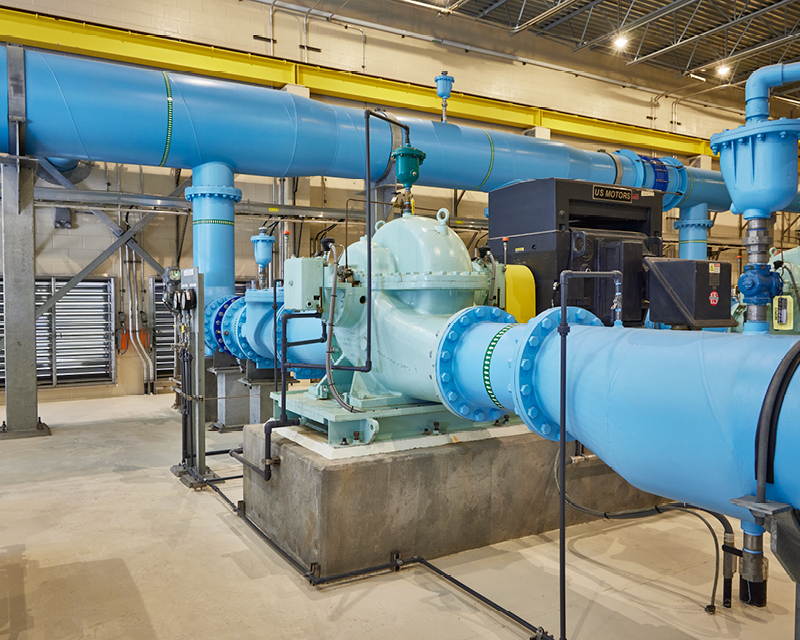
STV performed a detailed surge analysis and collaborated with Clemson Engineering Hydraulics to conduct physical hydraulic modeling, a hallmark of STV’s approach to critical pump station design. These models allowed engineers to refine valve configurations, pressure mitigation devices and station operating strategies with exceptional accuracy.
“Surge on the suction side is rare and potentially severe. Physical modeling was essential to eliminate guesswork,” Puchallapali said. “Every test allowed us to fine‑tune the design so DWU could have complete confidence in the system’s behavior.”
Maintaining Water Service Throughout Construction
Another major challenge was that the existing pump station needed to remain fully operational while the new one was constructed just feet away. With no possibility of disrupting water service to the surrounding neighborhoods, STV developed a meticulous construction sequencing plan that balanced safety, schedule, and operational continuity.
Short outages were limited and carefully coordinated, and there were no extended service interruptions throughout the project.
“Keeping a critical facility running while building its replacement is like open‑heart surgery on a living system,” Puchallapali said. “Every operational shift was planned and monitored in real time. The community never felt the transition. That was our goal.”
A More Resilient, Efficient, and Community‑Friendly Facility
The upgraded Walnut Hill Pump Station delivers 44 million gallons per day with performance characteristics tailored to DWU’s complex hydraulic environment.
Beyond technical performance, the new facility strengthens the community through:
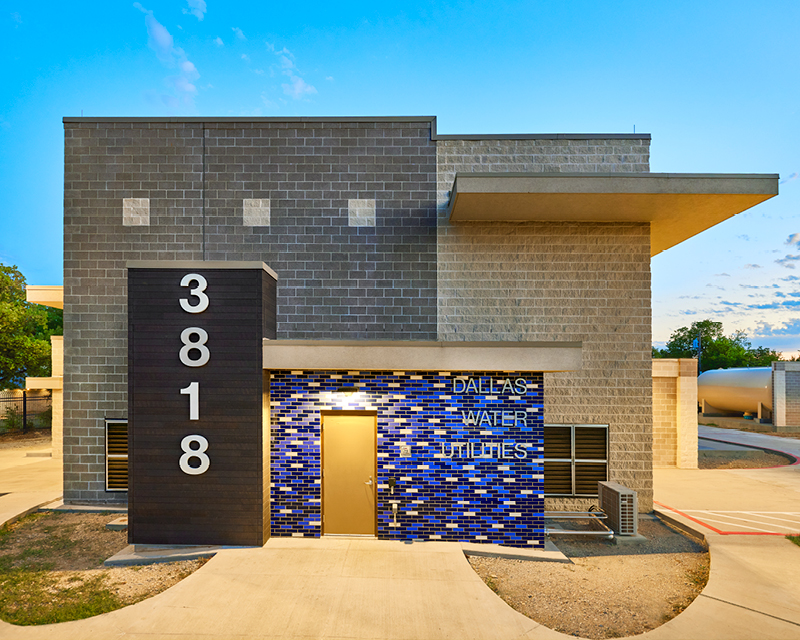
- Noise‑reducing architectural features, including acoustical deck systems and foam‑injected masonry walls
- Energy‑efficient, locally sourced materials aligned with Dallas’ green building standards
- Durable, low‑maintenance finishes that reduce long‑term operational costs
- Improved aesthetics and increased green space, supporting the area’s revitalization efforts
“We wanted the community to see this facility as a good neighbor,” Puchallapali said. “That meant reducing noise, enhancing its aesthetics and using sustainable materials. It’s a piece of infrastructure, but it’s also part of the neighborhood’s identity.”