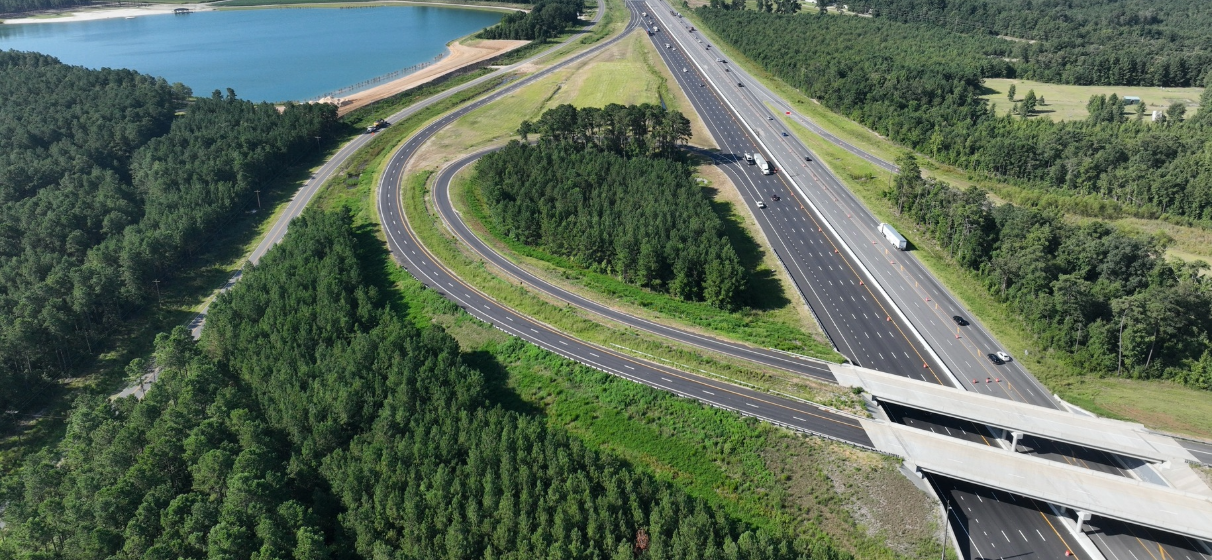
For southeastern North Carolina, the completion of the Fayetteville Outer Loop marks one of the region’s most significant transportation milestones in recent history. Envisioned decades ago and delivered through sustained investment by the North Carolina Department of Transportation (NCDOT) and its partners, the fully open loop reshapes how people, goods and services move around Fayetteville – and how the broader Cape Fear region connects to the state and nation.
The Outer Loop provides a continuous, high-capacity bypass that enhances access to I-95, improves safety and reliability for daily commuters and supports economic vitality tied to logistics, manufacturing and military readiness. With all segments now complete, the loop delivers long-term congestion relief while creating new opportunities for growth across Cumberland and Robeson counties.
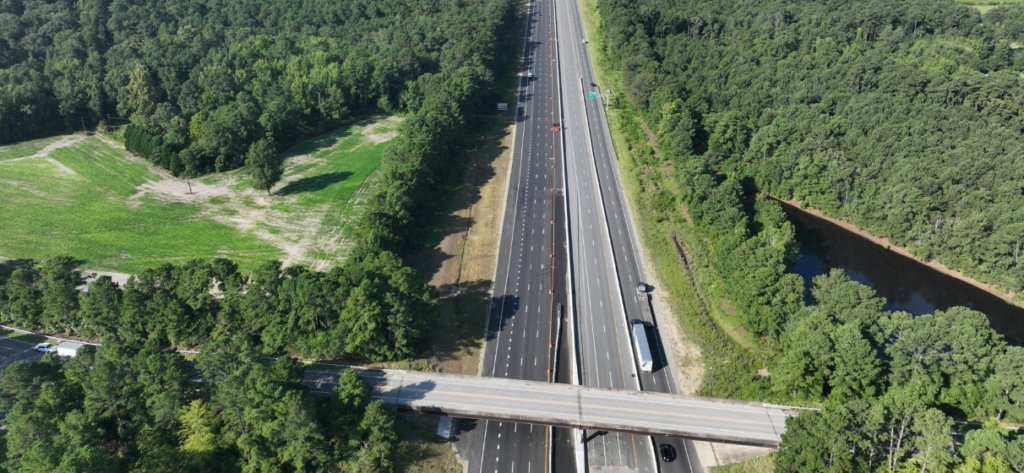
STV is proud of its role in advancing this transformative program. Prior to this most recent milestone, STV served as the lead designer for one of the most technically complex parts of the corridor: the I-295 Outer Loop from I-95 in Robeson County to south of SR 1003 (Camden Road) in Cumberland County. This design-build project, led by the Balfour Beatty/Branch joint venture, required a disciplined, solutions-focused approach to deliver critical infrastructure efficiently, safely and with lasting value.
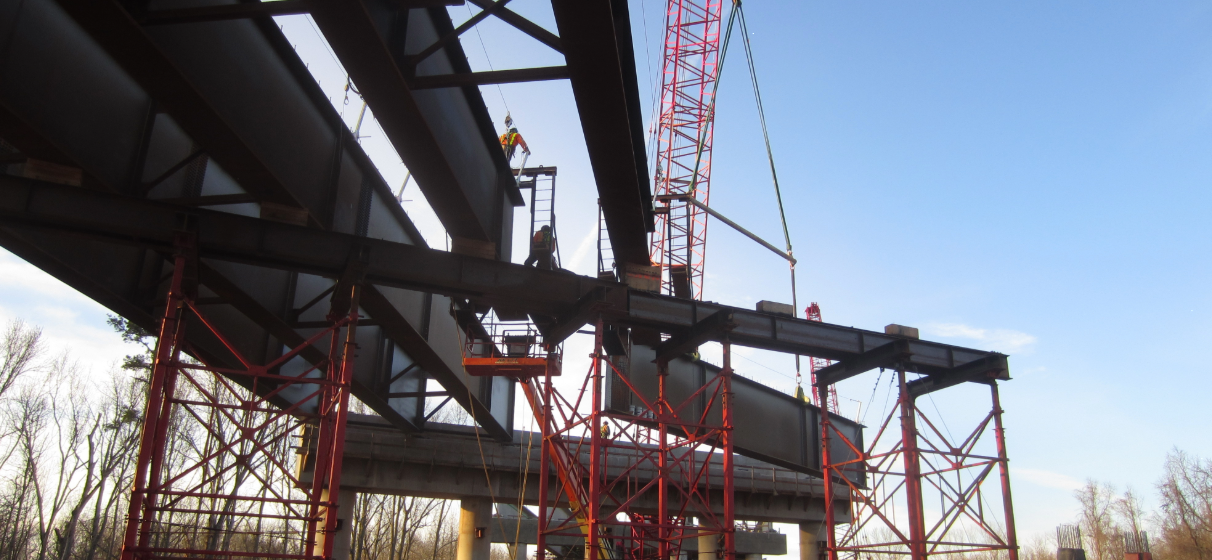
The approximately six-mile segment included a new interstate roadway, major bridges, drainage systems and intelligent transportation infrastructure, all built next to one of North Carolina’s busiest freight corridors. From the outset, the project required careful coordination with ongoing traffic on I-95, nearby developments, environmental resources and future phases of the Outer Loop – conditions that called for both technical precision and flexible delivery.
STV’s responsibilities encompassed comprehensive roadway and structure design, environmental permitting support, railroad coordination, right-of-way acquisition, geotechnical and ITS design. Working within a design-build framework, we collaborated closely with the contractor and NCDOT to identify opportunities for innovation that improved constructability and reduced overall project risk.
Alternative technical concepts played a key role in achieving these results. By optimizing bridge layouts and deck sizes, refining drainage methods and reducing borrow requirements, the team lowered material use and environmental impacts without sacrificing performance or safety. One of the project’s most significant innovations – the use of an on-site conveyor system to move embankment material – greatly cut truck traffic along I-95, enhancing work zone safety and reducing disruptions for travelers.
Maintaining mobility during construction was a constant priority. The project required extensive traffic control planning and real-time coordination to safely manage construction activities near active interstate traffic. Through careful phasing, clear communication and close coordination with nearby projects, the team helped keep traffic moving while completing a vital section of new interstate infrastructure.
The project also evolved to address broader corridor needs. When funding became available for future widening of I-95, the design-build team worked with NCDOT to integrate overlapping elements into the existing contract through an open-book, collaborative supplemental agreement. Designers and constructors jointly developed technical requirements, specifications and cost estimates, allowing the additional scope to be incorporated into the newly constructed infrastructure without rework.
This level of early collaboration and flexibility – central to the design-build approach – reduced overall costs, shortened the duration of construction activity along a critical section of I-95 and limited repeated disruptions to the traveling public. It also proved essential in advancing a project of this scale within a larger, multidecade transportation program.
The completion of the Fayetteville Outer Loop stands as a lasting example of what sustained investment and disciplined engineering can achieve. For STV, our work on this project reflects a broader commitment to delivering complex infrastructure that lasts for decades – projects that enhance regional connections, support economic development and improve the everyday experience of the communities we serve. As traffic moves around the full loop, the advantages of careful planning and technical skill will continue to influence the region’s mobility for years to come.