For almost 40 years, Downtown Evening Soup Kitchen (DESK) has provided meals, support services and pathways toward stability for individuals experiencing homelessness and poverty in New Haven. But as the organization’s programs expanded, so did the need for a permanent home that could better support its mission and improve access to critical services.
The vision was ambitious. DESK’s new home at 266 State Street would bring together food services, medical support, case management, shower and laundry facilities, and outreach programs under one roof. Centralizing those services would make it easier for guests to access support while giving DESK a stronger operational foundation for the future. The facility was designed not only to house services in one location, but also to create a more sustainable operating model that would support DESK’s mission and growth for years to come.
Delivering that vision, however, required careful coordination among project partners, funding agencies and community stakeholders.
To help make that possible, STV’s program management and construction management (PM/CM) team served as DESK’s owner-side delivery partner, providing owner’s project management (OPM) services from preconstruction through occupancy. The firm’s responsibilities included project accounting, budgeting, grant administration and day-to-day project coordination, helping guide the transformation of the three-story facility from concept through completion.
“From the beginning, the project was focused on improving how people access services,” said Geralyn Hoerauf, senior project manager at STV. “Bringing those programs together in one location creates a more welcoming and coordinated experience for guests while helping DESK operate more effectively.”
Managing Alignment and Accountability Behind a Mission-Driven Project
The completed facility provides a seamless experience for visitors, but delivering it required balancing a range of operational, financial and stakeholder priorities.
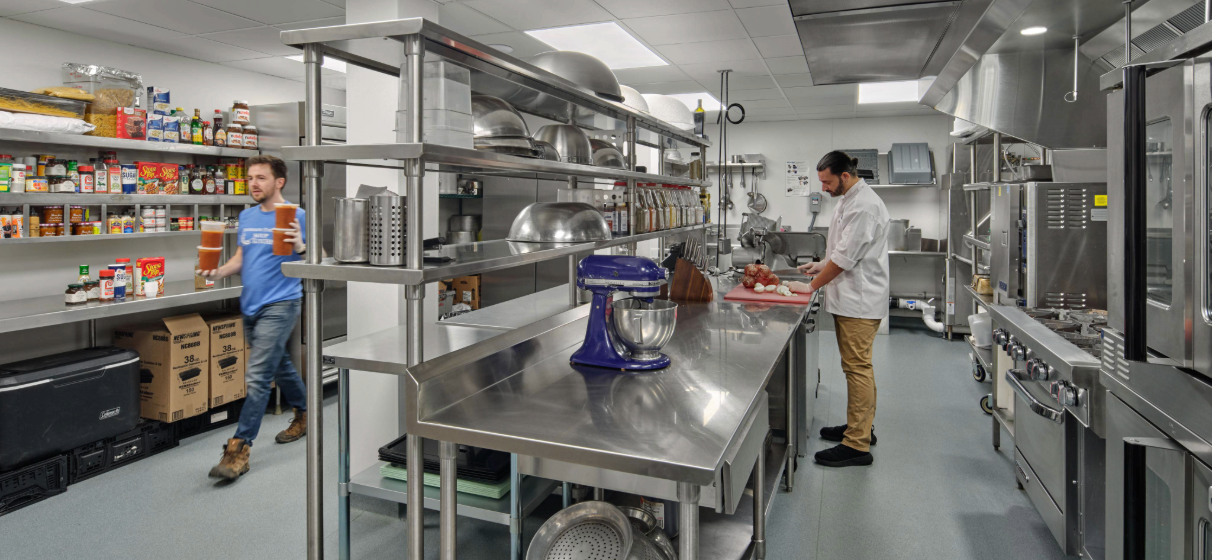
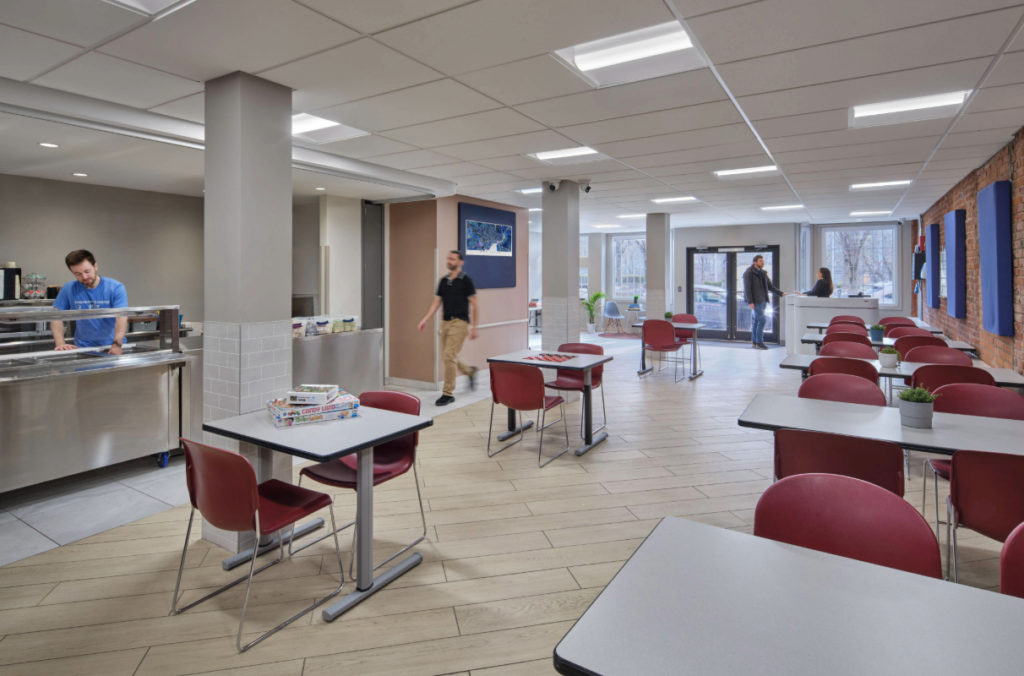
The project brought together multiple service functions within a single building, including a commercial kitchen, medical and healthcare-related spaces, case management offices, shower and laundry facilities, gathering areas and administrative support spaces. The team also had to navigate historic preservation considerations, healthcare requirements and the needs of a vulnerable population that would ultimately rely on the facility every day.
At the same time, the project’s funding structure added additional administrative and compliance requirements. The approximately $4.2 million effort relied on a combination of federal, state, local and private funding sources, each carrying its own reporting obligations, reimbursement requirements and compliance standards.
For STV, that meant helping DESK manage both the physical delivery of the project and the administrative processes that supported it. By maintaining visibility into project activities, funding requirements and reporting obligations, the team helped DESK make informed decisions while meeting accountability expectations across multiple funding partners.
“Our responsibility was to help DESK navigate every aspect of the project, from construction to funding accountability,” Hoerauf said. “When you have multiple funding sources, nonprofit stakeholders and a mission-driven organization, maintaining alignment requires constant communication and attention to detail.”
Throughout the project, STV coordinated with DESK, architects, contractors, funding partners and community stakeholders to keep priorities aligned while ensuring the organization’s goals remained at the center of decision-making.
Owner-Side Leadership as a Delivery Advantage
Delivering the facility required the same level of attention to funding, reporting and stakeholder management as it did to construction and renovation activities.
As DESK’s owner’s project manager, STV helped manage budgeting, project accounting, grant administration, reimbursement documentation, payment reviews and project reporting throughout the project’s execution. The team also supported stakeholder coordination, construction oversight activities, change management, closeout efforts and occupancy planning.
This owner-side management structure proved particularly valuable given the project’s diverse funding sources and broad stakeholder group. Maintaining visibility into both project delivery and financial requirements helped DESK navigate grant compliance obligations while keeping the project aligned with schedule, budget and operational goals. It also provided the organization with greater clarity, transparency and confidence throughout the decision-making process, helping leadership balance project priorities with long-term operational needs.
“Successful projects are built on strong partnerships,” Hoerauf said. “Our role was to bring together the owner, project team, funding partners and community stakeholders around a shared vision and help keep everyone moving toward the same outcome.”
That collaborative approach helped the project team stay focused on DESK’s mission while addressing the challenges associated with nonprofit, grant-funded development projects.
Building Better Communities Through Infrastructure
Today, DESK’s Drop-in and Resource Center serves as a centralized hub where guests can access meals and other basic needs, healthcare services, counseling, case management, hygiene facilities and other support programs in one location. By bringing these services together, the facility improves accessibility, streamlines service and strengthens DESK’s ability to support those in need.
For DESK, the project provides infrastructure that supports long-term operational growth. For guests, it creates a more coordinated and dignified experience centered on access, care and support, serving as a front door to the network of services of unhoused individuals across Greater New Haven
The success of that effort was recognized by the Connecticut Building Congress (CBC), which awarded the project first place in the Small Civic category and honored the team as the 2026 Project Team of the Year. The project also received a Community Impact Award from AIA’s Connecticut Chapter. These recognitions reflect not only the technical execution of the work, but also the collaborative approach that brought together DESK, project partners, funding agencies and community stakeholders around a shared mission.
“Projects like this have a direct impact on the communities they serve,” Hoerauf said. “When clients can provide essential services more effectively and create spaces that better support people’s needs, the benefits extend throughout the community. We’re proud to have partnered with DESK and the project team to help bring that vision to reality.”