During Mental Health Awareness Month, conversations often center on care delivery – programs, providers and services that support individuals facing mental health challenges. Increasingly, however, these conversations are expanding to include the everyday environments people move through and the role those spaces play in shaping daily experience, routine and connection.
For landscape architects in particular, this shift raises an important question: what role can outdoor environments play in supporting mental wellness – especially in dense urban communities where access to nature is limited? At STV, that question shapes how we think about public space and campus planning, as well as the landscapes that link buildings and the people who use them. It also reflects a growing recognition that design decisions made outside the walls of buildings can meaningfully influence how people feel, move and interact each day.
In many cities, green space is limited or disconnected from the communities that need it most. Yet time spent in nature has long been linked to mental health benefits, from stress reduction to healthier daily routines and opportunities for connection. The challenge lies in translating those benefits into outdoor spaces that feel accessible and welcoming, and that naturally integrate into daily movement rather than feeling like destinations set apart from everyday life.
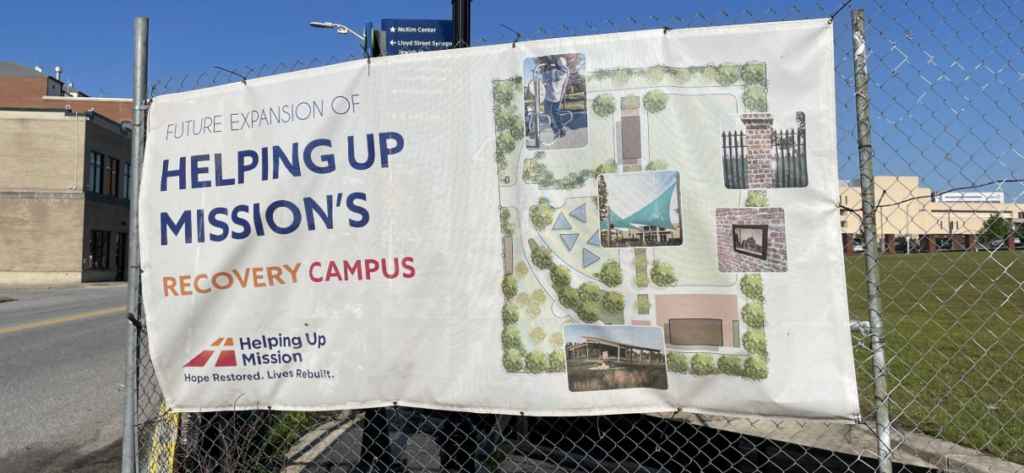
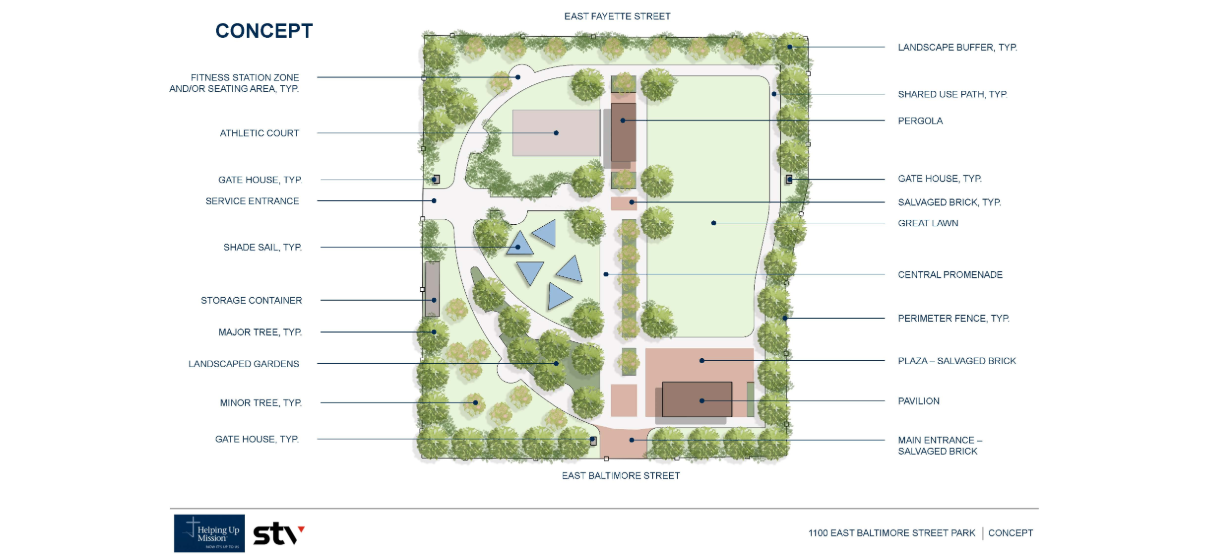
This perspective helped inform STV’s work on Recovery Park, a 1.77-acre green space now under construction in East Baltimore’s Jonestown neighborhood.
Developed in collaboration with Helping Up Mission (HUM), a nonprofit organization, Recovery Park was conceived as a vital link between HUM’s Men’s Center and its Center for Women & Children. From the beginning, the park was envisioned as a space that connects HUM’s campus with the surrounding neighborhood – symbolizing both new beginnings for individuals in recovery and a renewed future for a long‑abandoned site. Although not a traditional, open, city-owned park, the design allows for shared use through planned programming, partnerships and community events, including collaboration with the nearby Ronald McDonald House Charities of Maryland and the Jewish Museum.
From a landscape architecture standpoint, this required careful consideration of how space, movement, planting and scale could actively support a range of day‑to‑day experiences with mental well-being at the forefront. This meant shaping environments that offer both refuge and gentle stimulation – places for quiet restoration as well as spaces that encourage healthy social interaction and intuitive movement between buildings. Rather than prescribing how people should use the space, the goal was to create a setting that supports choice, agency and comfort across different moments of the day. As with many projects grounded in community well‑being, the design took shape through engagement rather than assumption.
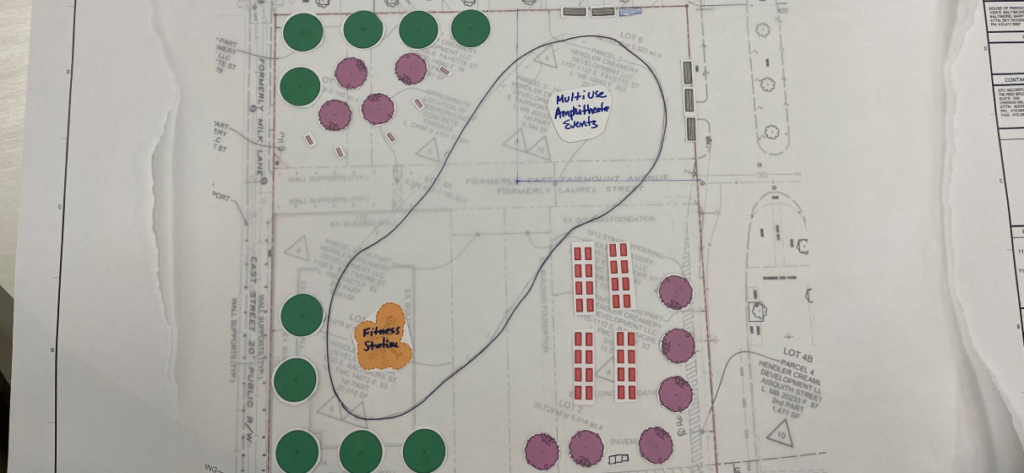
Early in the planning process, our team collaborated closely with HUM leadership and key stakeholders through a series of discussions and design charrettes. These conversations helped root the park’s design in lived experience, offering insight into how outdoor space could support recovery programs, balance privacy with connection and feel safe and respectful to those who would use it daily. Listening first was critical to shaping a landscape that responds to human needs rather than applying preconceived solutions. That collaborative process also reinforced the importance of aligning physical design with programmatic goals and long-term stewardship.
For HUM, which supports individuals overcoming addiction and past trauma, access to outdoor space aligns with its holistic recovery approach. The design framework focuses on creating multiple outdoor spaces that support mental, emotional and physical well‑being through the integration of natural elements, sensory engagement and inclusive access.
Sensory experience, including smell, was intentionally incorporated through plantings such as hay‑scented ferns, summersweet shrubs and fragrant sumac, reinforcing the restorative qualities of being outdoors. This approach is complemented by accessible paths, landscaping, a great lawn, a pavilion and flexible areas for recreation and gatherings, allowing HUM’s programs and daily routines to extend outside and into nature. Together, these spaces support movement, reflection and informal interaction – important components of establishing healthier rhythms during recovery.
From a broader design perspective, the project reflects a growing understanding that mental wellness is influenced by the quality of the environments people occupy each day, including the outdoor spaces that connect buildings and neighborhoods. This awareness guided many site decisions, from emphasizing openness and accessibility to creating areas that can adapt as needs change. The intent was not only to create a welcoming space today, but to support evolving uses and relationships over time, while avoiding cues typically associated with institutional environments.
These spaces are not just aesthetically pleasing; they also function as restorative environments. The park’s landscaping delivers environmental value by supporting stormwater management through the reduction of impervious areas from prior development, improving air quality and helping moderate the urban heat island effect. Equally important is how the space is designed to foster connection. While primarily serving HUM’s community, Recovery Park can also host collaborative events and programs that engage nearby organizations and neighbors, reinforcing the role of shared experiences in supporting mental wellness and community resilience.
A single park cannot address the full complexity of mental health challenges. Still, access to thoughtfully designed outdoor space can help create everyday conditions that support well‑being within compact urban settings. Recovery Park offers one example of how designers, nonprofits and communities can work together to embed those opportunities into the fabric of the city. It underscores how landscapes, when shaped with intention and care, can complement broader systems that support health, dignity and connection.
As cities continue to grapple with mental health challenges and inequities in access to resources, the role of designers evolves. While planners, engineers and landscape architects are not care providers, we do shape the environments people experience daily indirectly supporting connection, restoration and a sense of belonging. In doing so, we contribute to healthier, more connected communities where the landscape itself becomes part of a broader system of care.