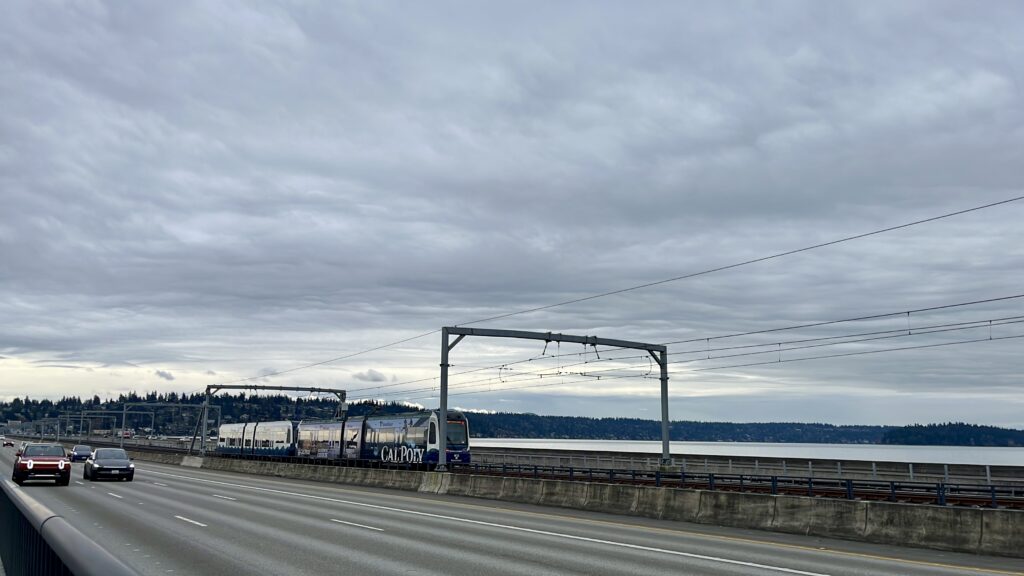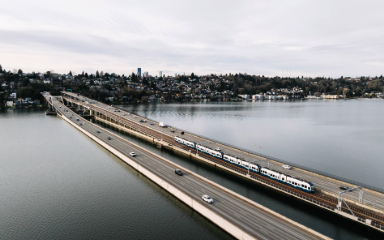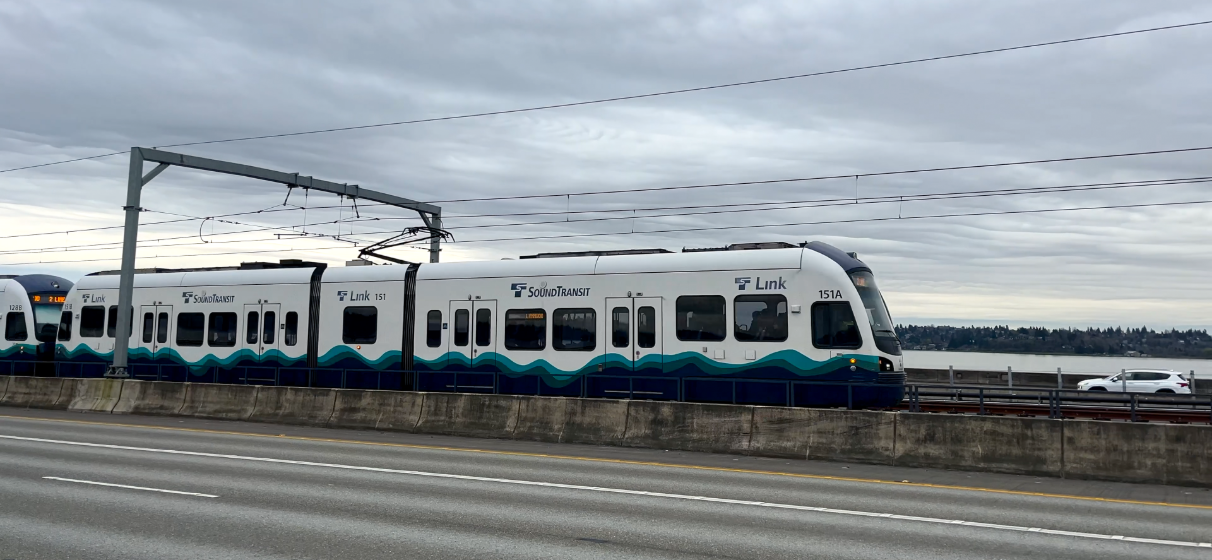
When the Sound Transit Crosslake Connection opened to riders last month, it made global transit history.
For the first time in the world, light‑rail trains traversed a floating bridge, connecting Seattle and the Eastside across Lake Washington – completing a long‑planned link between Sound Transit’s growing 1 Line and 2 Line networks while integrating complex rail systems in a wholly unique active rail environment.
The milestone is already reshaping how people move across the region: reducing travel times, expanding access to major job centers and unlocking the full potential of a transit service that will ultimately run from Tacoma to Everett and Seattle to Redmond. With the 2026 FIFA World Cup adding to already high regional travel demand in the city this summer, reliability was even more crucial.
What riders experience as a seamless trip, however, is the result of years of highly coordinated systems work – much of it focused on one essential question: how do you safely and reliably operate light rail across open water, in changing environmental conditions, as part of an already active regional system?
That question sat at the center of STV’s role on the project.
A Systems Challenge With No Precedent in Light Rail
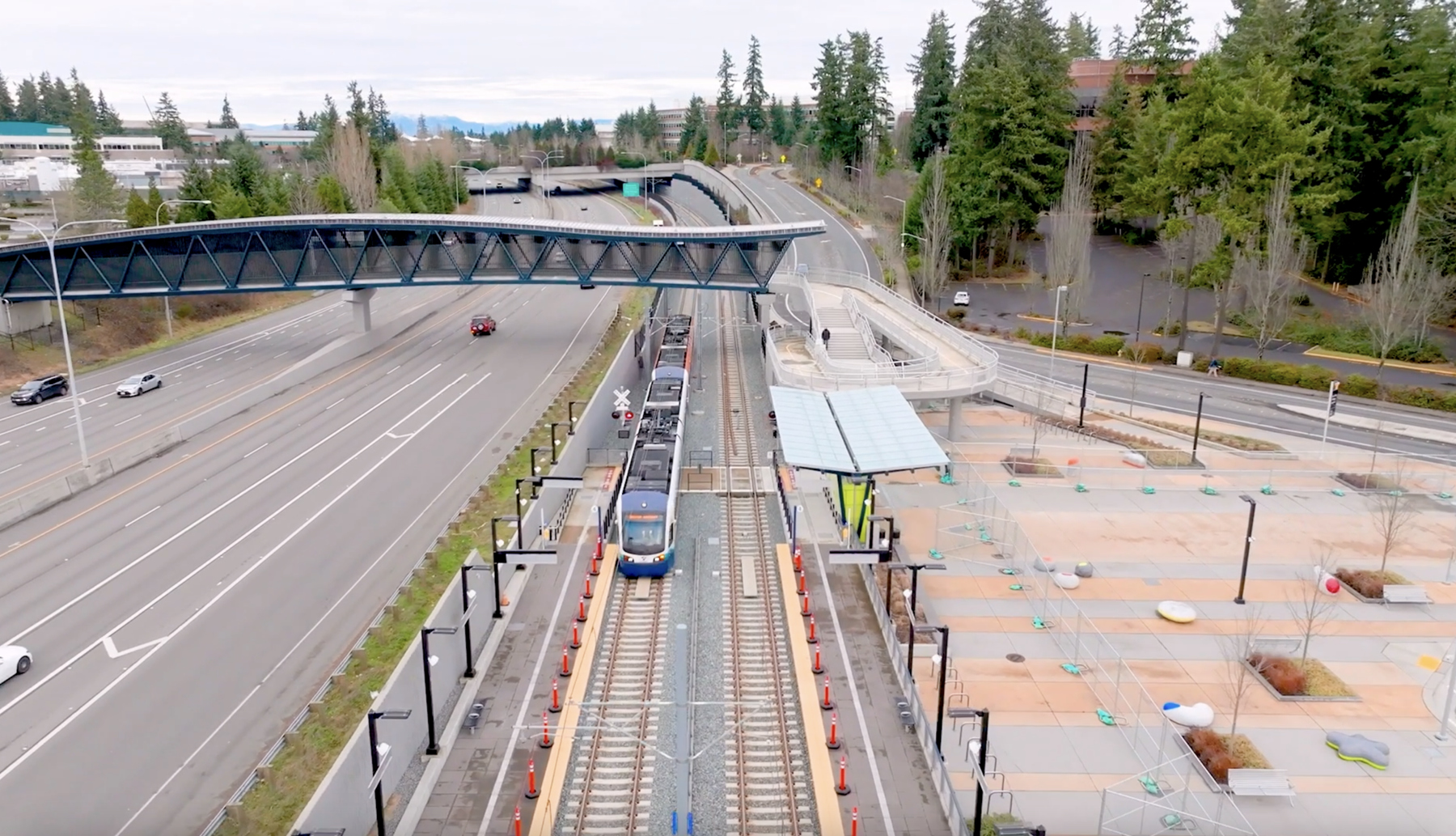
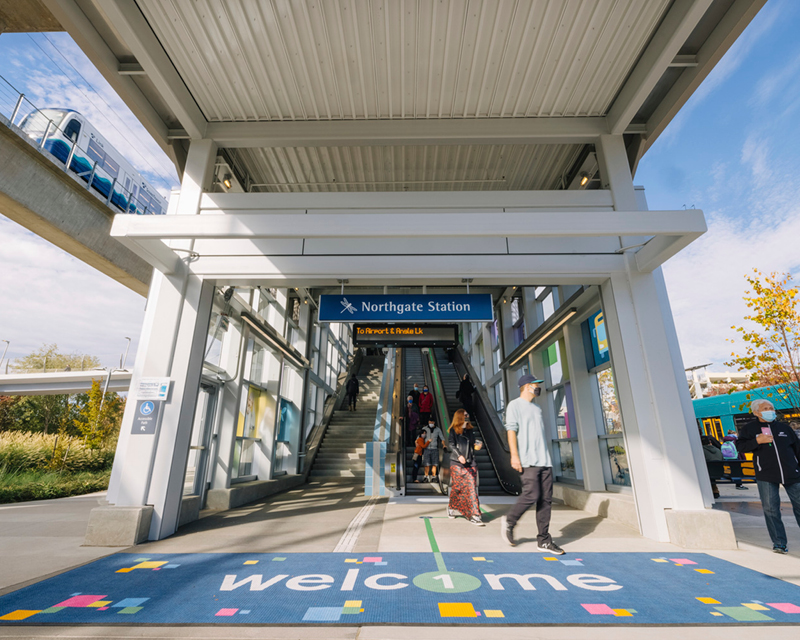
STV, working in joint venture with Mott MacDonald, supported Sound Transit in delivering the systems that allow the Crosslake Connection to function safely and reliably as part of the broader Link light rail network. The project builds on STV’s long‑standing support of Sound Transit’s Link system – including the East Link Extension (2 Line), the Northgate Link Extension, and the Lynnwood Link Extension – advancing each corridor from systems construction through integration into live service. That continuity gave the team a deep understanding of Link standards, operating constraints and the realities of bringing new segments online without disrupting daily riders.
For the Crosslake Connection, the team’s role included oversight of systems construction, integration, verification and validation and operational readiness support.
On any light rail system, multiple systems must operate in constant coordination to move trains safely. On the Crosslake Connection, that coordination was especially crucial.
Train electrification systems deliver continuous power to vehicles via overhead catenary and traction power infrastructure. On a floating bridge, those systems must maintain reliable performance despite movement, environmental exposure and transitions between fixed and floating segments of the alignment.
Control systems, including Automatic Train Protection (ATP), govern how transit moves through the corridor – controlling speed, separation, braking and stopping authority. These systems ensure trains never occupy the same space and always operate within safe limits, regardless of operator input or external conditions.
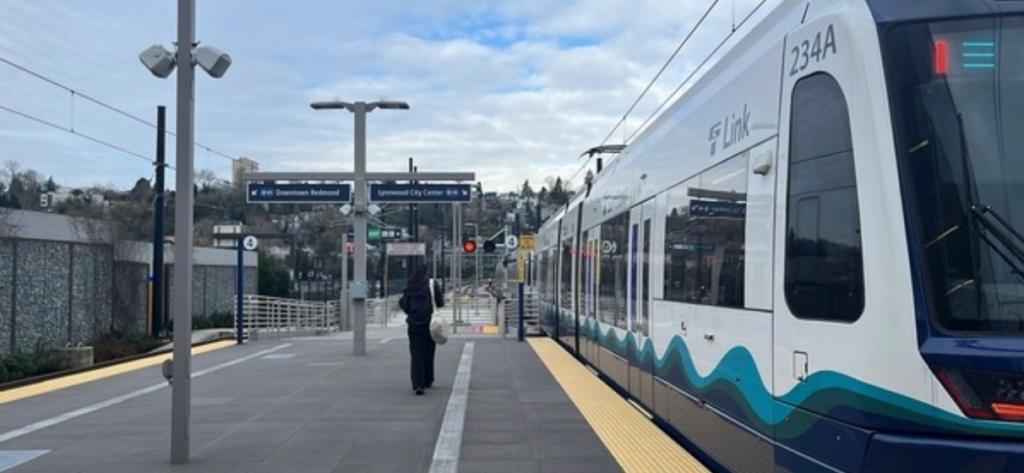
Communications systems connect vehicles, wayside equipment, and the Link Control Center, allowing real-time monitoring, command and response across the network. Clear, reliable communications are essential for both normal operations and degraded or emergency scenarios.
The Crosslake Connection introduced conditions that no light rail system had previously encountered. Unlike conventional fixed guideway rail, the floating bridge responds continuously to wind, waves and lake conditions. While bridge movement is monitored through separate structural and environmental systems, the rail systems operating on top of it must respond seamlessly and conservatively to those conditions without disrupting the rest of the network.
STV partnered with Sound Transit to validate that these systems were correctly installed, fully integrated and capable of responding appropriately under every expected operating condition.
Designing Around Conditions Riders Never See
Much of STV’s work occurred during the verification and validation phase – confirming that systems performed as intended not only under normal conditions, but when things didn’t go as planned.
Testing was conducted using staged trains on controlled track segments, often during overnight windows while other portions of the Link system were already in service. Scenarios included intentionally forcing track circuits down to simulate trains ahead, shortening control lines to confirm braking behavior and verifying cab codes across multiple tracks within a block to ensure fail-safe responses under constrained and degraded conditions.
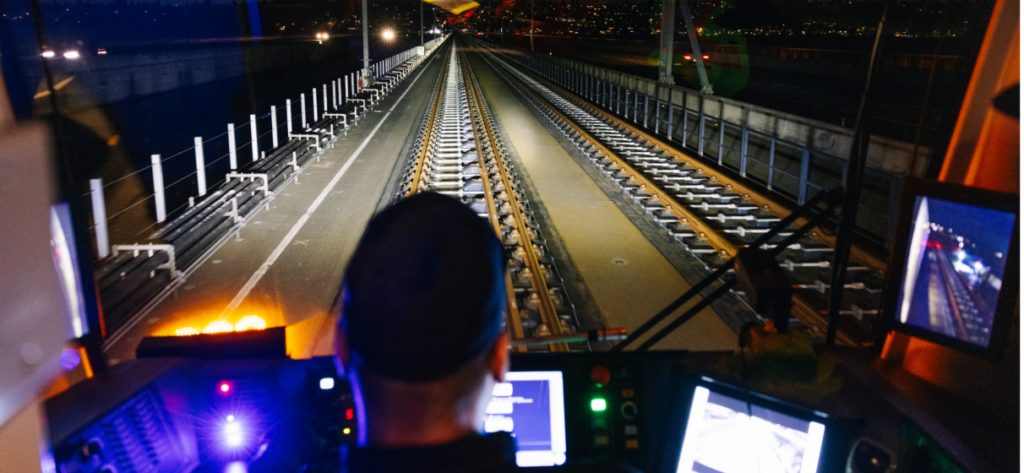
“On a floating bridge, you’re verifying how multiple systems interact under changing conditions,” said Ja‑Mie Luey, PE, vice president and West Coast rail and transit systems lead. “Our focus was on making sure the train control system consistently defaulted to the safest response – whether that meant reducing speed, increasing separation or holding service – while remaining fully integrated with the rest of the Link network.”
These efforts were part of a broader systems verification and validation program supporting Sound Transit’s transition from construction to operations.
One of the most complex – and least visible – systems interfaces on the Crosslake Connection is a WSDOT maintenance vehicle crossing located directly on the floating bridge.
Unlike a typical rail crossing, the gates at this location are normally down. When maintenance crews need to cross, they must coordinate directly with the Link Control Center. The train control system continuously monitors the crossing’s status and health and automatically downgrades operations if vehicle occupancy is detected, a gate fails to respond or an alarm condition is triggered.
STV supported validating every interface tied to that crossing, confirming that trains would slow or stop well in advance whenever conditions required – protecting both maintenance staff and rail operations without introducing unnecessary service disruptions.
Delivering Systems Readiness While the Network Was Live
As the project moved closer to opening, systems work became even more complex. Portions of the alignment were already carrying passengers, requiring careful coordination to test and validate without affecting daily service.
Each testing window involved temporary software configurations, formal permits and close coordination with Sound Transit operations and King County Metro staff for track access. At the end of every night, systems were restored to their operational state in time for morning service.
“A lot of this project’s complexity is invisible by design,” Luey said. “If everything is working as it should, riders never notice the additional logic running behind the scenes. That’s exactly the outcome we were aiming for.”
For more than a year, STV’s team worked incrementally across multiple testing segments, adapting plans as construction sequencing, bridge repairs and operational constraints evolved. While full end-to-end testing was not always feasible, progress continued methodically until all required conditions were validated.
Completing the System and Unlocking its Full Value
With systems verification complete, the Crosslake Connection advanced through operator familiarization, simulated service and pre‑revenue operations – each phase building confidence that the system would perform as intended under real‑world conditions.
Today, trains are running across Lake Washington as part of everyday service, connecting major employment centers and expanding access for tens of thousands of daily riders. The opening also supports future increases in frequency, enabling eight‑minute headways and accommodating growing volumes of trains moving through Seattle’s central corridor.
“The project wasn’t just about crossing the lake,” said Allison Dane Camden, vice president and Pacific Northwest area manager at STV. “It was also about completing the system – so Sound Transit can fully realize the value of its earlier investments and deliver a truly connected regional network.”