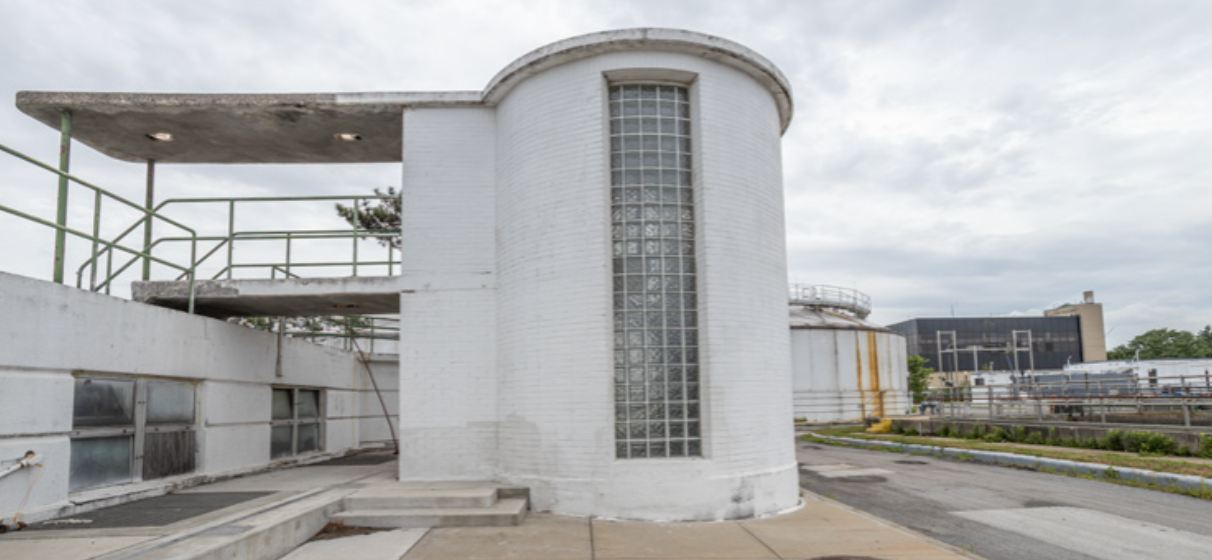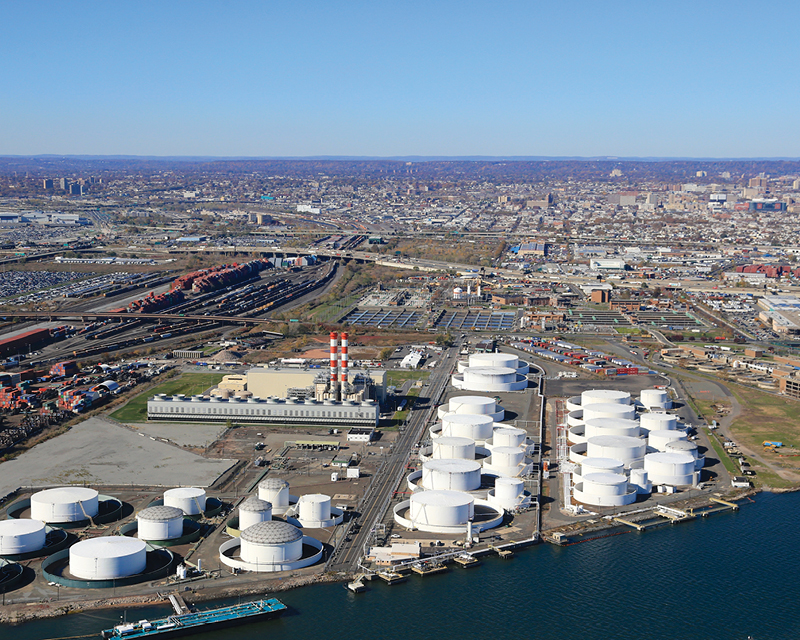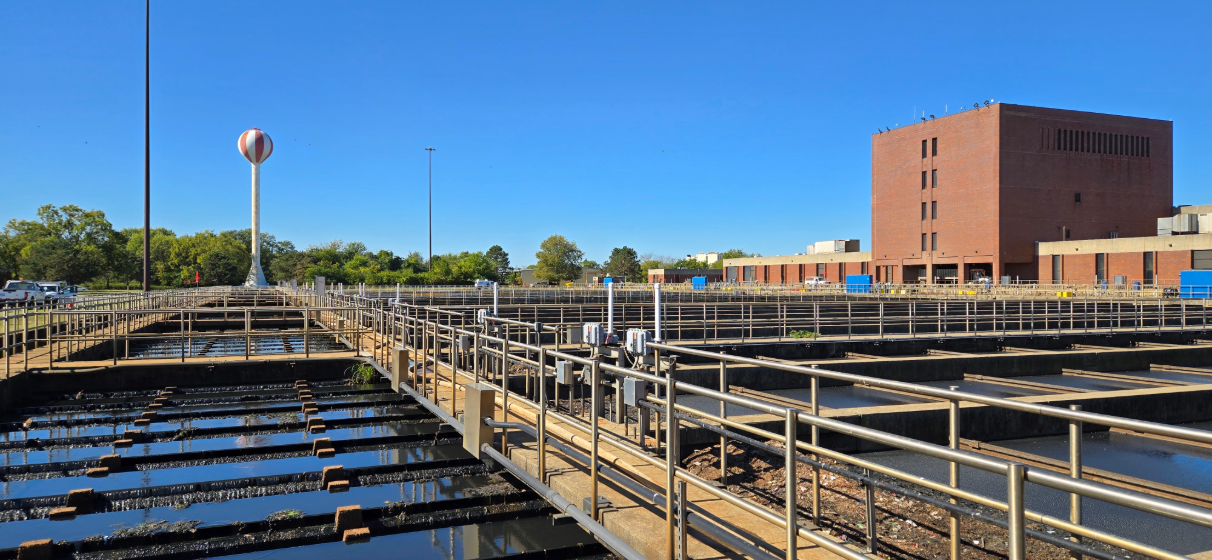
More than 10 years after Hurricane Sandy sent a destructive wall of water across Newark Bay and into the Passaic Valley Sewerage Commission’s (PVSC) main treatment plant, the agency has achieved a transformative milestone: the completion of its 2.5‑mile perimeter floodwall for the 140-acre facility, one of the most significant climate‑resilience investments undertaken at a U.S. wastewater facility.
For STV, which led structural design, architectural features and advanced modeling efforts, the project represents years of technical rigor and unwavering focus on delivering confidence to a client whose operations are inseparable from public health and regional resilience. The team remained committed to partnering closely with PVSC to understand real-world operational constraints and co-develop solutions that protected the facility without interrupting service.
A Facility at the Center of Regional Resilience
PVSC’s Newark plant treats up to 330 million gallons per day, serving 1.5 million residents across five New Jersey counties and the surrounding area. Its operations are inseparable from public health, environmental stewardship and the region’s economic vitality. However, its waterfront location on low‑lying land bordered by both tidal and riverine waters leaves it uniquely exposed to storm surge, elevated groundwater and compound flooding.
During Hurricane Sandy, the plant was inundated by hundreds of millions of gallons of brackish stormwater. Equipment was disabled, utility tunnels were submerged, power systems failed and treatment operations halted for nearly two days. The message was clear: outdated design standards were no longer adequate for a 21st‑century coastal wastewater facility.
As a result, in 2015, PVSC, in partnership with the Federal Emergency Management Agency, launched a comprehensive Resilience Program. The program encompassed approximately $800 million in infrastructure improvements designed to protect vital wastewater facilities from climate change and increasingly severe weather. In addition to the STV-designed floodwall, the program also included a pump station, an on-site power plant, enhanced stormwater management systems and plant-wide electrical improvements.
Designing Beyond the Code
From the earliest concept phase for the floodwall, STV identified that standard flood and debris‑impact criteria were inadequate for PVSC’s exposure. The team developed enhanced design criteria rooted in:
- Site‑specific wave, surge and hydraulic modeling
- Heavier debris impact scenarios reflective of an industrial waterfront
- Future sea‑level rise and more severe 500‑year flooding conditions
- Storm events anticipated to exceed Sandy in intensity
These decisions shaped every element of the floodwall and created a system designed and built not just to meet the minimum code, but to exceed it, providing enhanced protection for this critical facility.
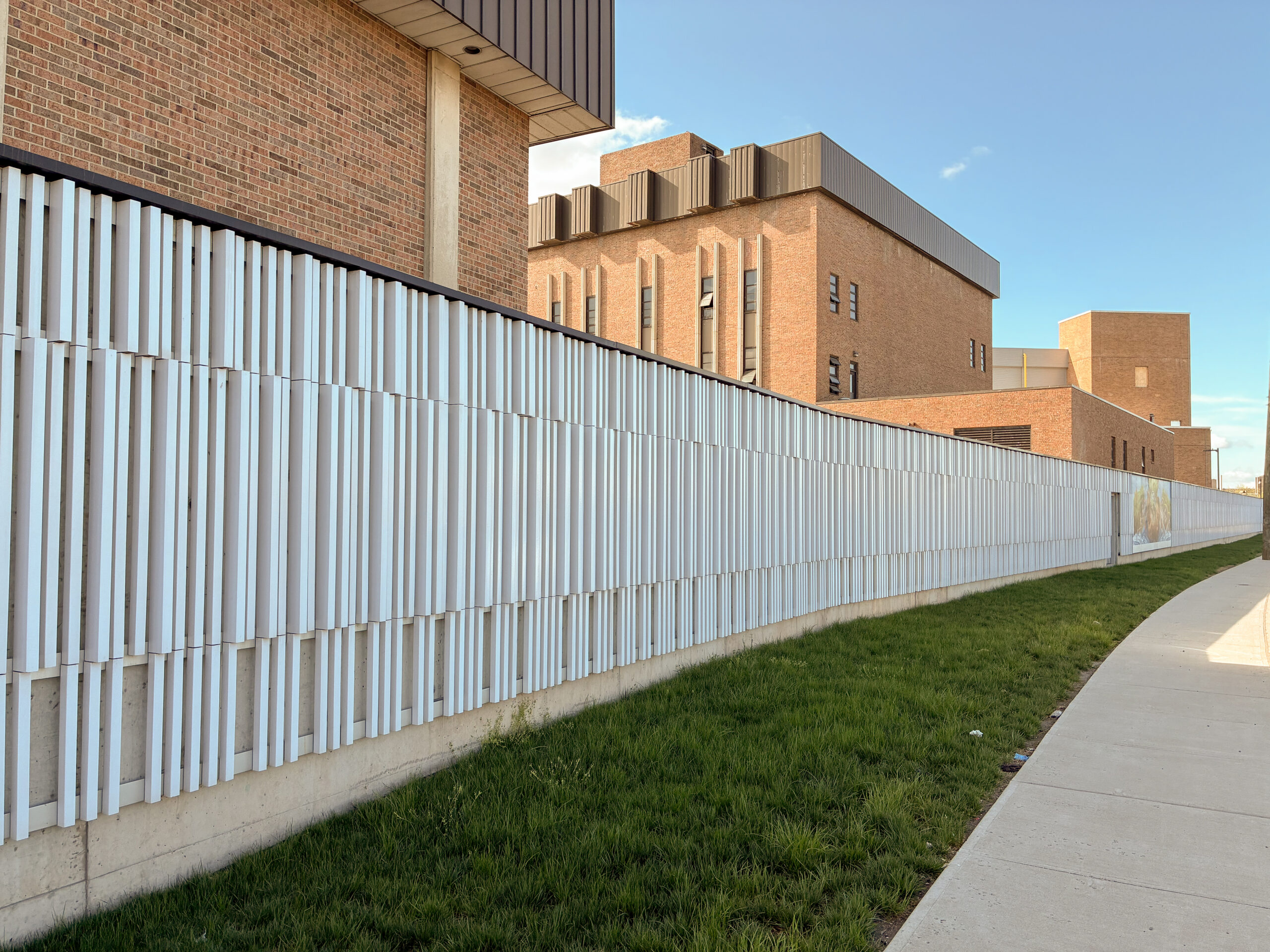
The completed floodwall is a composite system, not a monolithic barrier. STV designed a unique combination of features intended to meet conditions for potential future storm scenarios, including:
- Cantilevered concrete retaining walls for high‑exposure zones
- Varied wall height around the perimeter with each segment calibrated to detailed coastal modeling results
- Specialized foundations to resist scour, uplift and prolonged inundation.
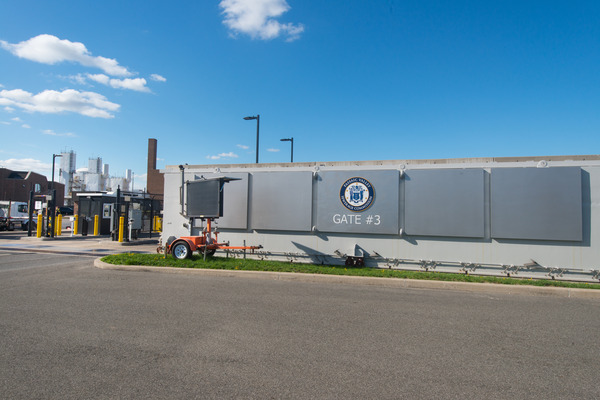
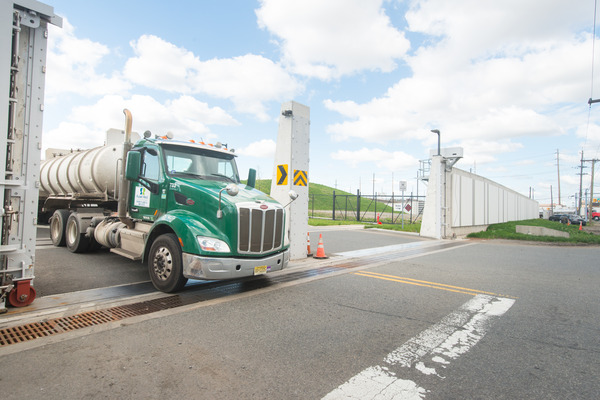
Completing the barrier is a system of large, stored-in-place structural steel sliding gates. The 65-foot-wide sliding gate #3 stands as both an engineering and operational triumph, enabling the plant to remain fully functional for hundreds of daily trucks while providing rapid protection during storms.
“What made this project successful was the level of coordination across disciplines and constant engagement with PVSC,” said Chris Cerino, technical director of structural engineering at STV. “Structural engineering, coastal modeling, performance criteria, constructability and operations all had to align. That collaboration allowed us to deliver a floodwall that is technically robust while remaining fully compatible with how the facility operates every day.”
Delivering Resilience for a Wastewater Treatment Plant
Designing a perimeter floodwall for a campus wastewater treatment plant is fundamentally different from protecting a conventional building or industrial site. Floodwater entering a treatment plant doesn’t just damage equipment; it destabilizes biological treatment, threatens disinfection, and can force untreated discharges. Any interruption risks immediate environmental, public‑health and regulatory consequences.
PVSC’s campus amplified these challenges. Beneath the site is a dense network of below‑grade tunnels, conduits, and utility pathways that carry influent, effluent, power and communications between the two sides of a split facility. These corridors could not be sealed, rerouted, or taken out of service. STV even engineered a floodwall alignment that beared on a major underground tunnel where alignment deviation was impossible, preserving access to critical systems, maintaining hydraulic continuity and supporting electrical resilience, all while keeping the plant fully operational throughout construction. STV designed a protective system robust enough to resist extreme external forces, including impact from a dislodged barge, while safeguarding the internal processes that keep the region’s waterways clean.
“Protecting a wastewater treatment facility requires a very different mindset than traditional building or site flood protection,” said Rich Peters, northeast regional water director at STV. “A facility like PVSC cannot shut down during a storm. Wastewater must keep flowing, treatment processes must remain stable, and power and controls must stay online. That reality shaped every aspect of this project.”
PVSC’s industrial waterfront location also demanded more advanced debris‑impact design than typical coastal projects. Standard code assumptions did not account for storm-borne vehicles, containers and heavy equipment that could become projectiles during surge conditions. STV developed site‑specific debris and load criteria that significantly enhanced the wall’s protective capability.
Daily operations influenced the engineering of the floodwall. The plant requires constant heavy‑duty vehicle movement and nonstop operator access, which led STV to design the now‑signature 65‑foot long sliding gate – a piece of moving infrastructure that supports everyday traffic while enabling rapid storm‑closure when needed.
This interdisciplinary integration – structural engineering, wastewater operations, coastal modeling and continuous field coordination – is emblematic of how STV collaborates to deliver solutions fit for purpose and rooted in deep client understanding.
A Regional Model for Climate‑Ready Infrastructure
For STV, the effort stands as a powerful demonstration of technical excellence, cross‑disciplinary collaboration and a deep understanding of the unique challenges wastewater utilities face in a warming, increasingly volatile climate.
With the floodwall now complete, PVSC is emerging as a leader in climate‑adapted wastewater infrastructure. By delivering this floodwall, PVSC has strengthened the region’s environmental security for generations and helped shape one of New Jersey’s most impactful resilience achievements.