When infrastructure lasts long enough, something interesting happens. A bridge, roadway or station built to serve a practical purpose can become part of a place’s identity.
Few places illustrate that better than Route 66.
As the highway marks its centennial in November 2026, its enduring appeal goes beyond nostalgia. It lives on through the landmarks, communities and structures that let people experience its history firsthand. In Oklahoma, one of those landmarks is the William H. Murray “Pony” Bridge, better known as the Bridgeport Bridge.
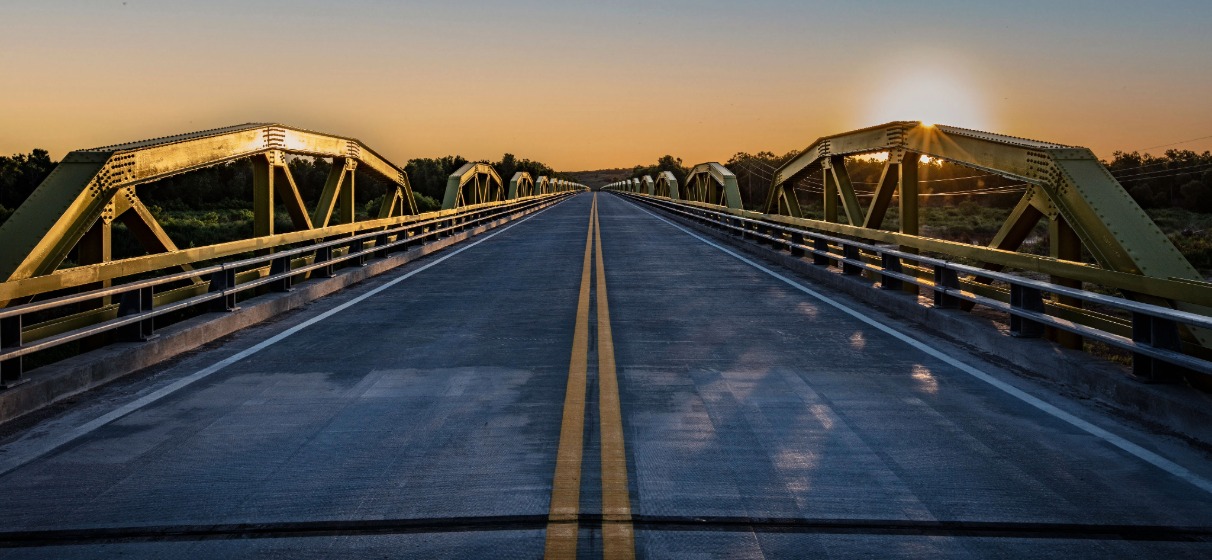
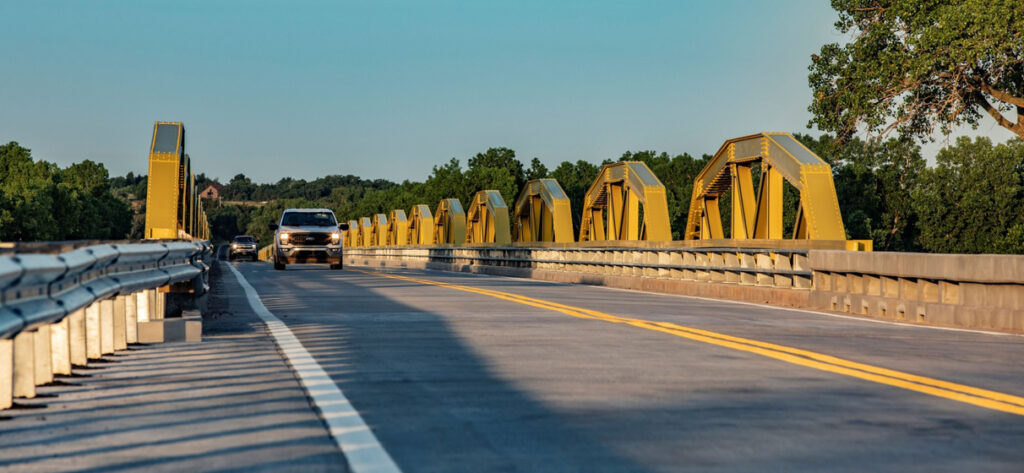
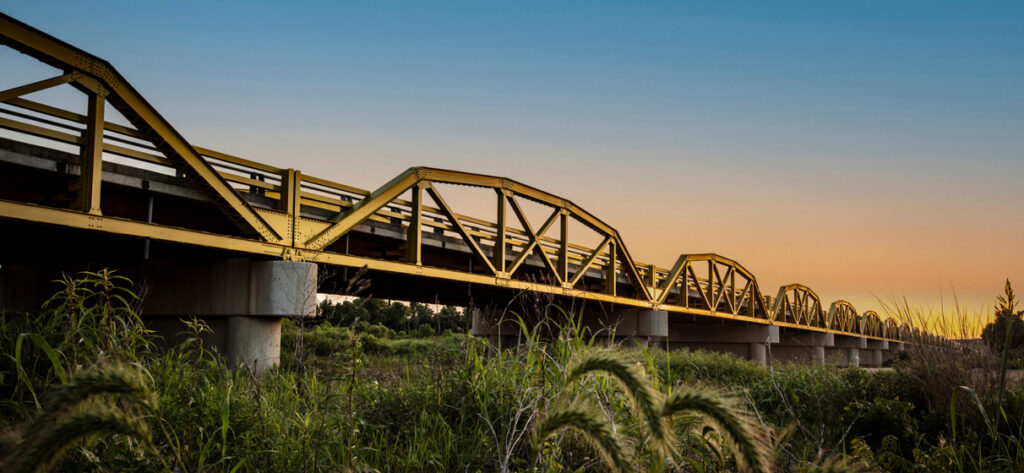
Built in 1933, the nearly 4,000-foot bridge crosses the South Canadian River on 38 distinctive pony truss spans. For generations of Route 66 travelers, it has become a recognizable part of the historic journey itself.
But historic infrastructure presents a particular challenge. It still has a job to do.
Through ongoing inspection and monitoring, the Oklahoma Department of Transportation (ODOT) recognized that the bridge’s age would eventually require a more comprehensive approach to support its continued use. That reality raised a question that extends well beyond a single bridge:
How do we preserve what makes historic infrastructure meaningful while preparing it to serve another generation?
Built for the Journey
When Route 66 was established in 1926, the highway represented something fundamentally new: a continuous path connecting communities across the middle of the country and opening new possibilities for travel, commerce and migration. By the 1930s, that promise of movement had taken on even greater significance as families traveled west in search of opportunity during the Great Depression and Dust Bowl. The road would eventually become synonymous with the American road trip, but its earliest legacy was rooted in connection and the possibility of going somewhere new.
The Bridgeport Bridge became part of that story in 1933. Stretching nearly 4,000 feet across the South Canadian River floodplain, its 38 pony truss spans formed a distinctive gateway for travelers heading west through Oklahoma. The crossing was an ambitious undertaking for its time, and the Oklahoma State Highway Commission described the construction of the original bridge as its most significant engineering undertaking to date.
The bridge’s significance grew alongside Route 66. It carried generations of travelers westward and later appeared in the 1940 film adaptation of The Grapes of Wrath, reinforcing its connection to one of the defining migration stories associated with the highway. Over time, its repeating trusses became one of Route 66’s most recognizable visual features.
That history helps explain why the bridge couldn’t be viewed solely as an aging transportation asset when its future came into question. Its engineering, appearance and location had become integral to the Route 66 experience. As lead designer for the rehabilitation, STV worked with ODOT to evaluate how the bridge could meet modern safety and performance needs while retaining the defining characteristics that had made it a Route 66 landmark.
Preserving the crossing meant understanding its history while determining how a structure designed for motorists in the 1930s could continue to serve travelers nearly a century later.
Sustaining What Matters
That history provided the project team with an important starting point, but it didn’t make the engineering decisions any easier. The bridge still needed to safely accommodate modern traffic, and nearly a century of service had taken its toll. When rehabilitation emerged as the preferred approach, the question became what could remain, what needed to change and how the two could work together.
Detailed testing indicated that much of the original substructure could continue to support the bridge, allowing the team to retain the existing columns and caissons. Other components could no longer meet modern demands in their original capacity.
The solution paired the existing foundations with a new load-carrying structural system. The bridge’s historic pony trusses were removed, rehabilitated, and reinstalled along the exterior of the new spans as non-structural elements. Their role changed, but the visual rhythm that has defined the crossing for generations remained.
That’s an important part of preservation that can sometimes get lost. We don’t have to choose between respecting history and accommodating change. The challenge is determining where each matters most.

Giving History a Future
Preserving the bridge also created opportunities to introduce new approaches to extend its service life.
The rehabilitation included Oklahoma’s first highway bridge application of full-depth precast concrete deck panels with Ultra-High-Performance Concrete joints. The solution helped accelerate construction, improve durability and reduce work in the sensitive river environment.
New materials and design approaches can help us retain more of what matters while improving the performance of historic infrastructure.
As infrastructure across the country ages, owners will face difficult choices about assets designed for a different era but still important to the communities they serve. Each project will require a different answer, but the starting point should be the same: understand what gives an asset value before deciding what needs to change.
Designing for the Experience
In Bridgeport, that value extends beyond the people driving across the bridge.
Route 66 has endured, in part, because the journey itself matters. People seek out its roadside landmarks and historic structures for a tangible connection to the communities and stories that shaped the highway.
The rehabilitation recognized that role as well. A new parking and viewing area provides visitors with a safer place to stop, experience the bridge and learn about its history through educational kiosks. It acknowledges that the bridge serves as both working infrastructure and a destination.
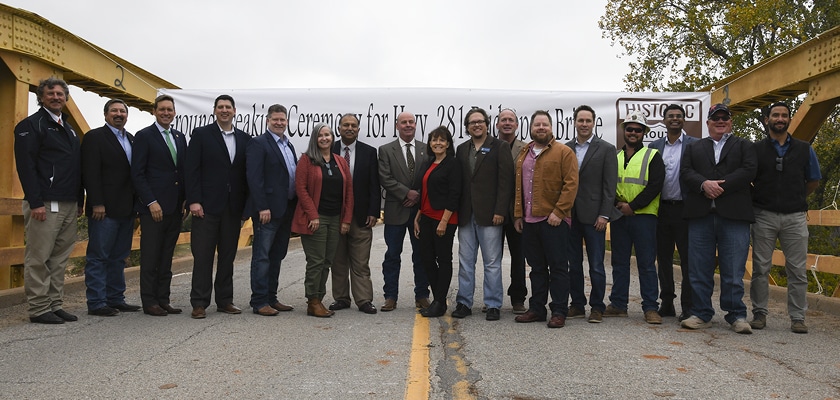
When the bridge reopened in May 2024, hundreds of classic cars joined community members, preservation advocates, engineers and public officials to celebrate its return. Nearly two years before the Route 66 centennial, the bridge was ready for its next chapter.
That moment underscored something we don’t always discuss when talking about infrastructure: people develop relationships with these places. Preserving them can support mobility while maintaining community identity, tourism and connections to shared history.
What We Carry Forward
The Bridgeport Bridge is one project, but the question behind it is becoming increasingly relevant.
Preserving historic infrastructure is ultimately about more than age or condition. It requires us to understand what an asset means to the people and places around it.
What makes this place worth carrying forward?
For Route 66, part of the answer lies in structures like the Bridgeport Bridge. They give physical form to a century of movement, change and community. Keeping that history visible while allowing the infrastructure to continue serving people is what gives preservation its lasting value.
A century after Route 66 was established, honoring its legacy means giving people the opportunity to experience its history while ensuring that history has a future.