If you want to affect the greatest number of people within the civic realm, you do it through infrastructure. There is no other instrument of comparable reach.
Every day, transportation systems connect people to jobs, schools, healthcare, businesses and each other. When those systems work well, communities thrive. When they don’t, the effects are felt immediately.
At its core, a transit system makes a promise: that people can move through their city safely, efficiently and reliably. But reliability is only part of the equation. People also need to understand how the system works. A station can operate exactly as intended and still feel frustrating if passengers struggle to navigate it. Reliability is the promise. Legibility is how passengers experience it.
That principle shapes how we think about transit infrastructure at STV. Every touchpoint, from the station entrance to the platform, contributes to how people understand, navigate and experience a city.
When Mobility Shapes Place
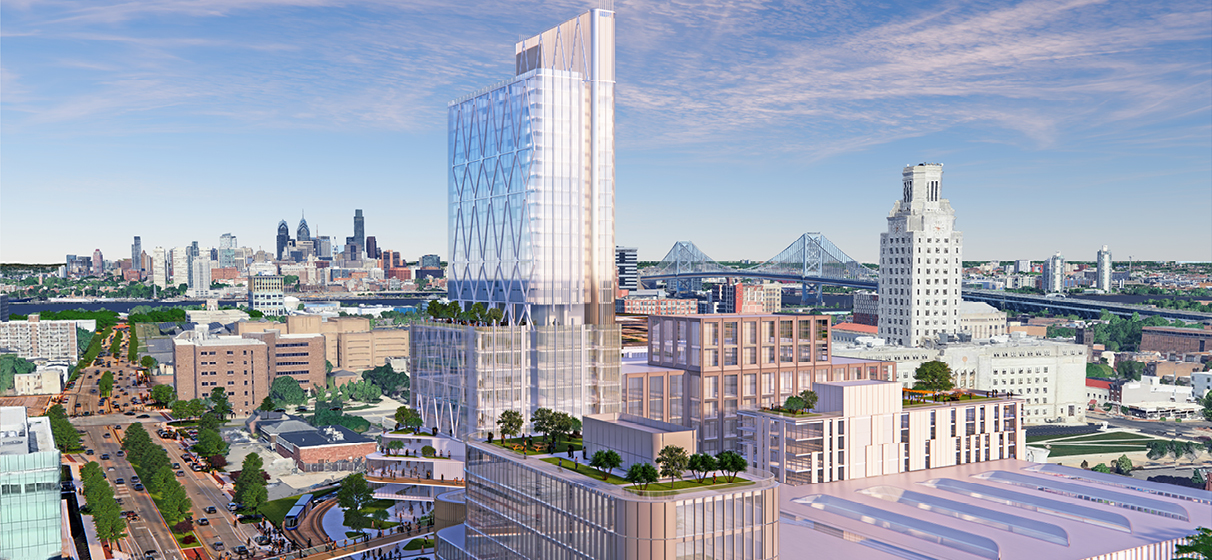
Transit facilities have always shaped the growth and success of communities. Access to mobility affects where people live, where businesses invest and how neighborhoods evolve. Today’s stations and transit hubs carry an even broader responsibility. They are often the first impression of a place and, for many residents, a part of daily life.
Architecture plays a critical role in shaping that experience. Long before a passenger boards a train or reaches a platform, a station’s design influences how they understand and navigate the space around them. Architecture can create clarity within a complex transportation network, strengthen neighborhood identity and contribute to the public realm in ways that extend beyond mobility itself.
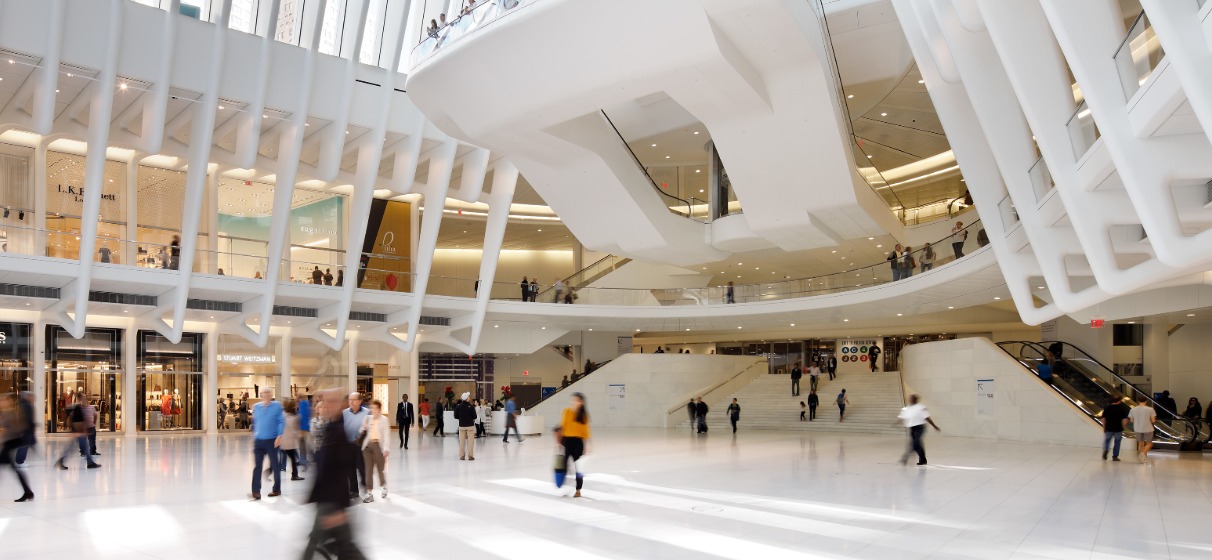
The World Trade Center Transportation Hub exemplifies this evolution. Through the Downtown Design Partnership, an STV/AECOM joint venture in association with Parsons Transportation Group, STV served as managing architect/engineer and architect/engineer-of-record for the project, working alongside design architect Santiago Calatrava to deliver the Hub’s iconic architecture, expansive concourses and highly complex transportation systems integration.
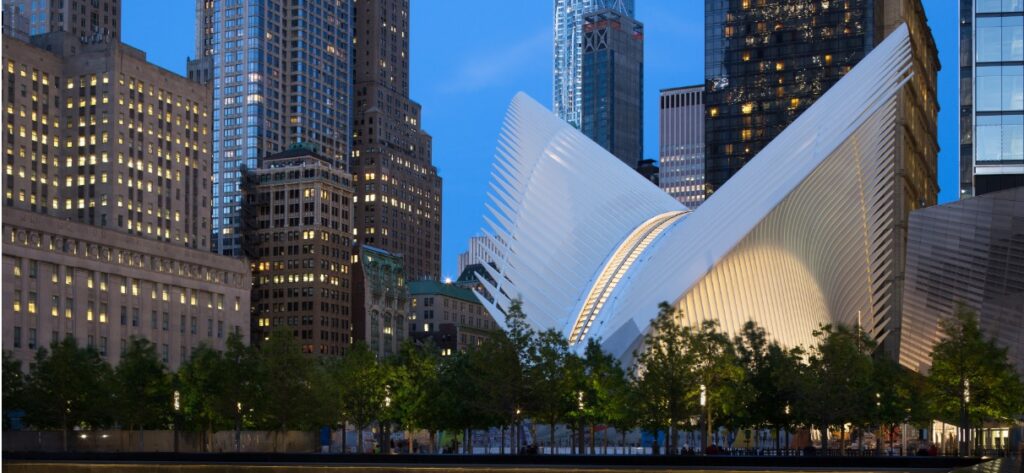
Serving more than 250,000 daily commuters, travelers and visitors, the Hub connects PATH, subway, retail and commercial destinations across Lower Manhattan. It functions both as a critical mobility connection and as a destination in its own right. The soaring Oculus has become one of New York City’s most recognizable architectural spaces. In that sense, the Hub serves simultaneously as transportation infrastructure, civic architecture and public space, reflecting the increasingly important role transit facilities play in shaping the public realm.
Designing for the Human Journey
Over many years, I’ve seen firsthand how complex transportation facilities need to accommodate a wide range of users. The daily commuter arriving on the same platform every morning has different needs than a visitor navigating the station for the first time. Good design must serve both.
At the street level, this means understanding how a station interacts with the surrounding community. At the concourse level, it means accommodating different movement speeds and creating spaces where people can orient themselves, pause or continue on their way. At the platform level, it means clear wayfinding, durability and intuitive circulation.
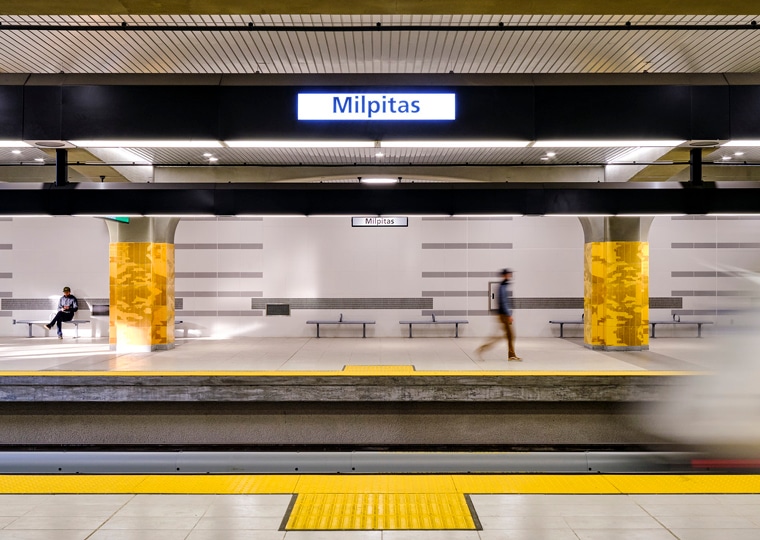
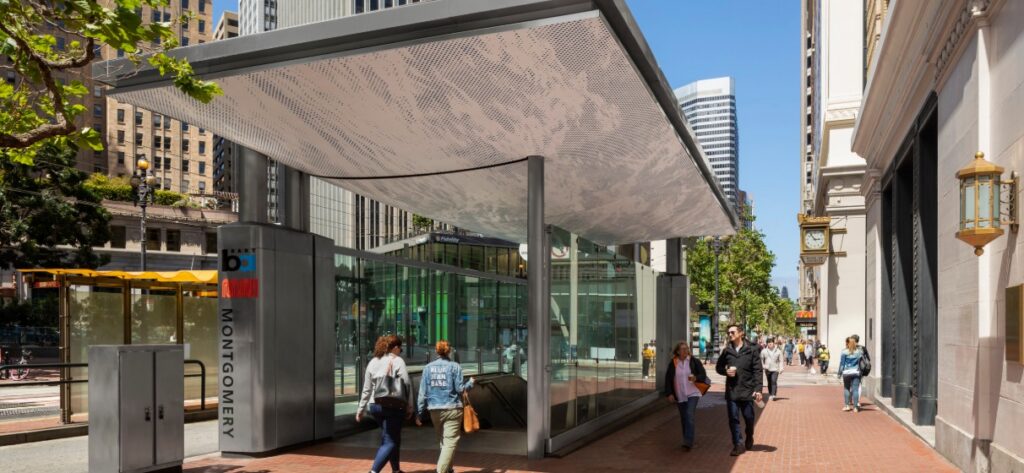
STV’s work on BART Canopy and Escalator Enhancements along San Francisco’s Market Street illustrates how architecture can strengthen that first point of contact. As lead design firm of record, in partnership with Perkins Eastman, STV designed enclosed station-entry canopies that integrate improved signage, real-time information, lighting and other architectural elements tailored to the character of each neighborhood they serve. While modest in scale compared to a major transit hub, the project reinforces an important principle: passengers should be able to recognize where they are, understand how to access the system and feel confident navigating it from the moment they arrive.
Good transit architecture helps people move confidently through complex systems and makes public transportation more intuitive and accessible.
Beyond the Station Platform
The impact of a transit investment extends well beyond the station footprint. Wherever people converge around mobility, opportunities arise for businesses, services, public spaces and community life to grow alongside it.
For architects, that means looking beyond the station itself. Decisions about access, visibility, wayfinding and public space also shape how transit meets the surrounding neighborhood.
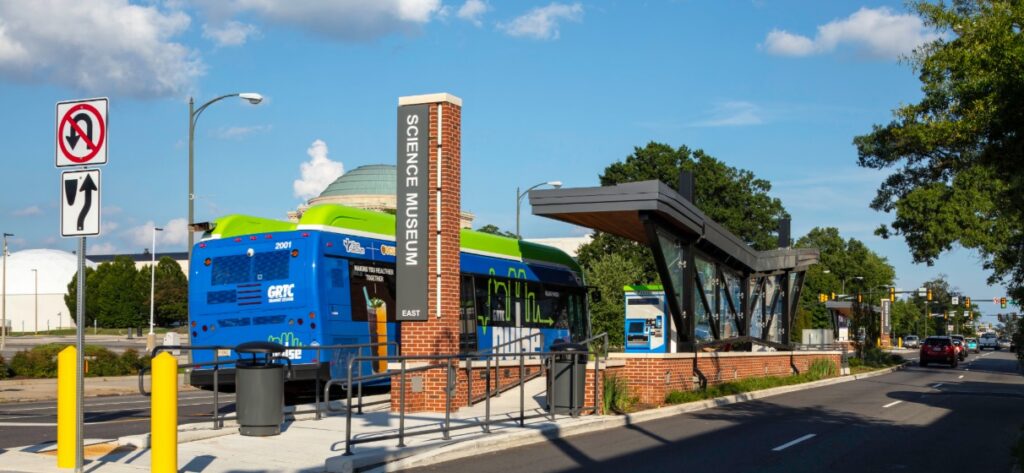
The Richmond Pulse Bus Rapid Transit system demonstrates that principle at the corridor scale. As lead designer, STV provided architectural and engineering services for the stations and supporting infrastructure. The stations were designed as highly visible points of connection, featuring prominent station markers, transparent passenger shelters and a cohesive architectural approach that makes the system easy to identify and navigate. Beyond supporting mobility, the stations create recognizable points of arrival along a route connecting commercial districts, healthcare facilities, educational institutions and other destinations throughout Richmond and Henrico County.
What matters is that the architecture does more than announce the presence of transit. It helps riders read the corridor, recognize where they are and understand how the system connects with the places around it.
But designing for place first requires understanding the place itself. A station strengthens its neighborhood first and foremost by being a good neighbor, which requires engaging a diverse range of stakeholders throughout planning and design.
As architects, we have to listen for the things drawings alone cannot tell us: how people use a street, what they value about a neighborhood and where change creates concern. Those conversations become another form of design input, helping us understand not only what a station needs to do, but how it should belong to its surroundings.
One lesson I have returned to throughout my career is that most people do not mind progress. It’s change they worry about.
The challenge is to understand those concerns and address them wherever possible through the design. Those conversations are rarely simple, but listening gives architects a clearer understanding of the place they are designing for and the people who will experience it every day.
Ultimately, a transit investment succeeds not only by moving people efficiently, but by becoming a useful, understandable and lasting part of the community around it.
The Promise of Movement
Transit systems will continue to change. New modes, technologies and patterns of movement will place new demands on stations and hubs, and architecture will have to adapt with them.
But the promise of mobility remains the same. People want systems they can trust and spaces they can understand. Whether through a major transit hub, a neighborhood station or a BRT corridor, successful infrastructure helps people move through their communities with confidence.
That brings us back to the fundamental promise of transit: reliability must get people where they need to go, and legibility must give them confidence in the journey. When infrastructure delivers both, it does more than move people. It helps them understand and connect with the communities around them.