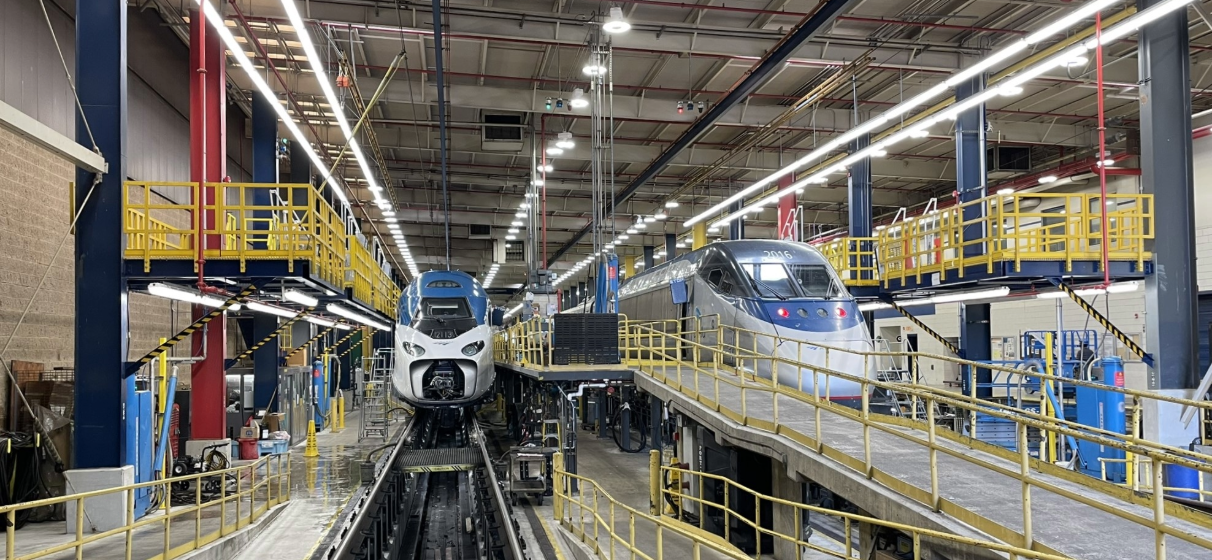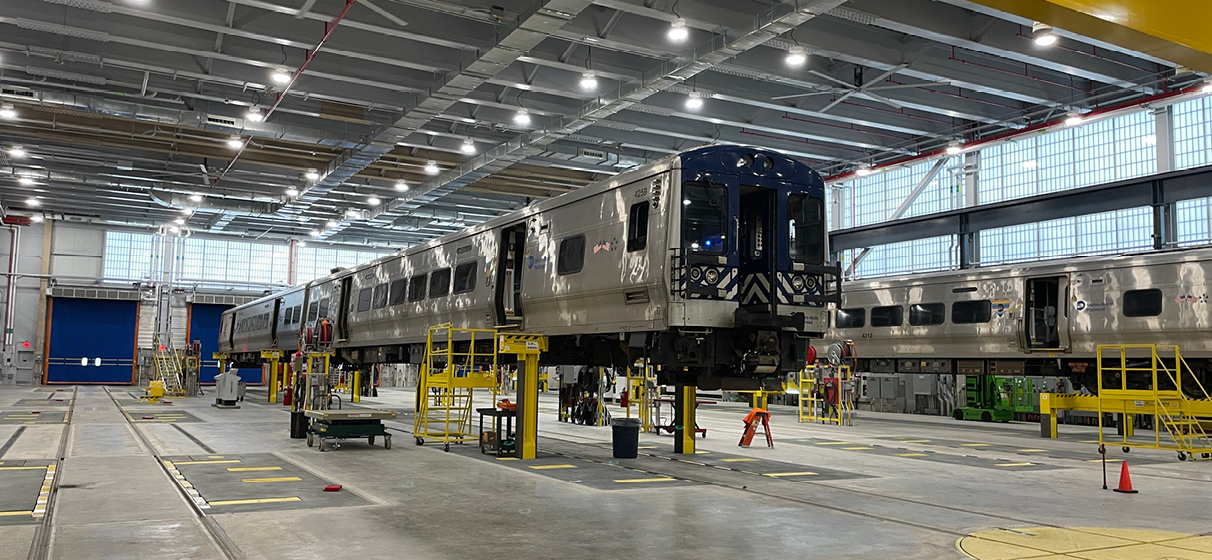
As Amtrak embarks on the most significant overhaul of its repair shops in over 50 years, STV is proud to continue its legacy of designing state-of-the-art maintenance facilities for the national rail agency. Recently, Amtrak selected STV, as part of a design-build team, to lead the $480 million expansion and modernization of the Ivy City Yard in Washington, D.C. – a crucial hub where Northeast Regional and Acela trains undergo routine servicing, inspections and repairs.
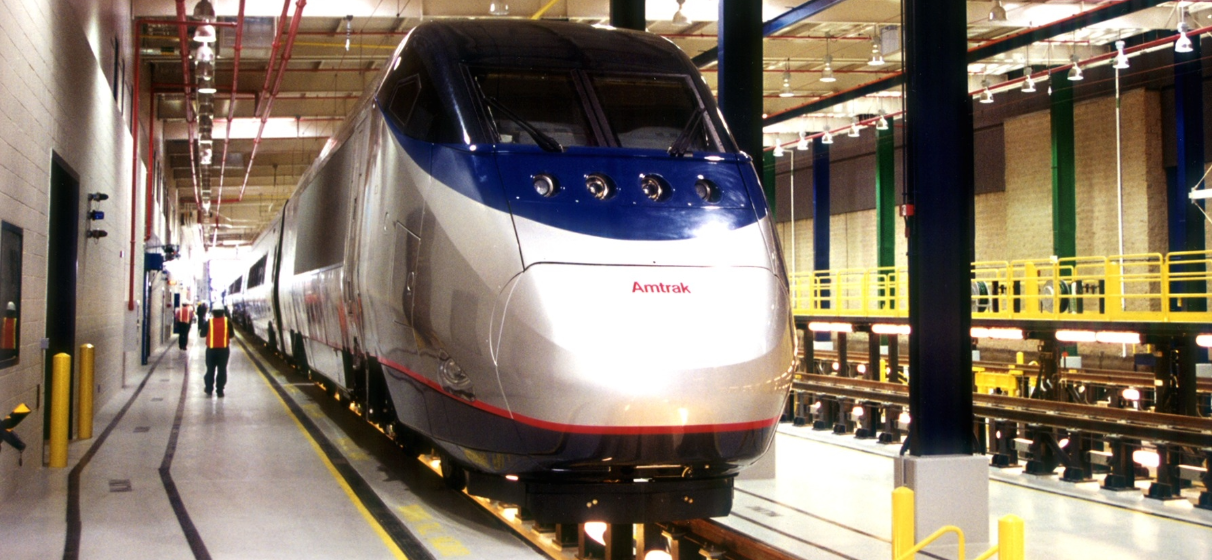
For STV, this project builds on a relationship that spans more than four decades and also represents a full-circle moment with Amtrak. Over 20 years ago, STV was part of the team that designed and delivered Amtrak’s first-ever high-speed rail maintenance shops at Ivy City Yard, Sunnyside Yard (Queens, New York), and Southampton Yard (Boston). Those projects helped launch Acela service and set a new standard for U.S. rail maintenance facilities.
To reflect on this history and discuss what makes designing for Amtrak unique, we sat down with Jeff Messinger, vice president and director of maintenance facilities at STV. With decades of experience overseeing some of the nation’s most complex rail shop and yard projects, Messinger shares insights into STV’s long-standing partnership with Amtrak and how our designs continue to adapt to a new era of rail travel.
1. What makes designing maintenance facilities for Amtrak especially challenging or unique?
Amtrak is maintaining a diverse fleet and doing so in some of the country’s busiest, space-constrained rail corridors. In past work at Ivy City, we’ve had to phase work carefully around ongoing operations – you can’t simply shut down the yard. These facilities also serve multiple users beyond Amtrak, including the Maryland Area Commuter Rail (MARC) and Virginia Railway Express (VRE), which means the design must account for operational complexity. Add to that the safety requirements of working on high-speed equipment and the need to integrate advanced systems, such as underfloor wheel truing, automated sanding, and diagnostic equipment and the design challenges become highly specialized.
2. How have passenger rail trends influenced how these facilities are designed today compared to 20 years ago?
When we designed the original Acela shops, the priority was introducing new maintenance equipment that was a first-of-its-kind Amtrak. Today, those needs are evolving with Amtrak’s fleet transition. Facilities must accommodate dual-power locomotives, allow for higher clearances for new equipment and integrate sustainable systems. There’s also a growing focus on efficiency and resiliency – things like fuel stations that reduce downtime, flexible layouts for future vehicles and designs that improve working conditions for staff.
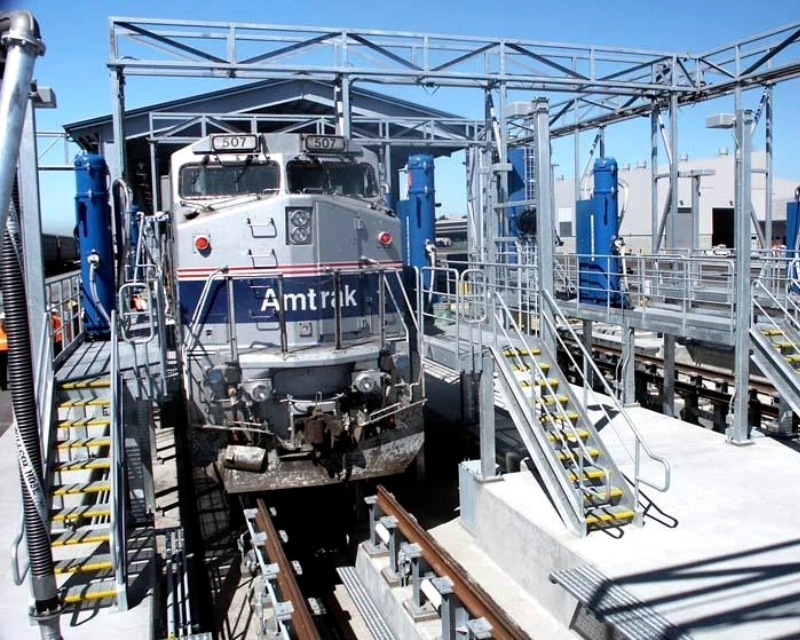
3. STV has designed maintenance facilities across the country. How does that broader portfolio strengthen your work with Amtrak?
Every project teaches us something new. From Ivy City to Oakland to Seattle, we’ve tackled everything from environmental remediation on century-old rail yards to integrating new technologies into existing facilities. That breadth of experience allows us to anticipate challenges and provide Amtrak with tested solutions. It also reinforces our ability to think long-term: these facilities must improve conditions today while enabling the next 30 or 40 years of passenger rail evolution.
4. What do you hope this project will mean for the future of Amtrak and passenger rail in the U.S.?
This project sets up Amtrak for a new era. By modernizing Ivy City Yard, STV is helping to improve service reliability, make maintenance safer and more efficient and ultimately support the growth of passenger rail across the Northeast Corridor. For me, the exciting part is knowing that our work here will serve millions of riders for decades to come, while also providing a model for how rail facilities nationwide can adapt to meet the demands of modern equipment and growing ridership.