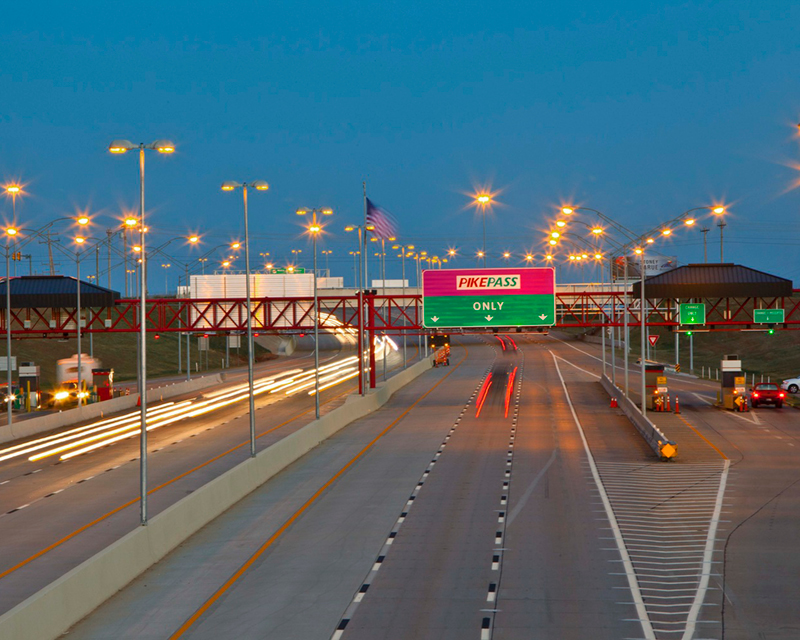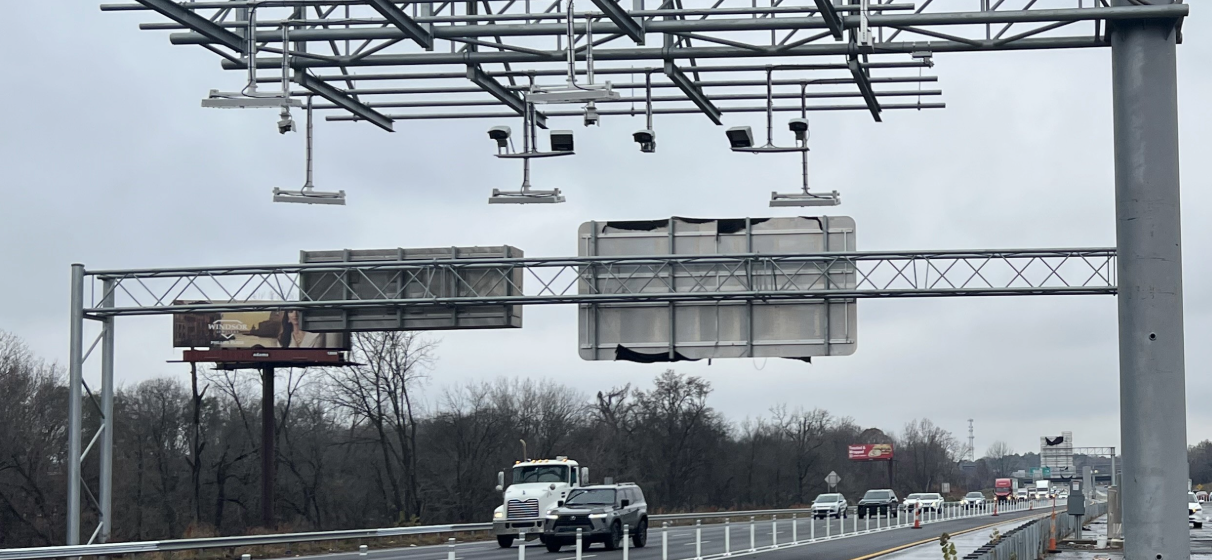
Tolling is entering a pivotal moment. As agencies transition to all-electronic systems and rethink the role of physical infrastructure, connected vehicle technology is opening the door to toll corridors that sense, respond and communicate in real time – bringing safety, operations and customer experience into a single, connected ecosystem.
Connected vehicle technology, specifically Cellular Vehicle-to-Everything (C-V2X), is creating new opportunities for toll agencies to move beyond gantries and transponders toward roadways that actively communicate with drivers, detect hazards in real-time and reduce the risk of crashes before they occur.
A first-of-its-kind pilot on North Carolina’s I-485 Express Lanes offers a glimpse into that future, and demonstrates how tollways can become platforms for safer, more responsive infrastructure.
From Toll Collection to Corridor Safety
At its core, C-V2X allows vehicles and infrastructure to “talk” to one another. Roadside units detect conditions on and around the roadway and transmit tolling pricing and safety information directly to vehicles equipped with onboard units (OBUs). Instead of relying on roadside signs, static alerts or crowd-sourced data, drivers receive timely, location-specific safety warnings inside the vehicle, including:
- Pedestrian and worker detection
- Stalled vehicle and wrong-way driving alerts
- Congestion warnings
Unlike navigation apps that rely on user reports, this system uses state-owned roadside equipment with 3D LiDAR and camera-based analytics to continuously monitor conditions. Once a potential hazard is detected, the system confirms it at short intervals and pushes alerts within a pre-defined radius based on roadway speeds.
The result is messaging that is neither too early nor too late, a critical factor when seconds can make the difference between a near miss and a serious incident on toll roads, which currently encompasses one third of all U.S. road fatalities.
The Role of Advisory Oversight in Emerging Technology
While connected vehicle technology has existed for years, its application to tolling (and especially to safety-critical use cases) remains new in the U.S. While standards for toll transactions are well established, standards for safety use cases, hazard timing and in-vehicle messaging are not.
To meet this need, STV developed a pilot evaluation framework that looked beyond “does it work?” to address the real-world questions agencies must answer before scaling up:
- What are the operational and maintenance implications?
- How does latency affect human reaction time?
- What workforce training is required?
- How do costs, user experience and policy changes factor into deployment?
- Can the system scale and remain interoperable across corridors and jurisdictions?
Beyond validating technology, we’re helping agencies understand what it would take to operate it responsibly.
STV’s on-site oversight identified practical issues (such as detection of reflective safety vests, object height thresholds and optimal equipment placement) that informed system refinements.
A Platform for Smarter Infrastructure
As more vehicles are manufactured with built-in connected vehicle capabilities, the need for physical gantries and roadside signage could diminish, lowering infrastructure costs while improving the driver experience.
For agencies facing systemwide transitions, such as all-electronic tolling conversions, C-V2X offers a chance to rethink traditional approaches and design corridors that are not only cashless, but safer and more adaptive.
With the right governance, testing and oversight, it can move from concept to corridor-scale deployment: delivering tangible safety benefits while maintaining the fiscal integrity toll agencies value.