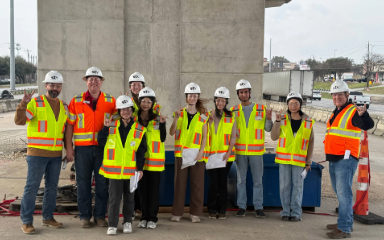
Protecting the environment is a central part of how STV delivers infrastructure projects. In Cypress, Texas, that commitment came to life when our environmental team led a freshwater mussel relocation effort to support construction of a new stormwater outfall – balancing infrastructure needs with the preservation of local aquatic ecosystems.
Protecting Species, Supporting Progress
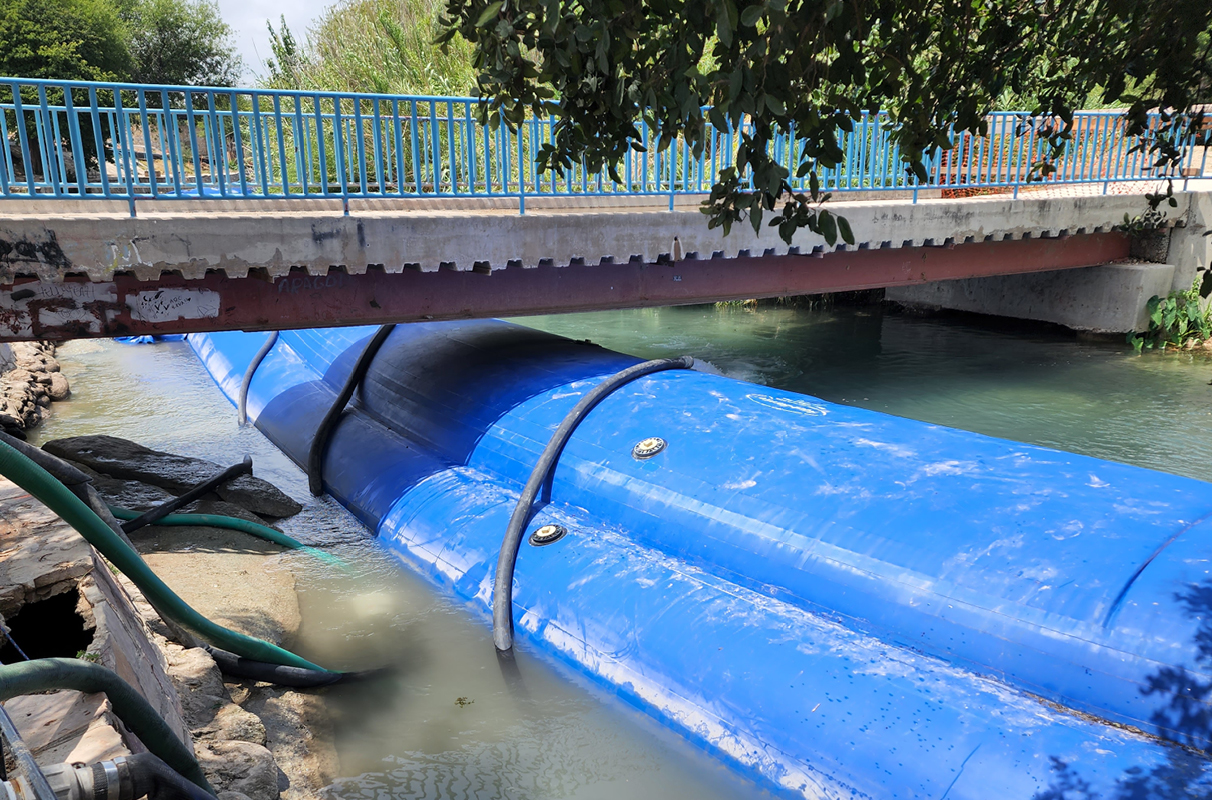
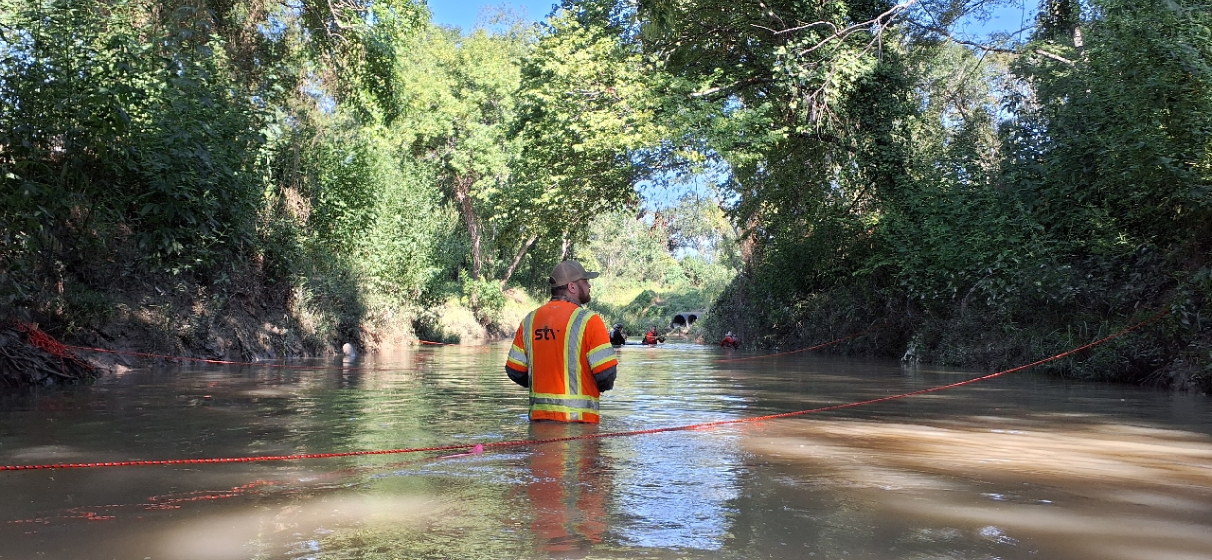
The relocation effort originated with the Mound Road Extension Project, which spans approximately 3,000 linear feet from Greenhouse Road to Cypress Drive and features a new roadway, asphalt and concrete pavement and a stormwater detention pond. Early environmental studies, conducted by STV as a subconsultant to Neel-Schaffer, identified that a nearby stream could support freshwater mussels. Working closely with our partners and the project team, STV developed and implemented an aquatic resources relocation plan to protect any species within the proposed work area below the ordinary high-water mark of Cypress Creek.
For the team, the project was a meaningful chance to apply science and teamwork. Every step – from the initial survey design to fieldwork – required careful planning, flexibility and an understanding of how to protect a living ecosystem while advancing a critical public project.
Adapting in the Field
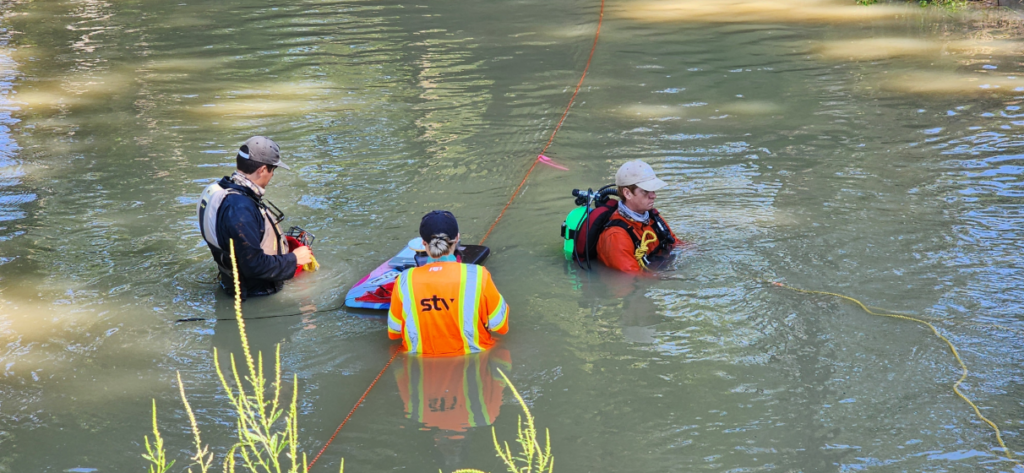
The relocation area, covering about 0.19 acres of Cypress Creek, was divided into 16 survey cells to provide complete coverage. Although the team expected shallow, wadeable water, field conditions were more complicated: in some spots, water reached depths of up to 1.6 meters. To handle this, STV worked with divers from Zara Environmental to manage the deeper sections, while STV staff coordinated the shallower survey cells, recorded findings and supervised the relocation process.
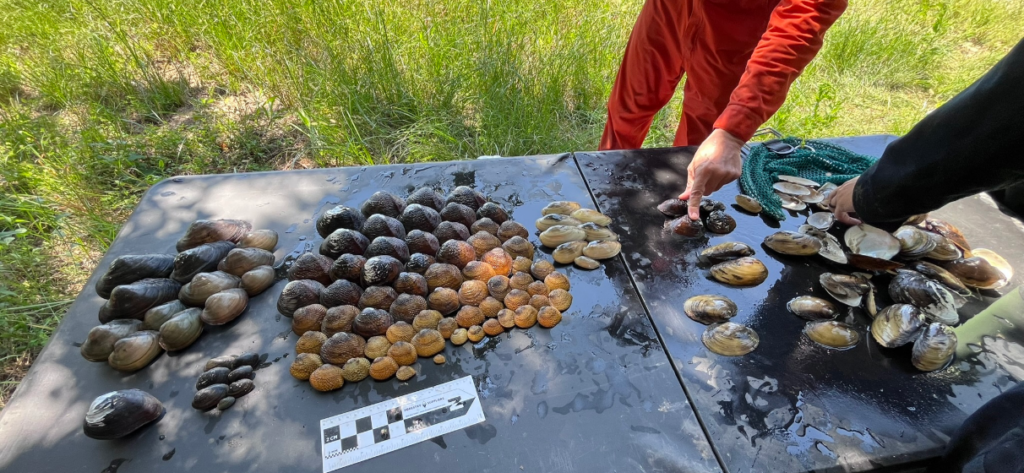
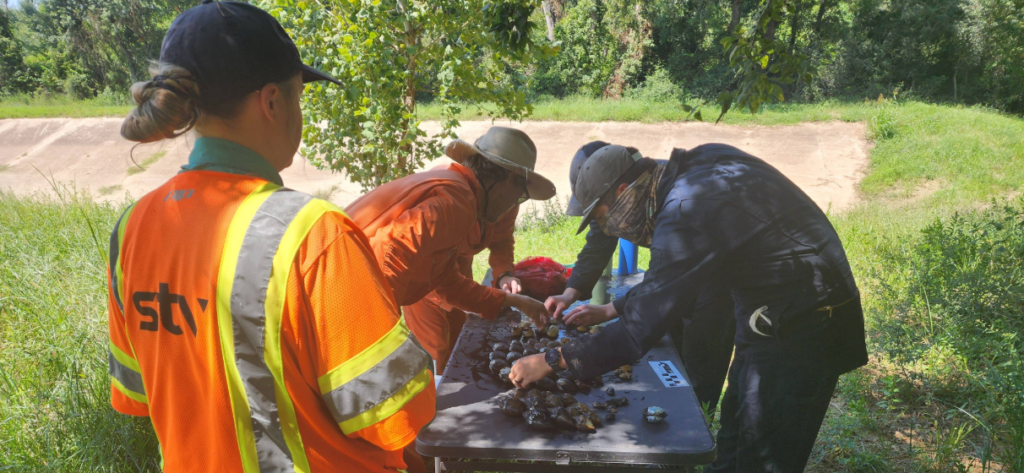
During the full-day survey and relocation, the team employed a multi-pass depletion method for thoroughness. Each find was carefully recorded, collected and moved according to the plan. In total, 105 live mussels representing five species – the giant floater (Pyganodon grandis), lilliput (Toxolasma cylindrellus), mapleleaf (Quadrula quadrula), Wabash pigtoe (Fusconaia flava) and yellow sandshell (Lampsilis teres) – were successfully relocated. Several long-dead fragile papershells (Potamilus fragilis) were also documented.
To support long-term ecosystem health, each mussel was individually placed roughly a mile upstream in a creek section with similar substrate and flow conditions, creating a stable environment for the species to continue thriving. The effort required close coordination between field biologists and divers, along with real-time adjustments to methods as conditions changed – showcasing the team’s expertise and field awareness.
Conservation in Action
The success of this effort reflects the heart of STV’s environmental practice: collaboration, adaptability and science-driven stewardship. This project also demonstrates how environmental planning helps keep infrastructure work moving efficiently and responsibly. By relocating these mussels and helping advance a key roadway improvement, our team demonstrated that infrastructure and conservation can thrive side by side.
Projects like this highlight the value of integrating environmental awareness into every stage of design and construction. In Cypress, that meant helping both the community’s infrastructure and its natural systems move forward together – progress with purpose.