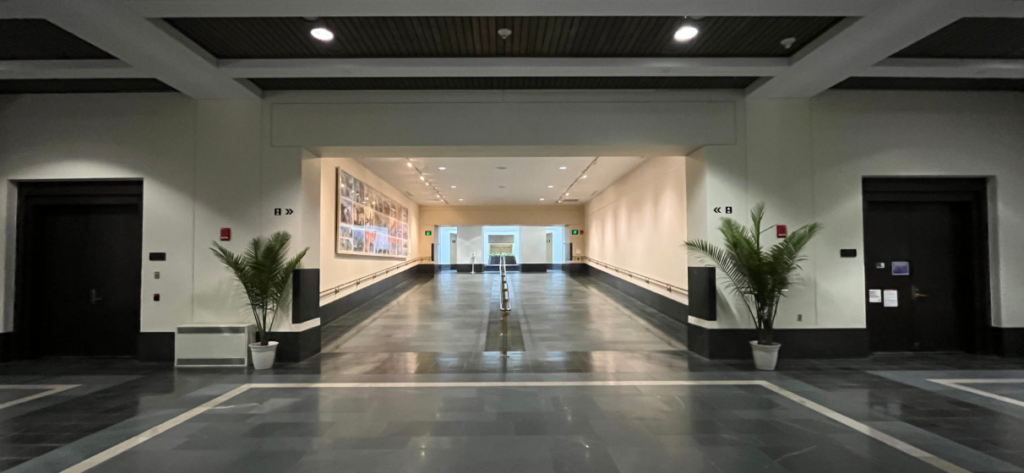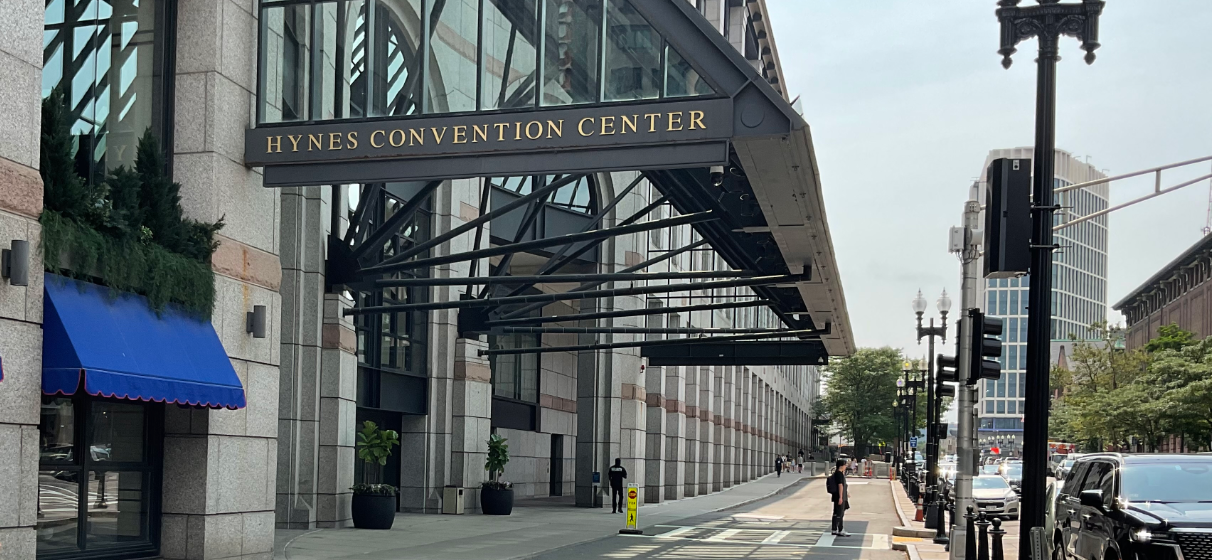
When you walk through the John B. Hynes Veterans Memorial Convention Center during a major event, you’d never guess that some of its most critical systems are being replaced just beyond the walls. That’s by design.
The Hynes, located in Boston’s historic Back Bay, hosts international conferences, professional trade shows and cultural exhibits year-round. As a key driver of the city’s economy, it doesn’t have the luxury of long shutdowns. Yet, like many large public facilities, it faces a familiar challenge: aging infrastructure that must be modernized to support long-term performance, accessibility and competitiveness.
That tension – between continuity and transformation – has defined STV’s role in support of the Massachusetts Convention Center Authority (MCCA)’s R33, R35, and R53 programs. Together, these efforts represent nearly the entirety of the MCCA’s $100 million investment in the Hynes. Our approach is informed by decades of work in complex, high-occupancy event venues, experience that was recently recognized by Building Design & Construction, which ranked STV among the nation’s top convention center engineering firms.
Planning Before Design
One of the most important decisions our team made early on had nothing to do with engineering details. It was about timing.
Before a single contractor was onboarded, STV collaborated with the MCCA and Hynes stakeholders to develop a five-year, nine-phase construction plan. This meant identifying when the building could be shut down, how long those shutdowns could last and what work could realistically be accomplished during each window.
That framework became the foundation of the entire program. Design choices, procurement strategies and construction sequencing all stemmed from that initial planning effort.
Tackling the Systems That Matter Most
Upgrading critical building systems in an active convention center demanded careful planning, innovative solutions and precise coordination, as each project presented its own unique set of challenges:
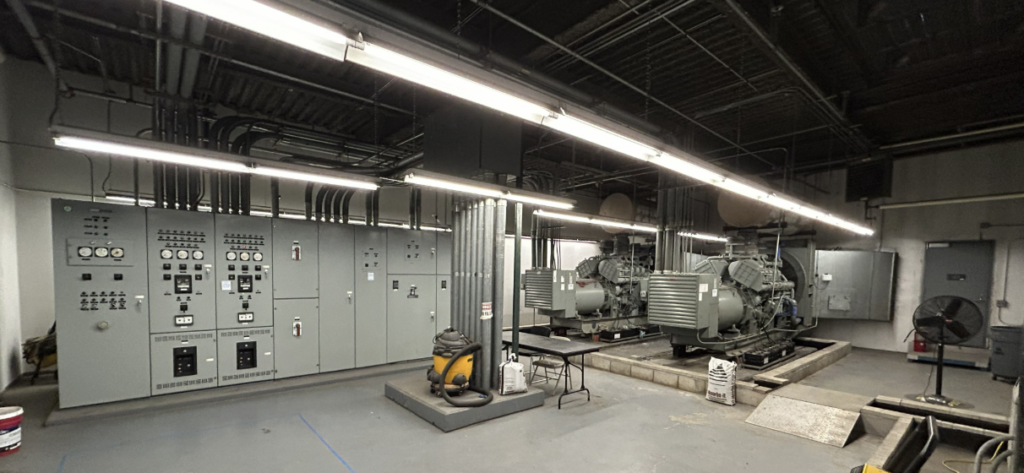
R33 – Switchboard & Electric Room Project: Replacing the building’s primary electrical distribution equipment was a complex undertaking. Previous planning attempts had failed due to long equipment lead times, high short-circuit ratings and the need to maintain power to a fully operational facility. Through early-release procurement packages, close utility coordination and carefully planned temporary power strategies, we advanced the project without disrupting operations.
R35 – Air Handling Unit (AHU) Replacement Project: The R35 program replaced 23 large AHUs. Moving massive legacy equipment through tight spaces was impractical, so we designed a modular fan array system that could be transported through existing stairwells and elevators. This approach simplified installation and reduced risk. The project also begins the process of replacing a completely outdated pneumatic control system with modernized digital controls. Two parallel building management systems will operate until all systems are transitioned to the new platform.
R53 – Deferred Maintenance & Facility Upgrades: Beyond the initial mechanical and electrical needs, the STV team was tasked with conducting a comprehensive review of the Capital Replacement Program and addressing all items that had reached their projected useful life by 2030. This program takes a holistic approach, covering roof and window replacements, full restroom renovations, accessibility upgrades, heating plant replacements or improvements, wayfinding signage updates and emergency power system enhancements. A key achievement was verifying full compliance with Massachusetts Architectural Access Board standards, accomplished through close collaboration with code consultants and regulators.
Engineering for the Future
Beyond replacement, we sought opportunities to enhance performance and resilience. In the heating plant design, we integrated heat recovery technology that captures waste heat from the chilled water system and reuses it for heating during periods of concurrent demand. This is a practical step toward reducing energy consumption and decreasing reliance on steam during the summer months.
Similarly, many of the systems being installed – from emergency power to digital controls – are designed not just to meet current codes, but to support the Hynes for decades to come.
Progress You Don’t Always See
To date, three construction phases have been successfully completed, with work ongoing on the next. The impact of this effort is reflected in continuity: events that proceed without disruption, spaces that are more accessible and building systems that perform reliably behind the scenes.
For me, the most rewarding part of this work is seeing years of planning come to life – knowing that every shutdown, handoff and technical decision helps create a modern facility that will serve millions of visitors for years to come.