At Dallas Fort Worth International Airport (DFW), reliable infrastructure is critical.
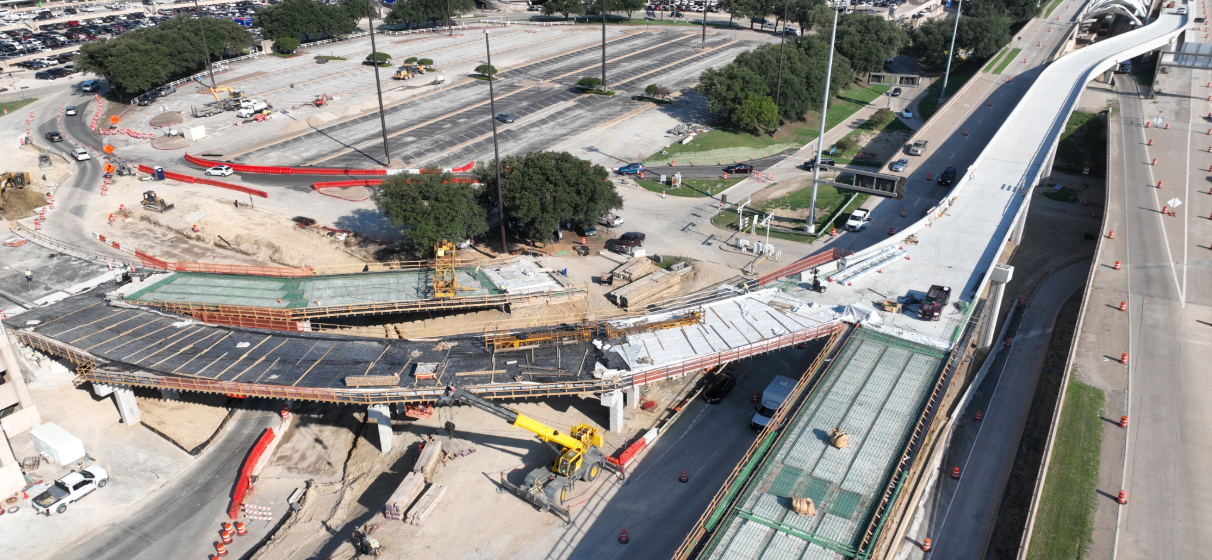
Every traveler entering the airport relies on International Parkway, the primary roadway connecting terminals, parking, rental car facilities and regional roadways. Modernizing it while the airport continues essential operations presented a challenge: how to replace 50-year-old bridge infrastructure, improve safety and wayfinding and prepare for future demand without disrupting traffic flow for customers who depend on it every day.
That challenge became intensified by scale. DFW is one of the largest and busiest airports in the world, advancing a $12 billion capital improvement plan, DFW Forward with hundreds of projects underway simultaneously. The International Parkway Modernization is the largest civil landside effort within the capital plan, spanning bridges, ramps, retaining walls, utilities, lighting and traffic systems. This work must be carefully sequenced to maintain continuous access to terminals, coordinate with adjacent construction and maintain the customer experience.
As part of DFW’s program management, construction management and civil landside planning team, STV, AZ&B (Ardurra) JV supports day-to-day coordination, design oversight and helping deliver complex improvements while maintaining uninterrupted airport operations. For a project like International Parkway, that role extends beyond oversight, requiring close integration across design and construction to manage disruption to traffic, maintain access and keep pace with an accelerated delivery schedule. Design-build has been central to that effort, enabling the flexibility, collaboration and real-time decision-making needed to advance work in an active airport environment.
Roadway System Modernization
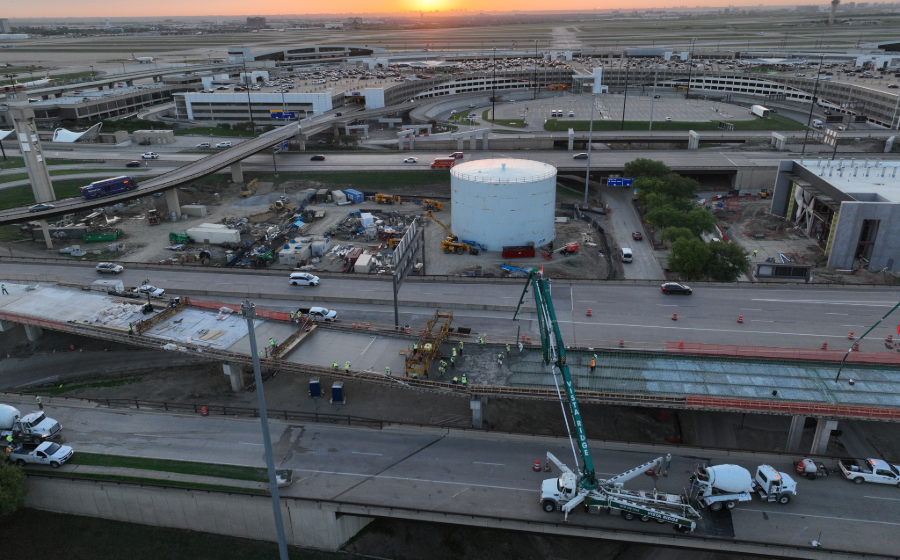
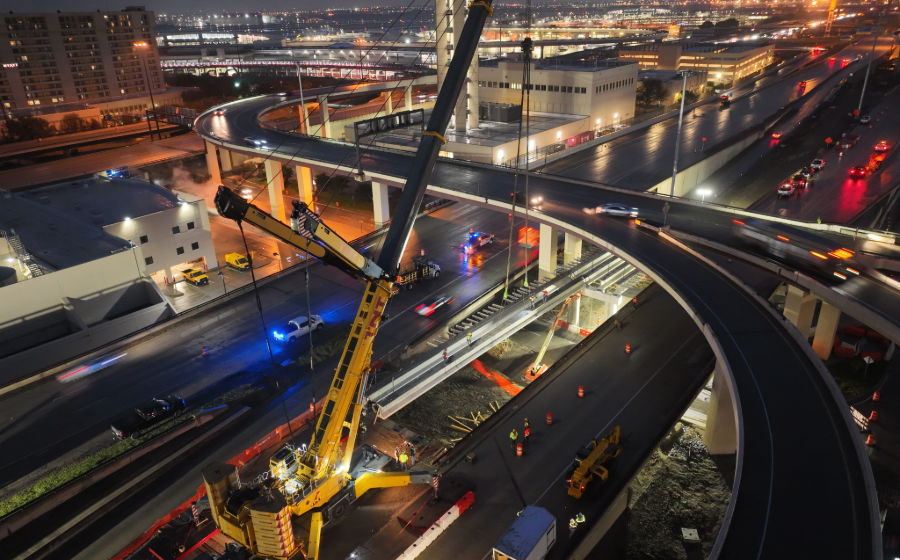
The International Parkway Modernization goes beyond roadway replacement. It is a comprehensive reconfiguration of how vehicles move through the airport. The project converted left-hand exits to more intuitive right-hand exits, improving traffic flow all while preserving operations without interruption. Improvements were implemented in phases across Terminals A, B and C with new right-hand exits now open, improving safety and creating more intuitive traffic flow for travelers.
These improvements were essential as DFW advances landside upgrades timed to support the summer peak travel period, including the arrival of global fans.
Why Design-Build Made the Difference
By integrating design and construction early, the team from the contractor Archer Western, designer Jacob and STV, AZ&B (Ardurra) JV was able to optimize alignments, refine phasing strategies and provide resolutions in a collaborative environmental. This approach facilitated fast‑tracking, allowing construction to proceed while the design continued to evolve in response to field conditions and operational constraints.
Design-build created a framework for shared accountability – aligning safety, schedule, cost and customer experience around a common set of goals.
Collaboration as a Core Strategy
The International Parkway project emphasized partnership through facilitated sessions with the owner, designer and contractor around a shared mission and vision, while structured communication protocols supported transparency and accountability at every level of the team.
Regular task-team meetings, hands-on design reviews and close coordination between engineering and construction teams allowed any challenges to be addressed early. Ongoing engagement with airport operations, airlines, utilities and public agencies ensured decisions were informed by real-world operational needs.
Digital Tools Supporting Informed Decisions
Digital collaboration was also essential. Visualization tools, 3D models and virtual drive-throughs helped stakeholders understand proposed changes well before construction. Traffic modeling and simulated dry runs allowed the team to test phasing scenarios, refine maintenance-of-traffic plans and reduce uncertainty around major closures.
BIM was integrated as part of DFW’s broader digital strategy, supporting not only design coordination but long-term operational value as assets become incorporated into the airport’s evolving digital ecosystem.
Looking Ahead
With major access improvements now in place, the International Parkway Modernization is demonstrating how complex infrastructure can be delivered within an active, evolving environment designed to strengthen connectivity, improve safety and maintain operations.
Managing this work in an operating airport reinforced – in practical ways – the value of early integration, shared accountability and trust, principles that are increasingly crucial as airports across the globe face growing demand and heightened expectations.