Fatalities associated with wrong-way driving (WWD) are on the rise, driven by increased traffic volumes, impaired driving and distracted motorists: making WWD one of the nation’s deadliest roadway hazards agencies face today.
When the Washington State Department of Transportation (WSDOT) set out to reduce the potential for wrong-way crashes, the agency partnered with STV’s mobility technologies team to move beyond reactive fixes toward predictive prevention. Our objective was clear: identify where risk concentrates, understand why it occurs and translate insight into targeted, buildable safety solutions across Washington’s highway system.
By combining advanced analytics with field-tested engineering judgment, STV delivered a clear, actionable roadmap for reducing wrong-way crashes: one grounded in data, validated in the field and designed for long-term impact.
- Crash Data Review
Our team analyzed five years of Washington State Patrol wrong-way driving logs, isolating corridors and interchanges with the highest incident rates. Beyond identifying hotspots, the analysis revealed repeatable patterns (time of day, roadway geometry and driver behavior) that helped prioritize where interventions would make the greatest difference.
- On-Site Roadway Surveys
Data is most powerful when tested against reality. Over several days, our engineers conducted field visits across the state, validating the analytics with real-world conditions and identifying subtle design issues that only emerge on the roadway itself. - Tiered Mitigation Measures
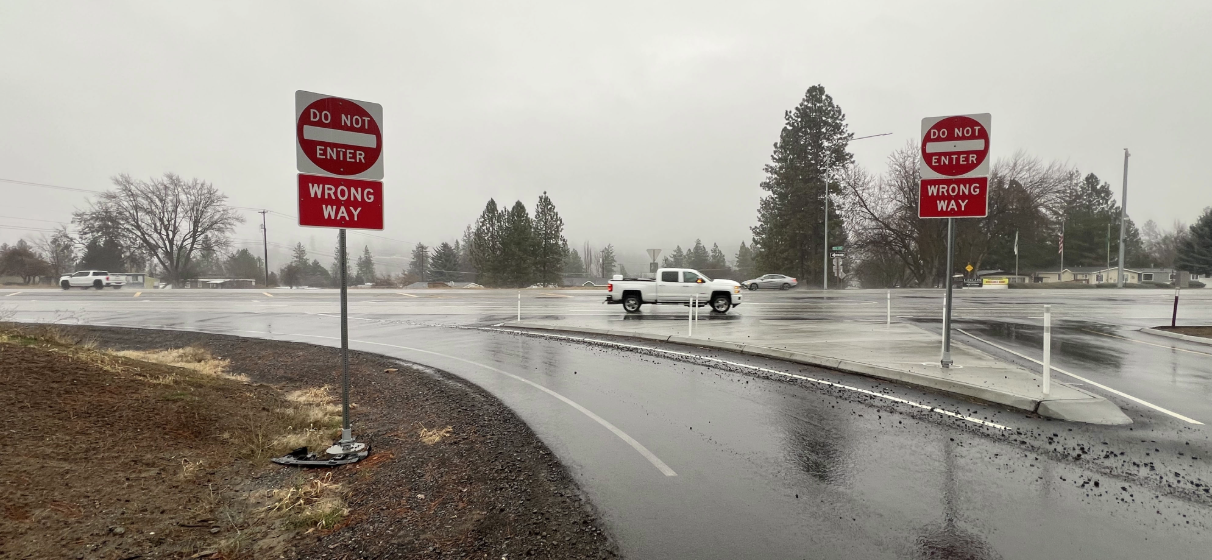
Drawing on national team of experts, we recommended a suite of scalable improvements, from high-visibility LED “Wrong Way” and “Do Not Enter” signs to upgraded striping and geometric refinements. Each countermeasure was tailored to site-specific risk, operational constraints and cost effectiveness, so recommendations could move quickly from concept to construction. - Interactive Power BI + GIS Dashboard
To keep safety improvements dynamic, we delivered a custom dashboard that integrates Power BI and GIS mapping. WSDOT can now visualize incidents, monitor mitigation performance and prioritize funding in real time, transforming static crash data into a living decision-support system.
The value of predictive analytics is not in the model alone, but in how effectively it informs day-to-day decisions. At STV, data scientists and transportation engineers work side by side to operationalize raw crash logs, sensor feeds and mobility data into actionable roadway improvements.
- Advanced Analytics and Machine Learning that transform raw transportation data into proactive safety strategies.
- Custom Dashboards and Integrations with agency systems for continuous monitoring and instant insights.
- End-to-End Delivery from grant funding support to design and implementation, ensuring that recommendations become built solutions.
As agencies prepare for the future of connected and autonomous vehicles, real-time roadway intelligence will be critical to protecting drivers, passengers and communities. STV’s integrated approach, combining engineering expertise, mobility data and digital delivery, helps owners shift from reactive response to predictive prevention for safer highways, fewer fatalities and stronger connections between the communities these roads serve.