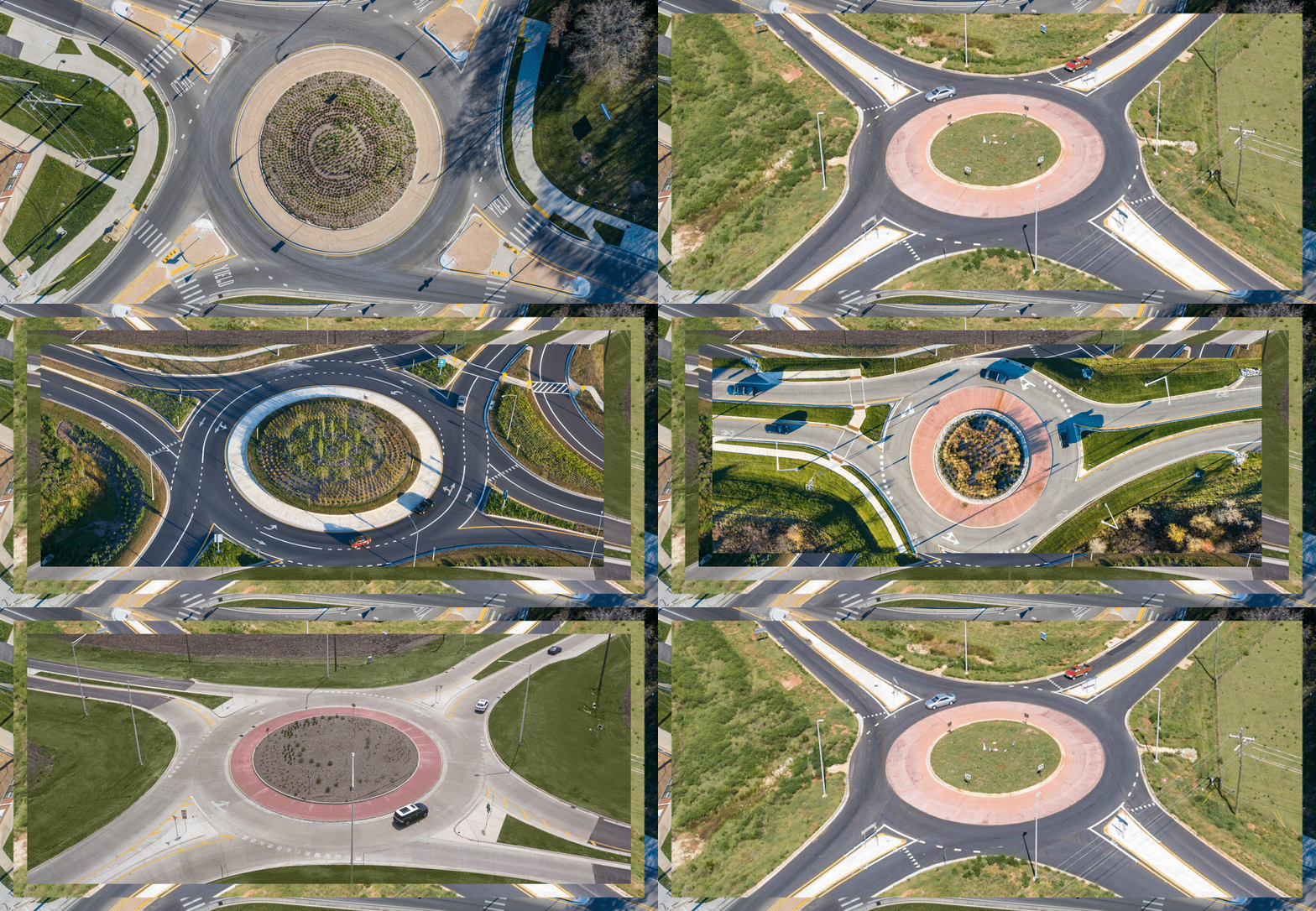
Roundabouts are having a moment in the United States – and STV is playing a key part in this movement.
STV’s recent selection by the Connecticut Department of Transportation to help modernize a busy interchange in Glastonbury is just the latest entrant in the firm’s growing portfolio of roundabouts across the United States.
From nearly 50 roundabouts in Georgia to multiple safety-enhancing designs in Illinois, as well as other efforts in South Carolina, North Carolina, Kentucky and more, STV’s engineering, planning and project delivery experts are helping transportation agencies and other stakeholders who are turning towards these circular intersections to create safer, more efficient roadways.
Here’s why:
- Studies backed by the Federal Highway Administration (FHWA) show that intersections converted to roundabouts reduce total crashes by 35-47%
- The Insurance Institute for Highway Safety reports that roundabout conversions lead to 72-80% fewer injury crashes.
That’s because, by requiring vehicles to slow down and yield to circulating traffic, roundabouts reduce high-speed collisions and create safer conditions for pedestrians and cyclists.
Despite some initial hesitations, communities are warming to roundabouts quickly. A 2020 survey in Washington state found a 31% increase in favorability after drivers experienced the benefits of smoother flow and safer turning movements.
At STV, our planners, engineers and project delivery experts have helped clients nationwide rethink intersections and corridors with roundabouts – from rural roadways to urban gateways.
Here are some of the projects where STV helped reimagine traditional intersections into modern, safe and efficient roundabouts.
Burlington Road at Bolcum Road – Campton Hills, Illinois
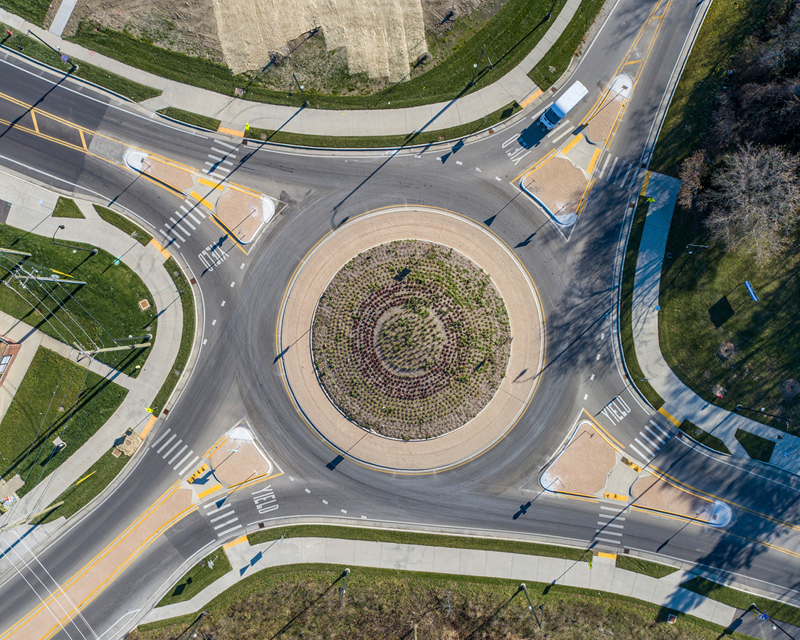
What was once a problematic “T” intersection plagued by backups and unsafe left turns is now a safer, more efficient roundabout serving more than 17,000 vehicles daily. On behalf of the Kane County Department of Transportation, STV delivered construction inspection services for this compact roundabout, designed to ease congestion while fitting within a tight footprint.
To meet an ambitious five-month construction timeline, STV developed innovative traffic staging plans that repurposed existing pavement where possible. The final design also integrated new drainage, sidewalks and lighting, along with a landscaped center island and a colored concrete apron to accommodate large trucks. The result: a modern roundabout that improves safety, mobility and aesthetics for the growing community.
Audrey Nixon Boulevard – North Chicago & Waukegan, Illinois
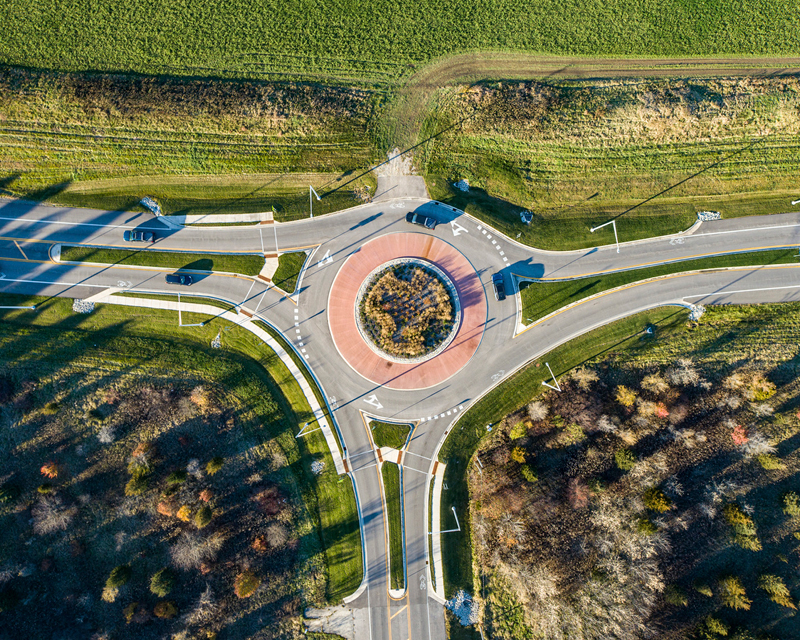
Audrey Nixon Boulevard is a vital corridor linking residential neighborhoods, schools and recreation spaces. Originally a four-lane roadway with limited pedestrian infrastructure, it presented safety and congestion challenges. STV provided construction engineering services for the Lake County Division of Transportation to deliver a reimagined corridor, transforming it into a more balanced, multimodal roadway.
A centerpiece of the project is the new roundabout at Dugdale Road, which replaces a conventional intersection and smooths traffic flow with safer turning movements. Beyond vehicles, the redesign adds sidewalks, bike paths, and signalized crosswalks, creating safe connections for pedestrians and cyclists. The roundabout also plays a role in linking the Greenbelt Forest Preserve with the Robert McClory Bike Path, improving recreation access for the community.
I-69 Ohio River Crossing – Henderson, Kentucky
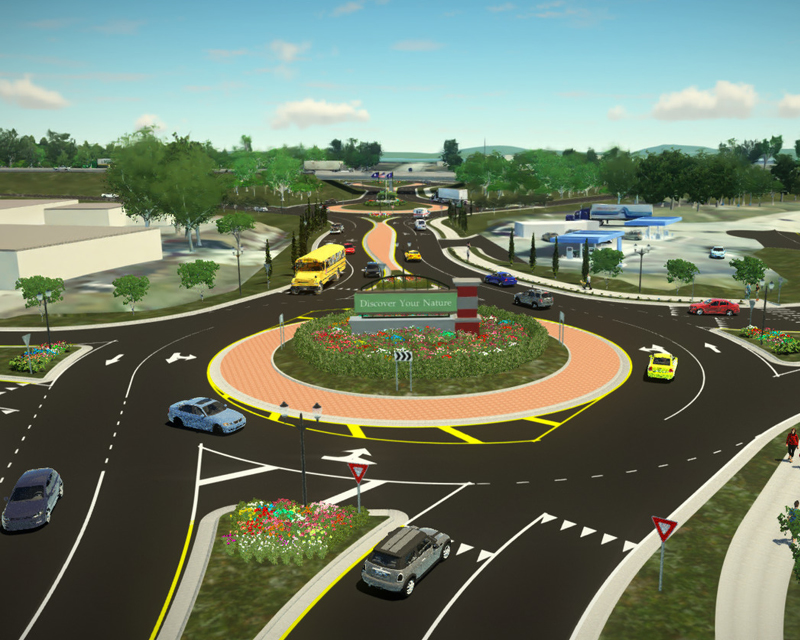
Few projects illustrate the transformative power of roundabouts better than the I-69 Ohio River Crossing (ORX). The new four-lane corridor connects Evansville, Indiana, with Henderson, Kentucky – a vital regional link. To address safety and efficiency challenges at the KY 351 interchange, STV designed a triple roundabout configuration that replaces outdated cloverleaf ramps with a more compact and streamlined system.
The innovative design reduces congestion and eliminates unsafe loop ramps, all while minimizing right-of-way impacts. To bring the concept to life for stakeholders, STV developed 3D and virtual reality models that allowed community members and officials to “experience” the roundabouts in action. The immersive visuals helped build consensus, demonstrating how the reimagined interchange would function as both a regional gateway and a safer community corridor near schools and neighborhoods.
S-75/Cherokee Road – Anderson County, South Carolina
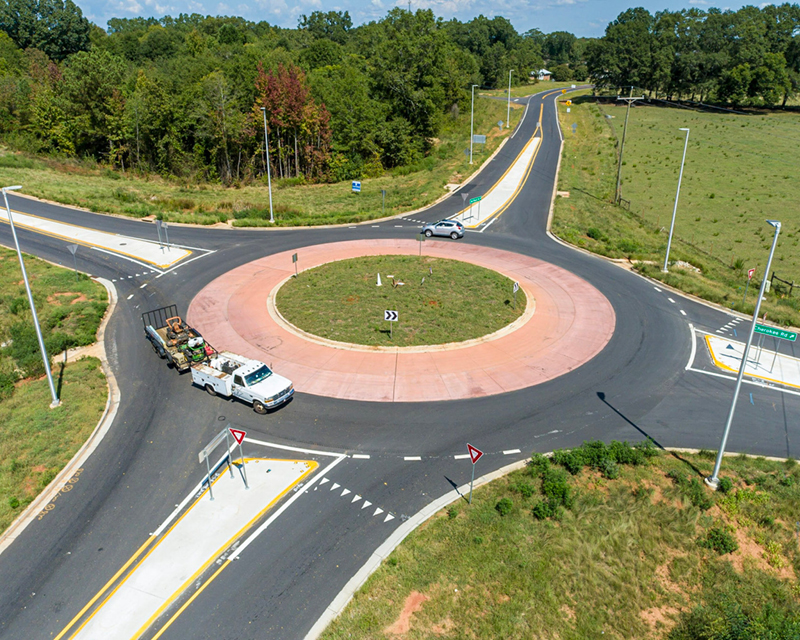
In Anderson County, South Carolina, STV worked with the state Department of Transportation to replace a deficient bridge over US 29 and redesign nearby connections. A traditional signalized intersection had been proposed for an adjacent roadway, but STV identified a roundabout as the safer, more economical choice.
Though less common in rural areas, the roundabout solution reduced impacts to wetlands and surrounding property, preserved right-of-way, and improved overall traffic operations. The new design also accommodates freight vehicles on US 29, supporting both safety and future economic growth. This project demonstrates how roundabouts can be just as effective in rural communities as they are in urban ones.
Darrell Road at Neville Road/Case Road Roundabout Conversion – Wauconda Township, Illinois
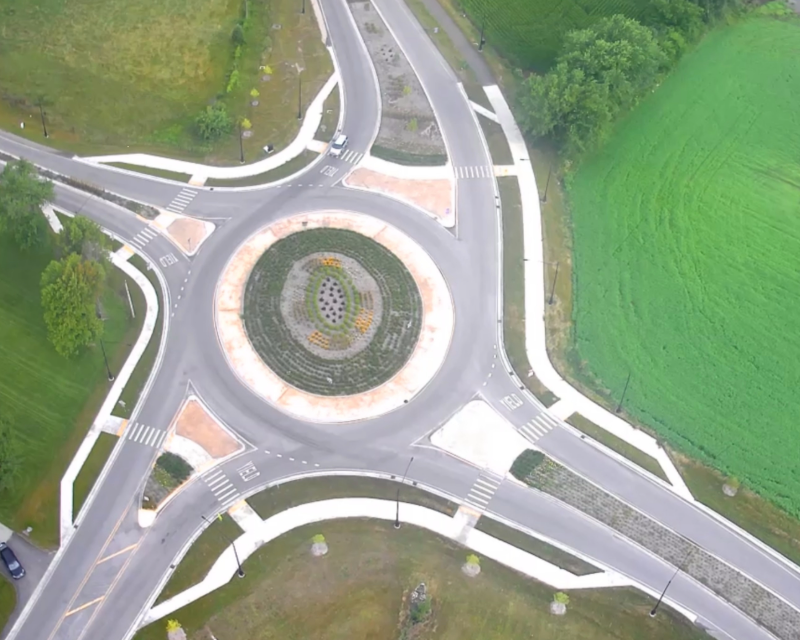
In response to a projected doubling in regional traffic over the next two decades, STV expertly transformed two offset T‑intersections into a single, streamlined single‑lane roundabout – significantly enhancing safety, sightlines and mobility for more than 10,000 daily users. The team championed Complete Streets principles by integrating sidewalks and bike paths connecting to the Black Crown Forest Preserve. As the construction manager on behalf of Lake County Division of Transportation, STV tackled challenging moisture and erosion issues through innovative subgrade drainage and soil stabilization techniques, managed crucial utility coordination and maintained transparent communication via a virtual pre‑construction open house. Thanks to this collaborative and proactive approach, the project was delivered ahead of schedule, improving infrastructure and delivering cleaner, safer connectivity to the community.