As K-12 education places greater emphasis on applied learning and workforce readiness, the relationship between curriculum and the built environment is becoming increasingly intertwined. Schools are expected to support hands-on instruction, technical training and real-world problem solving – often beginning earlier in a student’s academic journey, with facilities playing an increasingly important role in preparing students for the skills and careers that local economies depend on.
Angela Cahill, AIA, NCARB, LEED AP, is a project executive for program management and construction management at STV, where she oversees the delivery of complex K-12 facilities. In parallel, her involvement with statewide student programs such as SkillsUSA gives her direct insight into how students are taught to think, communicate and demonstrate intent well before they enter the workforce.
That dual perspective – spanning both educational delivery and facility planning – offers a useful lens on how school environments are evolving. In this interview, Cahill discusses what she’s observing in today’s students, how those shifts are influencing campus design, and what they may signal for the future of K-12 facilities planning.
1. What stands out to you about how learning is changing?
What strikes me is how early students are being asked to think like professionals. At SkillsUSA, students aren’t judged just on whether something looks good – they’re evaluated on accuracy, clarity and how well they communicate design intent. Those are the same skills that matter in real project delivery. Education is shifting from theory‑based learning to applied thinking much earlier, and that shift has direct implications for the spaces where learning happens.
2. How does that perspective influence how you think about school design and planning?
It reinforces the idea that facilities can’t be generic anymore. If students are learning through doing, the environments in which they learn need to reflect real-world conditions. That could be a lab, a technical space or another specialized setting, but the key is alignment. That means bringing educators, owners and project teams together early to align curriculum goals, equipment needs and space planning from the start, rather than treating them as separate decisions. When curriculum and facilities are planned together, the building itself becomes part of the educational process rather than just a container for it.
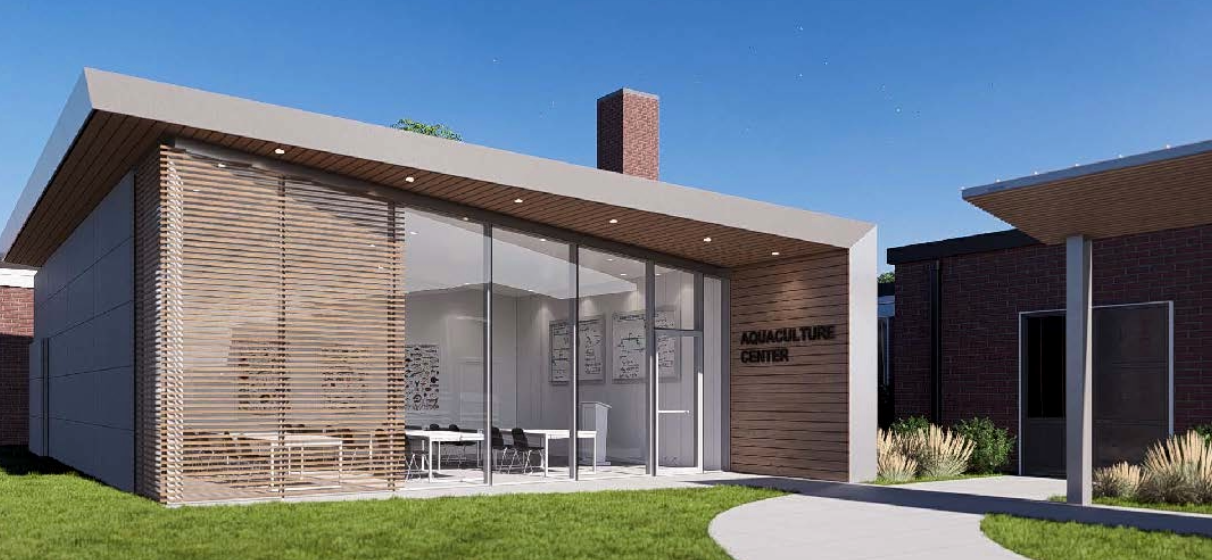
3. How does Rockville High School Aquaculture Laboratory, where STV served as the owner’s project manager, reflect that alignment?
Rockville was designed specifically around the school’s Agricultural Sciences & Technology program. The facility combines classroom instruction with hands‑on lab space where students work directly with aquaculture systems. It’s a strong example of a building designed around what students need to practice and experience, not just what they need to study, helping students develop skills that translate directly to regional agricultural and technical career pathways.
4. From a delivery standpoint, what becomes more complex with career‑focused facilities like this?
These projects require much earlier and deeper collaboration. At Rockville, the team had to integrate specialized systems while the school remained operational, which meant working closely with educators to understand how the space would be used day to day. That shared understanding helps ensure the facility, the program and the equipment all support one another over the long term.
5. Based on what you’re seeing – both with students and with facilities – what does the future of K‑12 campus planning look like?
I think we’ll continue to see campuses defined less by traditional classrooms and more by flexible, program‑driven spaces that support applied learning. As workforce readiness becomes a bigger priority, facilities will need to help students build real‑world skills earlier. We’re already seeing that take shape in projects like Memorial School, where planning is centered around flexible learning environments, STEM and makerspace labs, breakout areas and outdoor classrooms – all designed to support a broader range of teaching approaches and student services. The most effective schools will be the ones where the physical environment actively supports how students learn and prepare for what comes next.
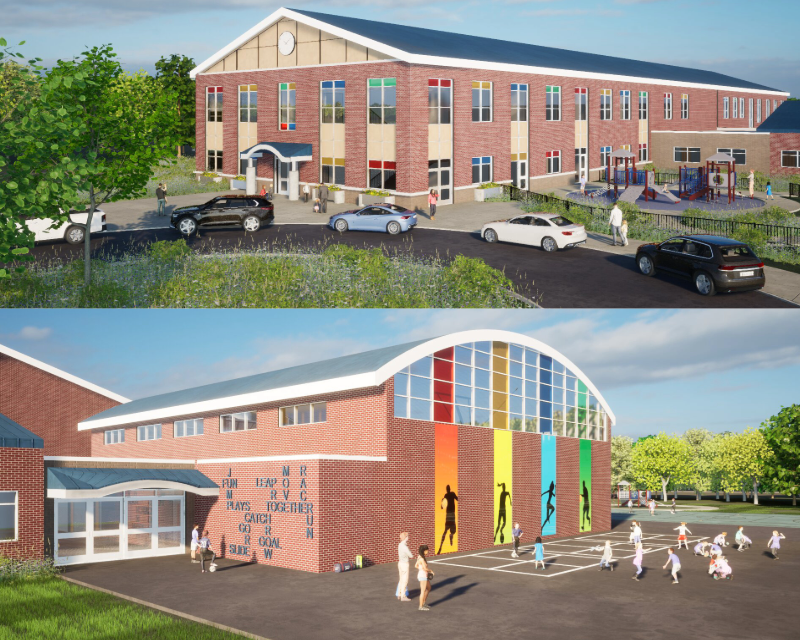
Rendering: QA+M Architecture