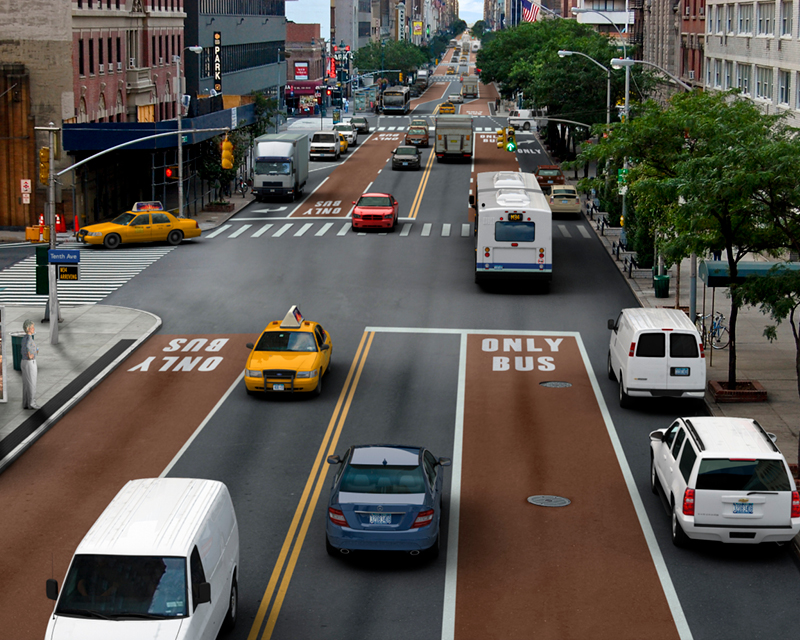
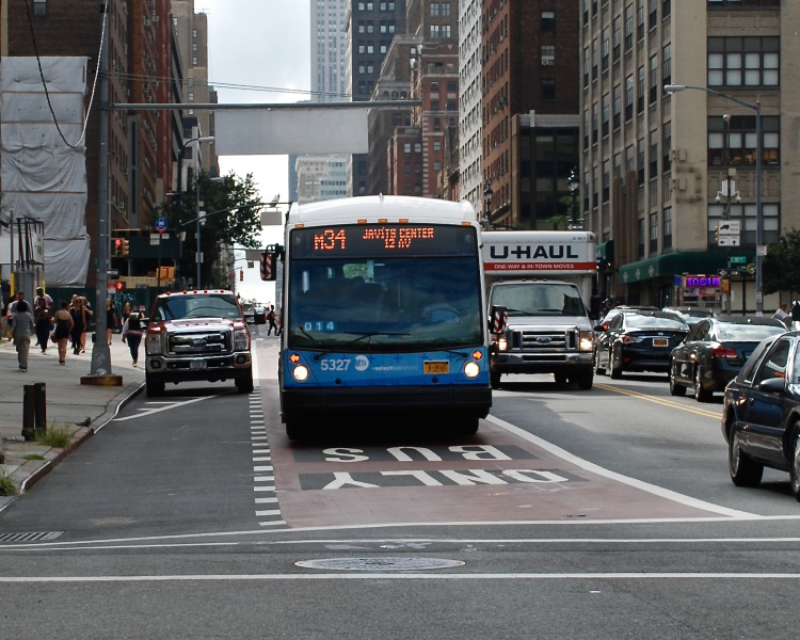
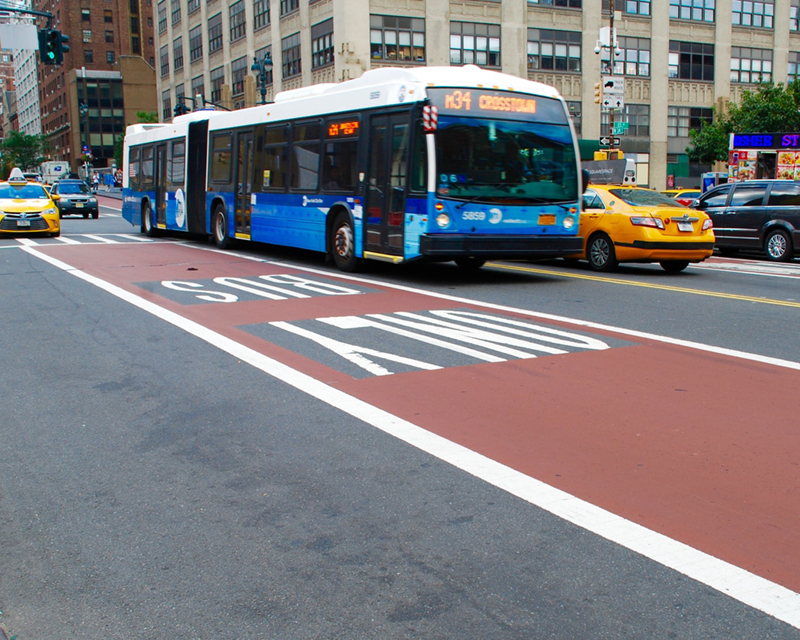
Running through the core of Midtown Manhattan, 34th Street is one of New York City’s most heavily traveled east‑west corridors. To alleviate chronic congestion and improve bus travel times, the New York City Department of Transportation (NYCDOT), in partnership with MTA New York City Transit (NYC Transit), launched an initiative to implement Select Bus Service (SBS) along this two‑mile stretch between the East River and Hudson River. STV supported this effort by providing preliminary engineering and design services to introduce offset, bus‑only lanes and other operational improvements that enhance service reliability and convenience for the corridor’s thousands of daily riders.
What challenges did STV address?
The corridor’s extreme congestion, high pedestrian volumes and limited roadway width posed significant obstacles to improving bus performance. NYCDOT needed a robust understanding of how SBS treatments, such as dedicated lanes, limited stops and revised curbside operations, would affect traffic, mobility and safety. This required sophisticated modeling and data analysis to evaluate future conditions and achieve consensus among key stakeholders.
What solutions did STV deliver?
STV developed an ambitious traffic model incorporating traffic and pedestrian simulations to assess potential SBS impacts on the corridor. The firm collected extensive field data and prepared engineering designs for offset bus‑only lanes, station spacing and related improvements to help NYCDOT and NYC Transit enhance crosstown bus operations. STV’s work provided the technical foundation needed to implement a faster, more reliable SBS service.
How does this project benefit the region?
The improvements help reduce travel times, increase ridership and enhance overall reliability along one of Manhattan’s most critical transit corridors. Faster and more predictable bus service improves mobility for commuters, supports economic activity and enhances the daily travel experience for residents, workers, and visitors.
Key stats and accolades
- 2‑mile crosstown corridor from river to river
- Traffic and pedestrian modeling to forecast SBS performance
- Offset bus‑only lanes designed to reduce congestion
- Supports faster, more reliable crosstown bus service