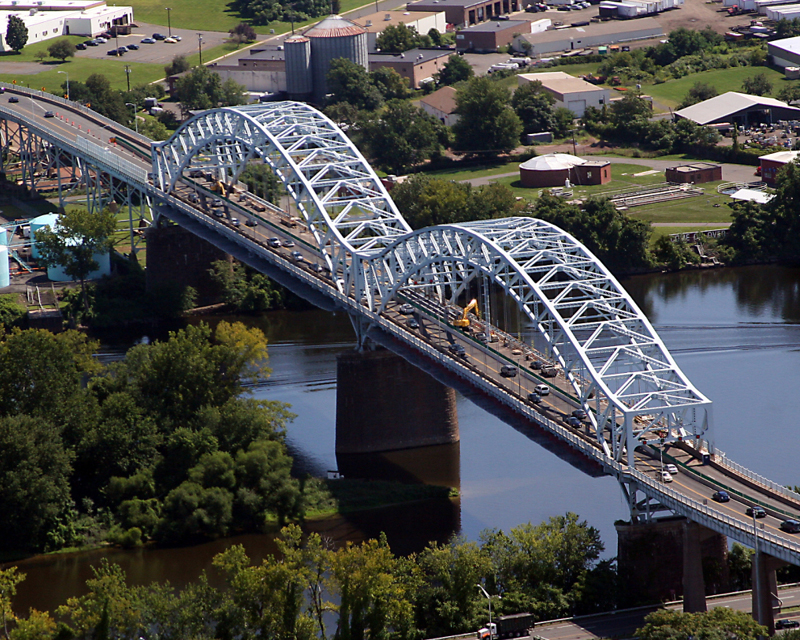
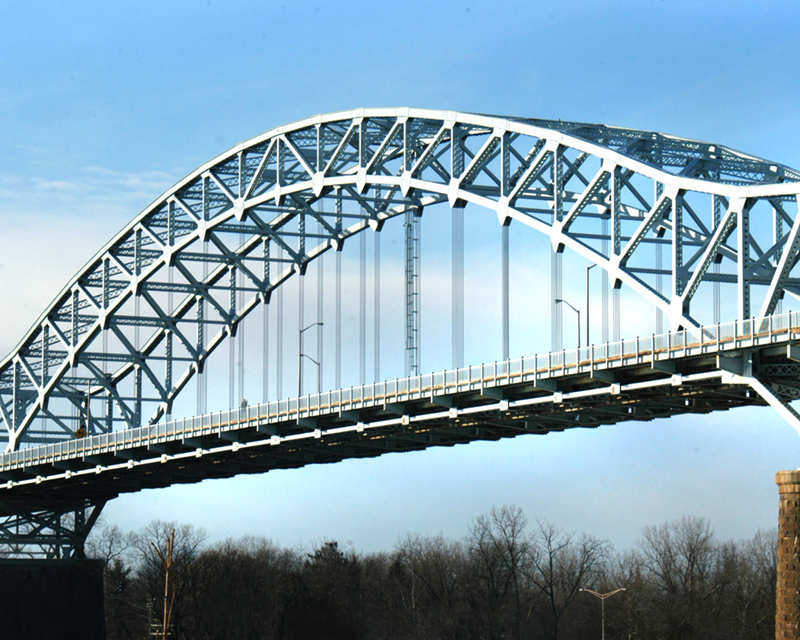
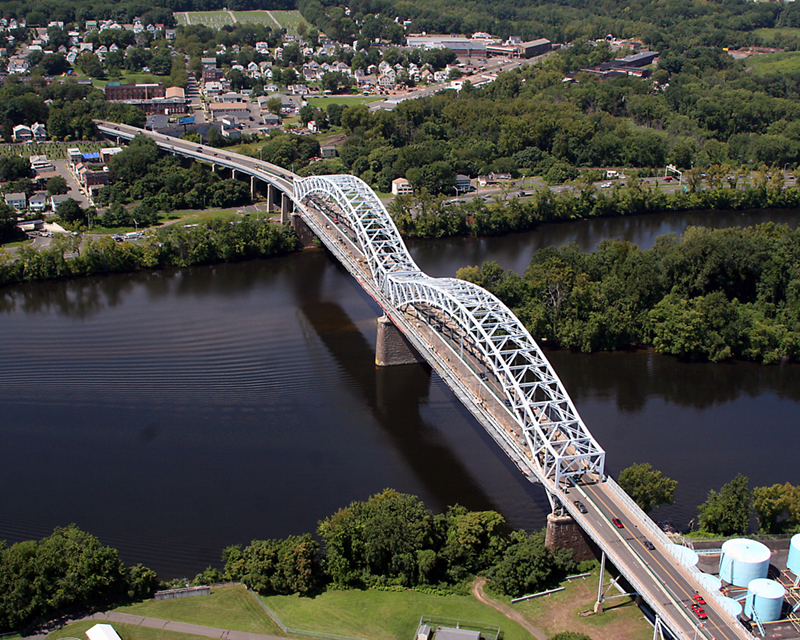
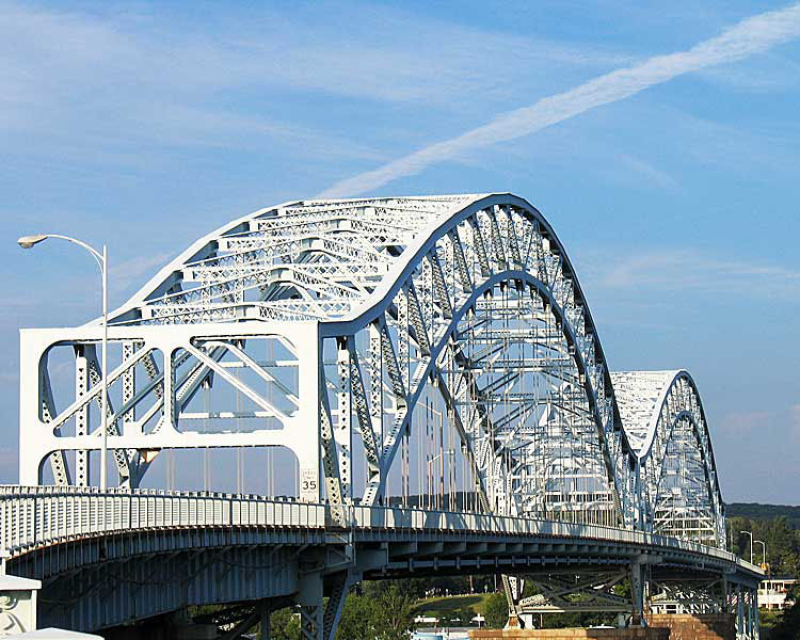
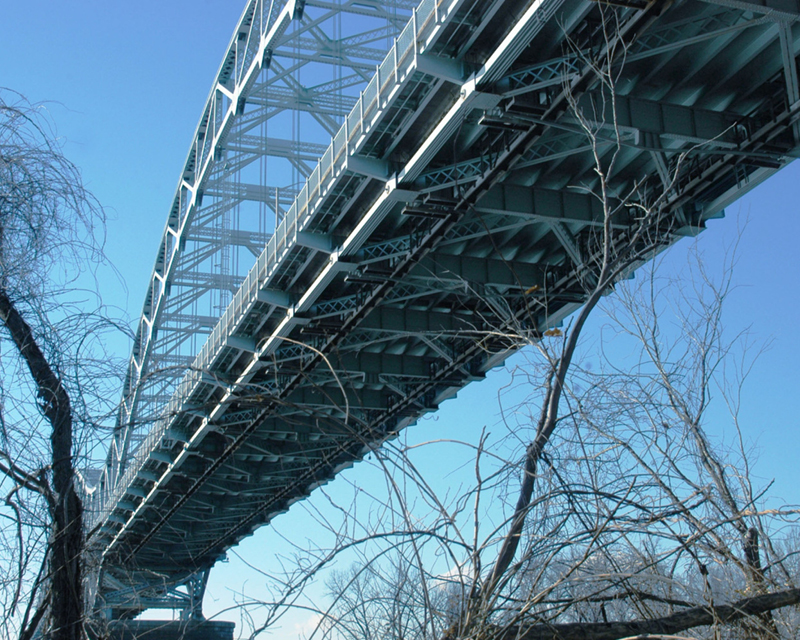
Since its opening in 1938, the 3,428‑foot Charles J. Arrigoni Bridge has stood as Connecticut’s longest bridge span and one of its most iconic structures, with twin tied through‑arch spans crossing the Connecticut River between Middletown and Portland. Carrying Routes 66 and 17, the bridge is essential to regional mobility. When inspections revealed significant deterioration in the concrete‑filled steel grid deck, the Connecticut Department of Transportation (CTDOT) prioritized rehabilitation to preserve the structure and maintain safe, reliable travel for thousands of daily users.
What challenges did STV address?
CTDOT needed to replace the aging deck on an accelerated schedule while keeping the bridge open to traffic – a major challenge given the structure’s age, complex composite materials and need for precise coordination. With steel types dating back to 1938, including low‑carbon and high‑strength silicon steels, the rehabilitation required careful material evaluation and design solutions that would integrate seamlessly with the existing structure.
What solutions did STV deliver?
STV delivered full design and cost estimating services under an expedited three‑month schedule. The final design replaced 50,000 square feet of bridge deck while maintaining traffic flow and ensuring long‑term durability. The team engineered a solution that accommodated the bridge’s unique historic materials, improved overall deck performance, and minimized disruption to commuters and businesses dependent on this critical river crossing.
How does this project benefit the region?
The rehabilitation extends the life of one of Connecticut’s most important transportation assets, improving safety, ride quality and system reliability. By strengthening a major link between communities east and west of the Connecticut River, the project supports economic activity, reduces congestion and preserves a beloved landmark for generations to come.
Key stats and accolades
- 3,428‑foot tied through‑arch bridge
- 50,000 sf deck replacement
- Opened in 1938 as Connecticut’s longest span
- Accelerated design delivered in three months