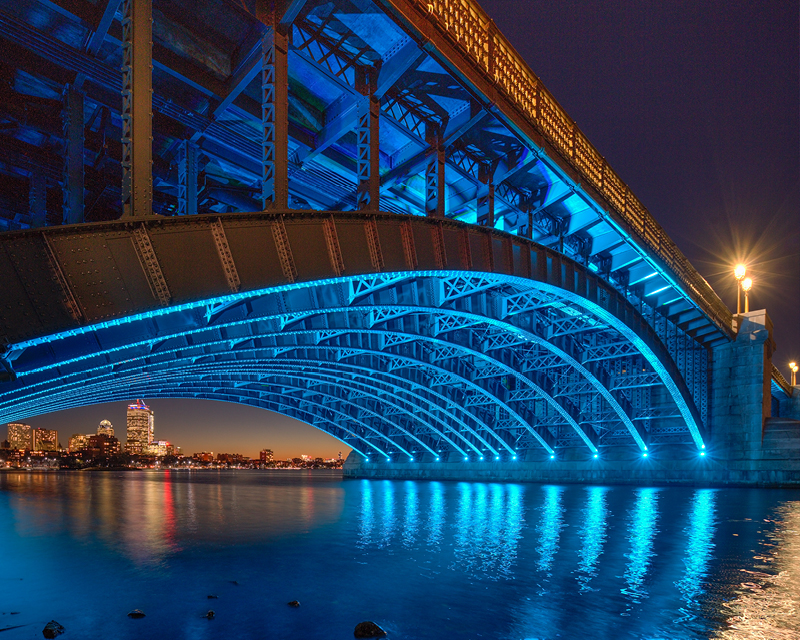
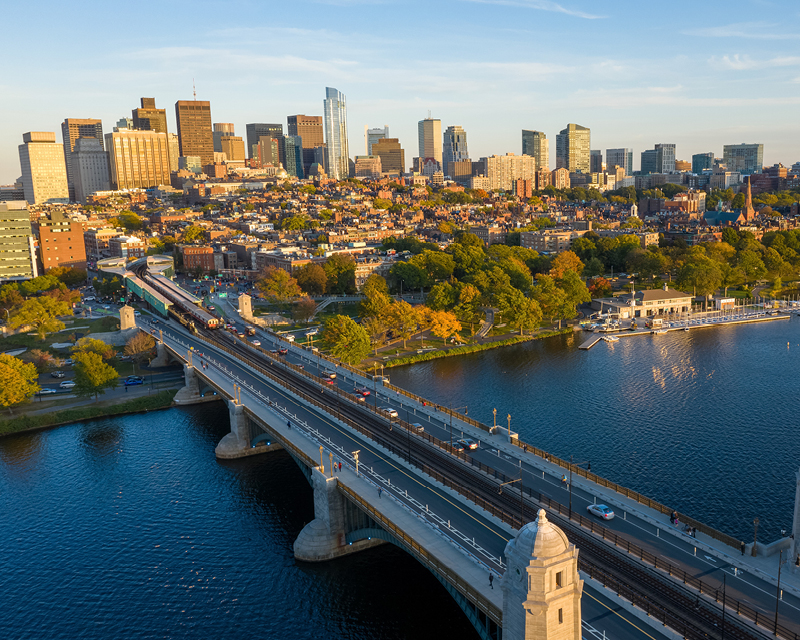
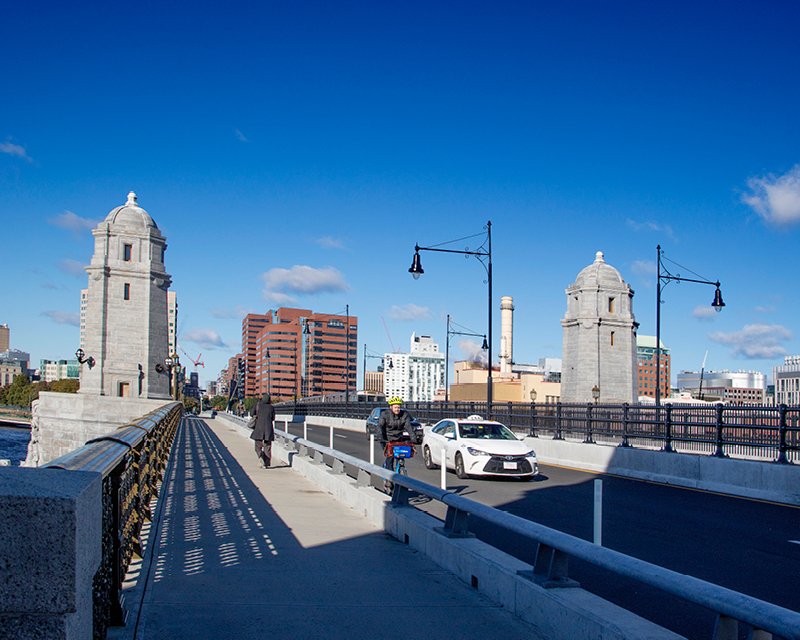
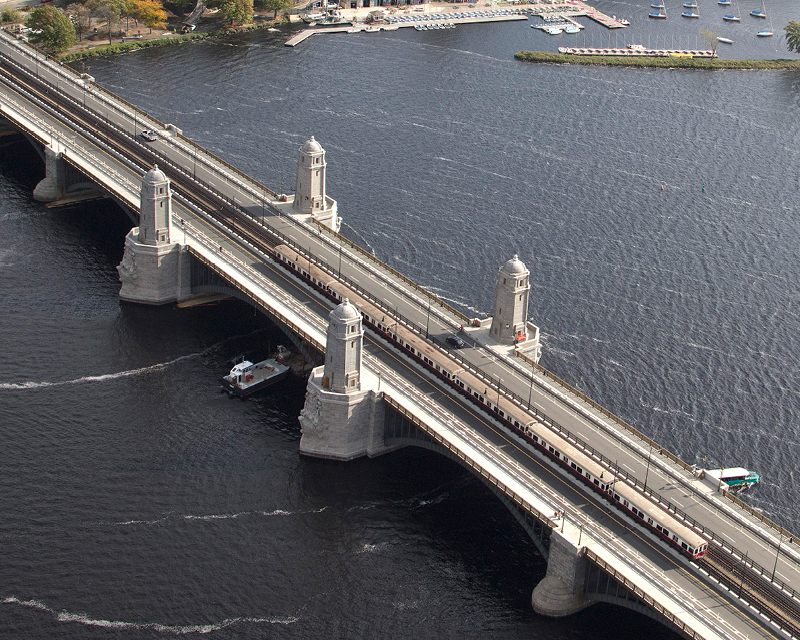
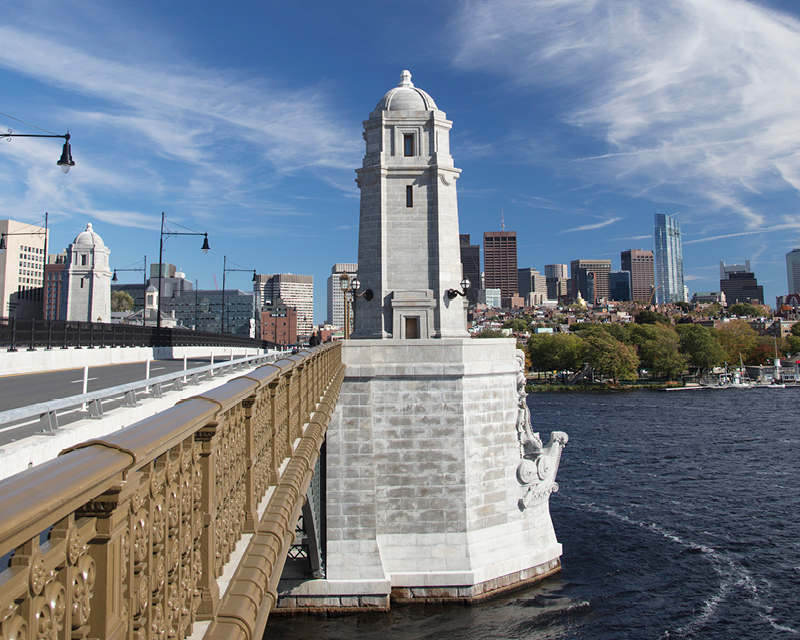
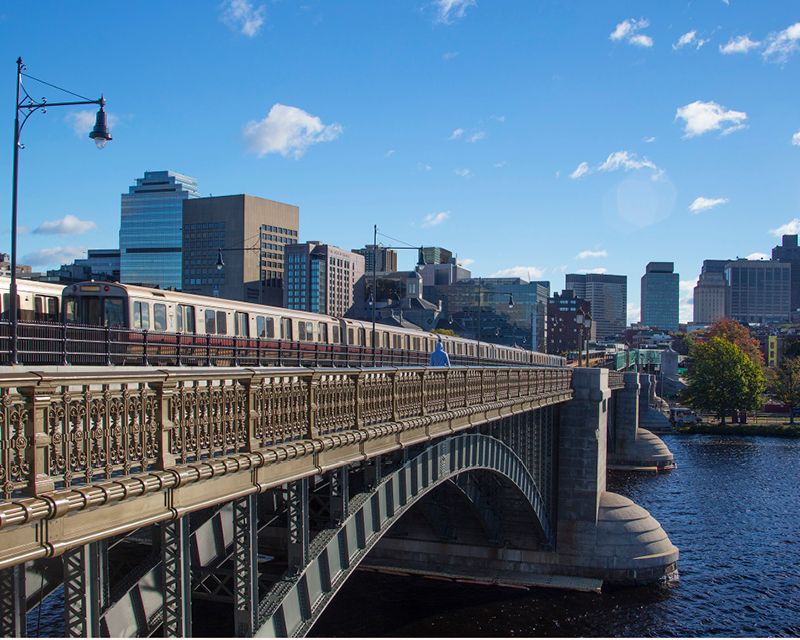
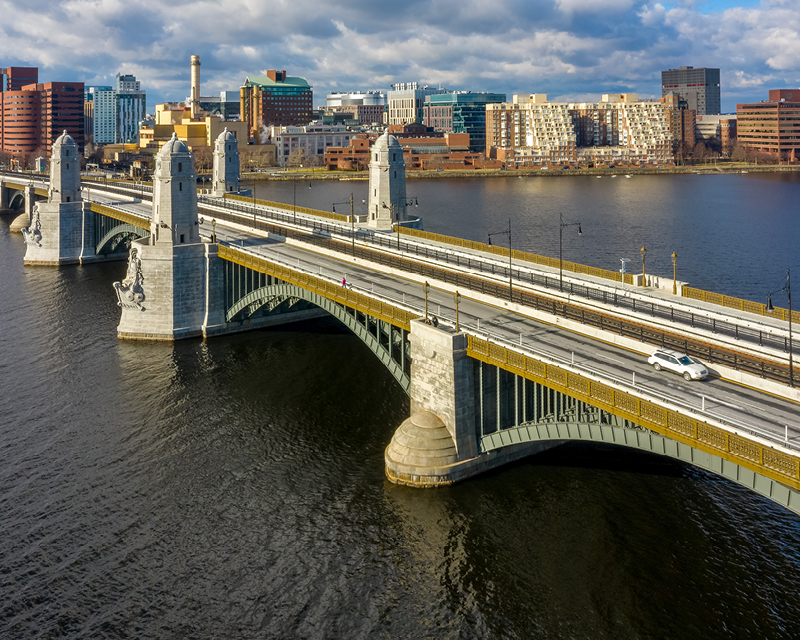
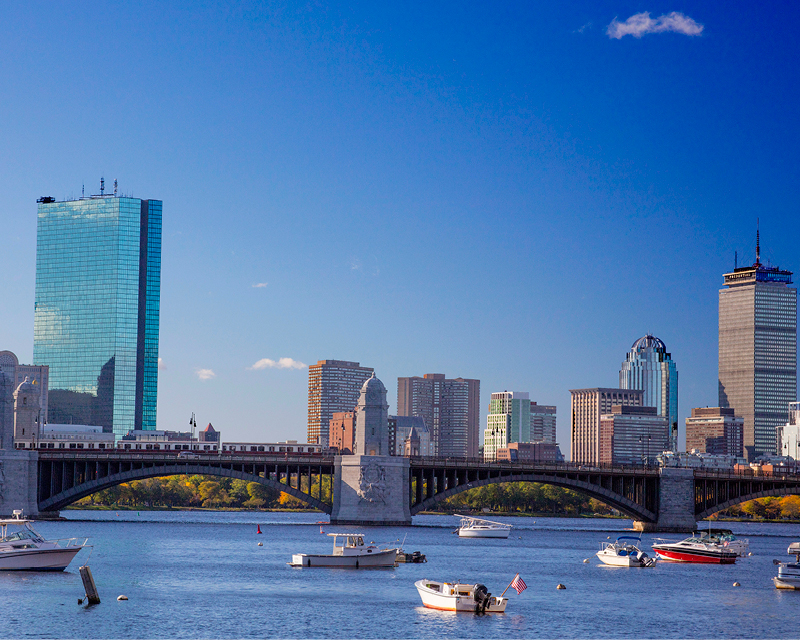
One of Massachusetts’ most iconic and historically significant structures, the Longfellow Bridge has been restored to its original architectural grandeur while modernized to meet 21st‑century multimodal transportation demands. Known locally as the “Salt and Pepper Bridge” for its distinctive granite piers and towers, the bridge carries both Route 3 and the MBTA Red Line over the Charles River, linking Boston and Cambridge. After more than a century of service, the bridge showed extensive deterioration in its arches, columns, masonry and metalwork, requiring a comprehensive rehabilitation to ensure long-term stability and public safety.
What challenges did STV address?
The project required preserving the bridge’s historic character while upgrading structural capacity to contemporary transportation standards. Significant deterioration across multiple structural and architectural elements demanded careful reconstruction, all while maintaining Red Line operations and accommodating vehicular, bicycle and pedestrian traffic along one of the region’s most critical mobility corridors.
What solutions did STV deliver?
Serving as the lead designer on the design-build team, STV modernized the structure to meet AASHTO requirements, adding three vehicle lanes, two bicycle lanes, and wider ADA-compliant sidewalks. STV designed improvements to the MBTA Red Line’s center tracks, including new traction power, communications and signal modifications. The team also provided construction support services to ensure the historically accurate reconstruction of the four signature 58‑foot masonry towers that anchor the center span.
How does this project benefit the region?
The rehabilitated Longfellow Bridge enhances safety, accessibility and multimodal mobility for the hundreds of thousands of travelers who depend on it daily. It preserves a beloved architectural landmark, improves transit reliability, and supports sustainable, inclusive transportation options across the Charles River. The project strengthens a vital connection between Boston and Cambridge and contributes to the region’s long-term infrastructure resilience.
Key stats and accolades
- 58‑foot reconstructed masonry towers
- 100‑year stabilization and structural rehabilitation
- 1793 original opening year of the river crossing
- Fully AASHTO‑compliant, with expanded bike and pedestrian facilities
- Honors from Boston Preservation Alliance, Massachusetts Historical Commission, National Trust for Historic Preservation, American Public Works Association, American Council of Engineering Companies and International Bridge Conference