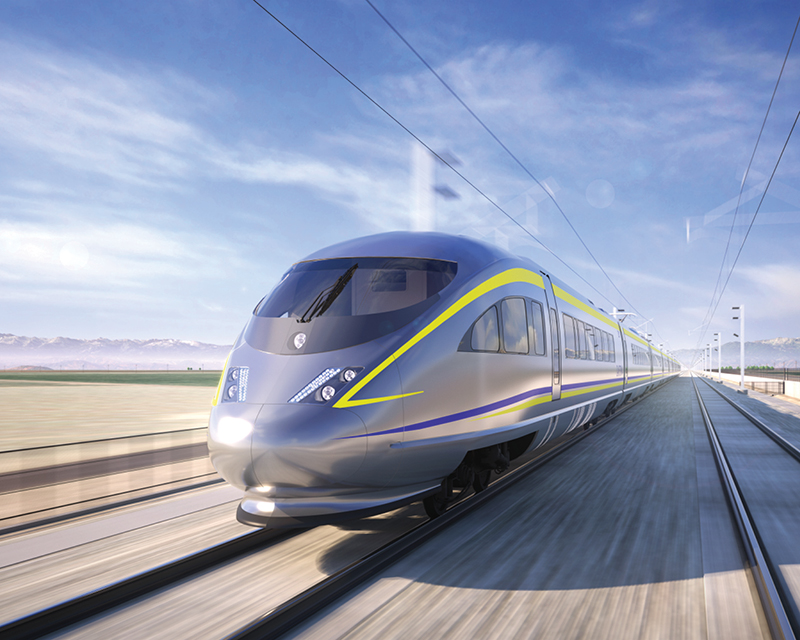
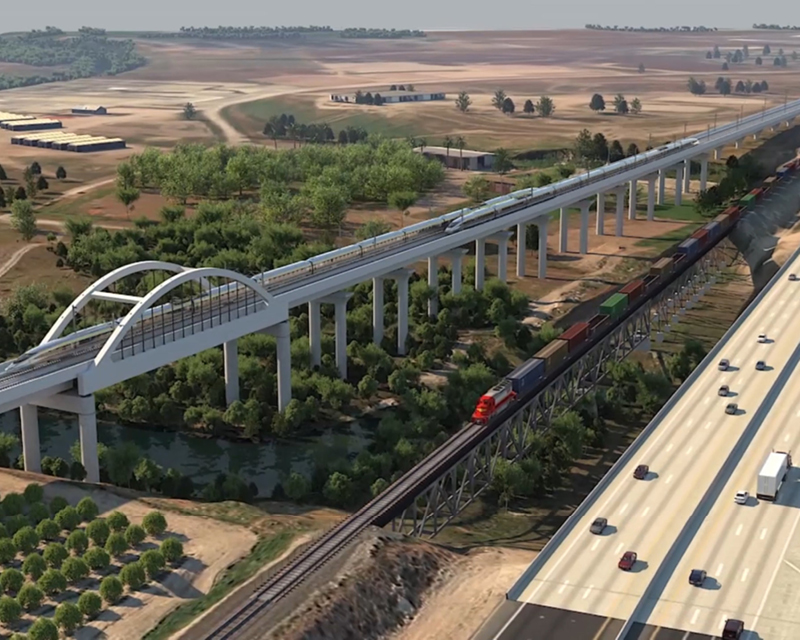
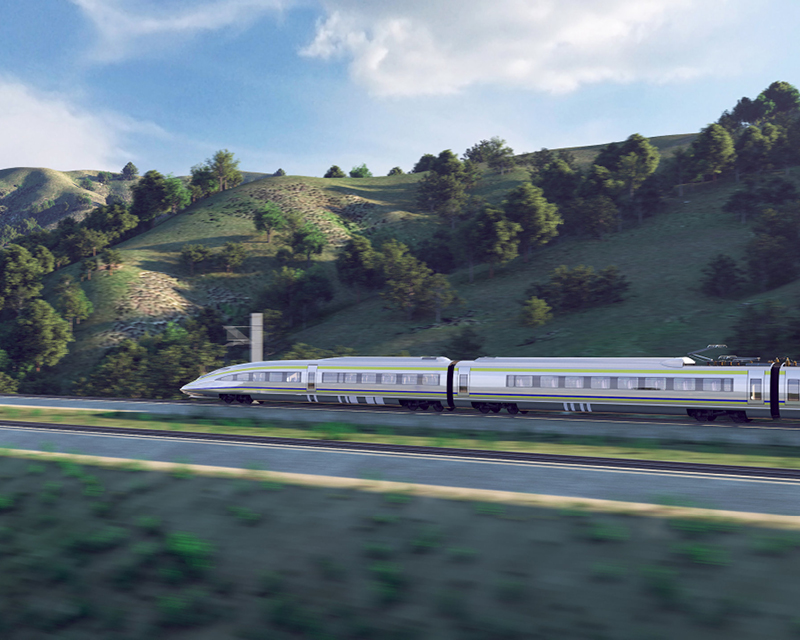

The California High‑Speed Rail (HSR) program is one of the most ambitious infrastructure endeavors in the United States, designed to connect major population centers with a state‑of‑the‑art, sustainable rail network. Spanning an envisioned 800 miles, the system will offer faster, cleaner and more efficient travel options for millions of Californians. Central to this effort are the 14‑mile Burbank to Los Angeles and the 30-mile Los Angeles to Anaheim sections.
What challenges are STV addressing?
Developing a high‑speed rail corridor within a constrained and densely developed urban environment required resolving significant engineering, environmental, and operational complexities. The California High‑Speed Rail Authority (CHSRA) needed a partner capable of preparing a robust Environmental Impact Report/Environmental Impact Statement (EIR/EIS) that addressed multi‑agency coordination, rail integration, environmental constraints and public engagement – including NEPA comment management and community responsiveness.
What solutions are STV delivering?
As the prime consultant, STV led the preparation and approval of the EIR/EIS for the Burbank to Los Angeles and Los Angeles to Anaheim sections, seamlessly integrating HSR operations with existing commuter, intercity, and freight rail service. In the Burbank to Los Angeles section, the team advanced the nation’s first planned HSR‑to‑airport connection while providing comprehensive environmental analysis, corridor planning, stakeholder coordination, and ongoing communications support. STV continues to assist CHSRA with NEPA processes, workflow alignment and multi‑agency engagement as the program advances.
How will this project benefit the region?
California High‑Speed Rail will revolutionize mobility across the state by reducing travel times, cutting emissions, alleviating highway and airport congestion and connecting communities to jobs, education, commerce, and tourism. With an estimated 68 million annual passengers expected, the project will transform transportation, support economic growth, and enhance sustainability for generations to come.
Key stats and accolades
- 800‑mile statewide high‑speed rail network
- First planned HSR–airport connection in the U.S.
- 68 million projected annual passengers