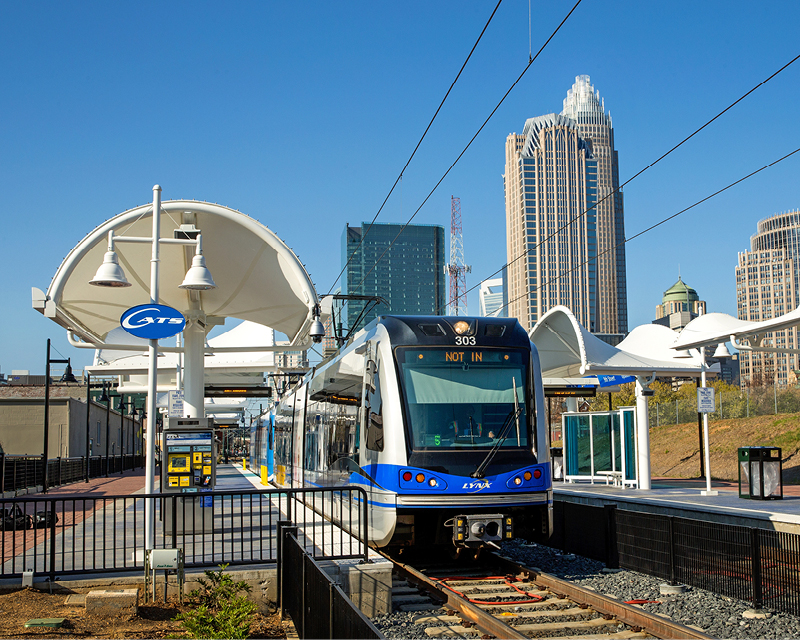
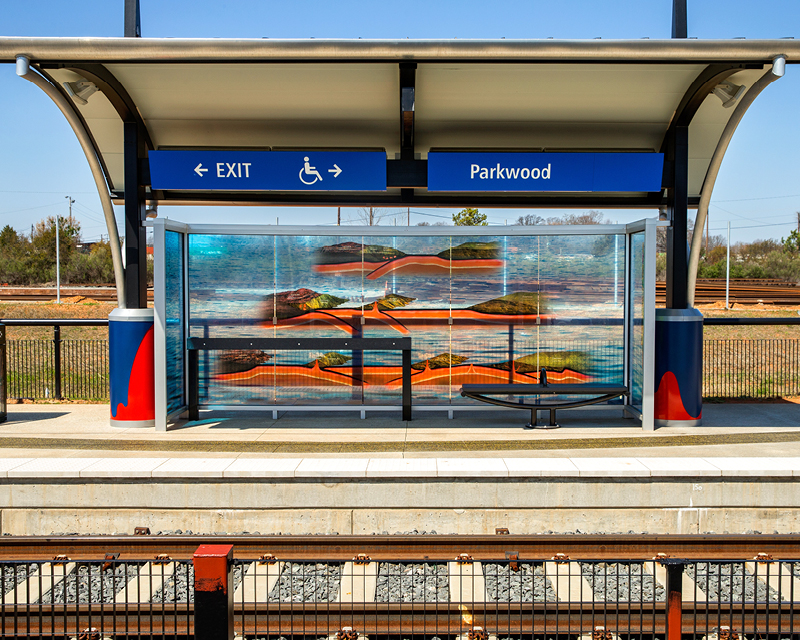
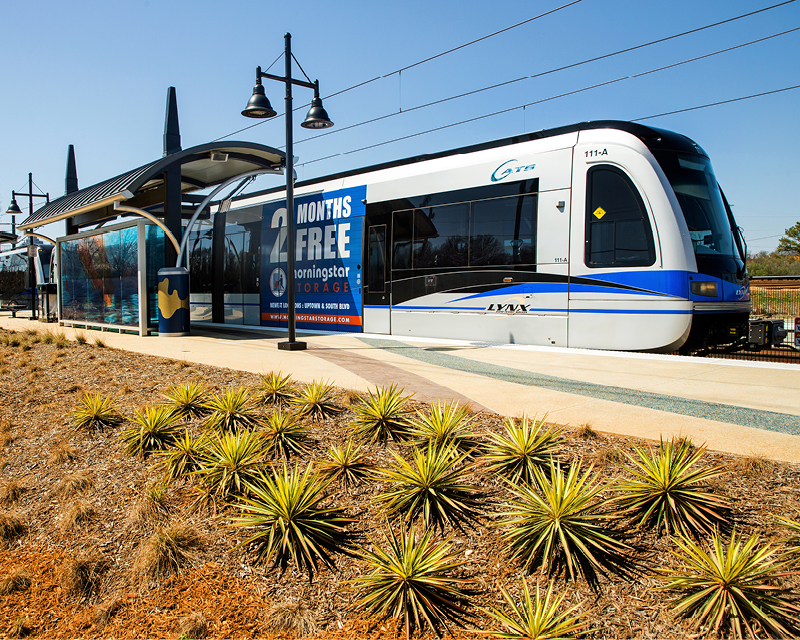
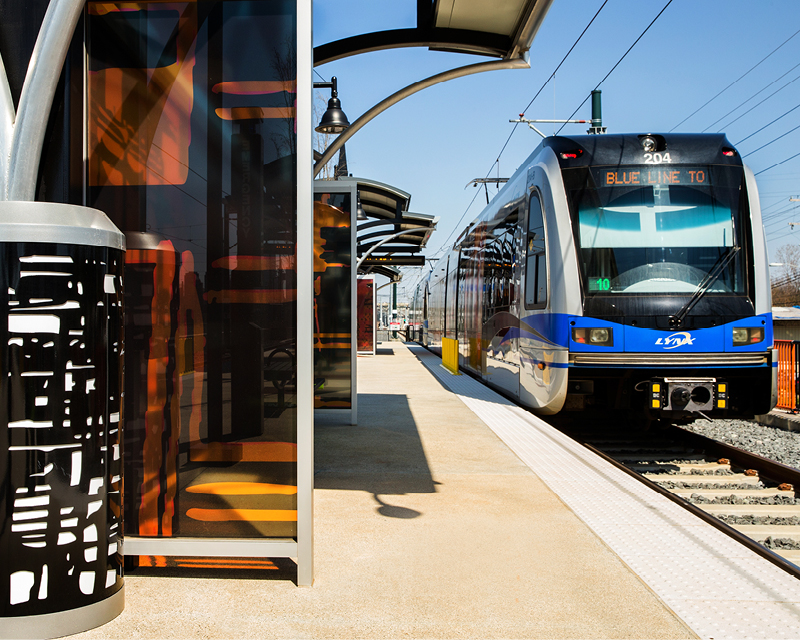
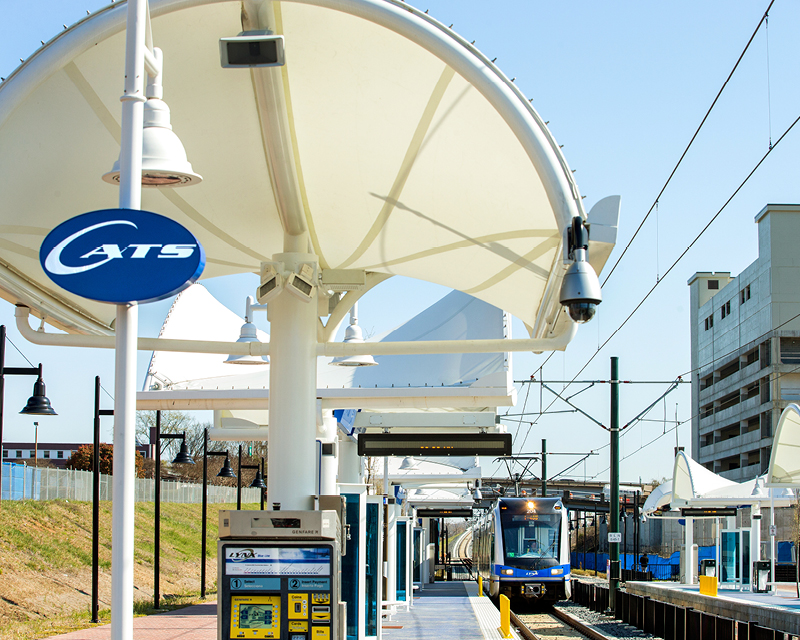
More than a decade in the making, the 9.3‑mile Charlotte Area Transit System (CATS) Blue Line Extension (BLE) expands the success of the original LYNX Blue Line to meet the transportation needs of Charlotte’s rapidly growing communities. Within months of opening, ridership surged by 48%, underscoring the region’s demand for reliable, high-capacity transit. One of the largest public works projects in North Carolina history, the BLE now links residential neighborhoods with the city’s major arts, education, employment, entertainment and retail destinations.
What challenges did STV address?
Charlotte required a comprehensive transit expansion capable of supporting projected population growth, improving multimodal mobility and alleviating roadway congestion. The corridor demanded significant coordination between freight and passenger railroads; complex roadway widening; and the integration of new stations, structures and maintenance facilities – all while maintaining safe transportation operations.
What solutions did STV deliver?
As lead designer, STV provided preliminary and final design for the 9.3‑mile double‑track light‑rail extension. The firm designed all light‑rail track alignments, 1.5 miles of relocated freight track, 4.5 miles of widened roads, 20 grade crossings, 11 stations, 13 bridges, and more than 80 retaining walls. STV also designed a new maintenance and storage facility, upgrades to the existing maintenance building, and three parking garages, along with a surface lot. The team delivered environmental impact studies and coordinated extensively with NCDOT, freight rail partners and local agencies to ensure a seamless project development process.
How does this project benefit the region?
The BLE expands access to jobs, education and services while reducing congestion and supporting Charlotte’s long-term growth strategy. It enhances economic development along the corridor, promotes sustainable transportation and delivers a safe, reliable transit option for thousands of daily riders.
Key stats and accolades
- 9.3 miles of new light‑rail tracks
- 20 grade crossings
- 11 new stations
- 13 bridges and 80+ retaining walls
- 3 parking garages and 1 surface lot
- Recognized by ACEC North Carolina, ACEC National, and Engineering News‑Record