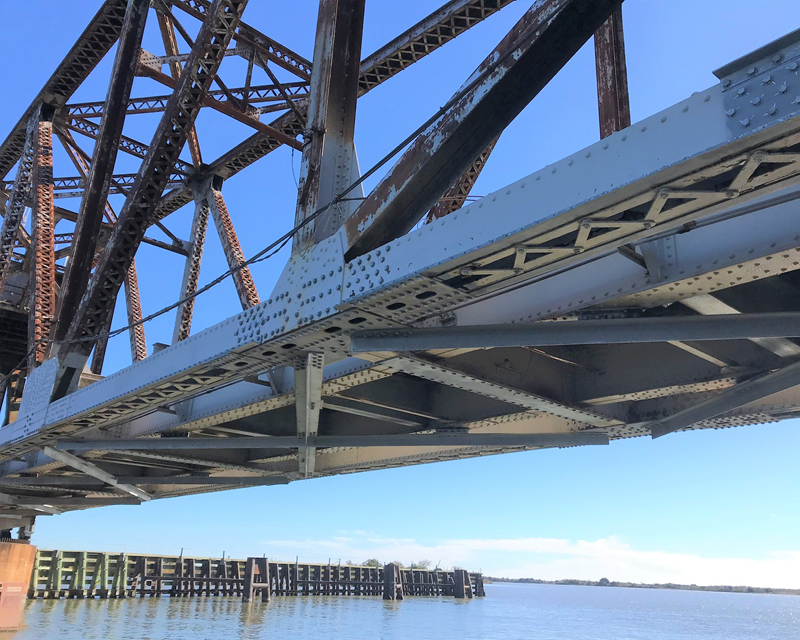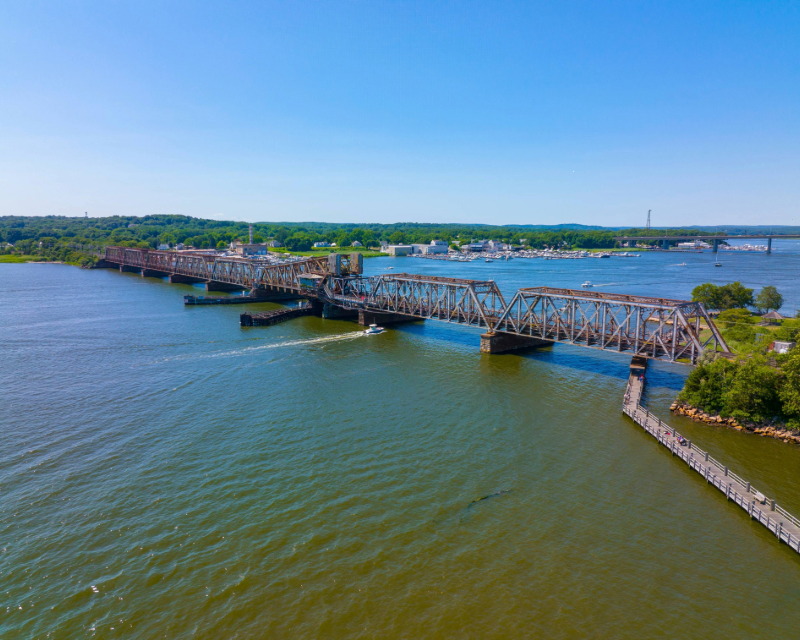
Amtrak has initiated the replacement of the aging 1907 two-track movable bridge spanning the Connecticut River between Old Saybrook and Old Lyme as part of the agency’s broader modernization of the Northeast Corridor. The project aims to build a modern two-track bridge, designed for higher speeds (up to 70 mph – a 55 % increase from the current 45 mph), improved reliability and better vertical clearance for maritime navigation. STV, as a sub-consultant to AECOM, was engaged by Amtrak to provide construction management services, including field inspection and office engineering, leveraging its deep rail-bridge expertise in Connecticut.
What challenges are STV addressing?
Replacing a key rail bridge on one of the country’s busiest passenger corridors presents multiple challenges: maintaining ongoing rail and freight service during construction, addressing marine navigation requirements and coordinating utility relocations under tight constraints. STV’s role requires adapting to complex site conditions, managing construction inspection across active operations and verifying that the new structure meets stringent speed, reliability and continuity goals while minimizing disruption to both rail and river traffic.
What solutions are STV delivering?
As part of the delivery team, STV is providing construction management and inspection services under Amtrak’s master services agreement for the Northeast Corridor. STV’s team is supporting the prime contractor and Amtrak by offering technical expertise in bridge rehabilitation, scheduling and tracking inspections, and documenting field activities to verify quality and compliance. The firm’s prior work on other Connecticut rail bridge projects – which include bearings replacement, culvert rehabilitation and retaining-wall enhancements – position the firm to deliver effective oversight for the new bridge construction.
How will this project improve rail service and the region?
Once completed, the new Connecticut River Bridge will enhance the reliability, capacity and speed of intercity and commuter rail services across Connecticut. By increasing design speed, improving structural performance and reducing recurring delays caused by the aging bridge, the project supports Amtrak’s new-era strategy for faster, cleaner and more efficient rail travel. It also benefits regional freight operators and maritime navigation by providing improved clearances and smoother coordination between rail and waterway operations.
Key Stats and Accolades
- Two-track replacement of the existing 1907 moveable rail bridge between Old Saybrook and Old Lyme.
- Designed for a maximum operating speed of ~70 mph (versus 45 mph for the existing bridge).