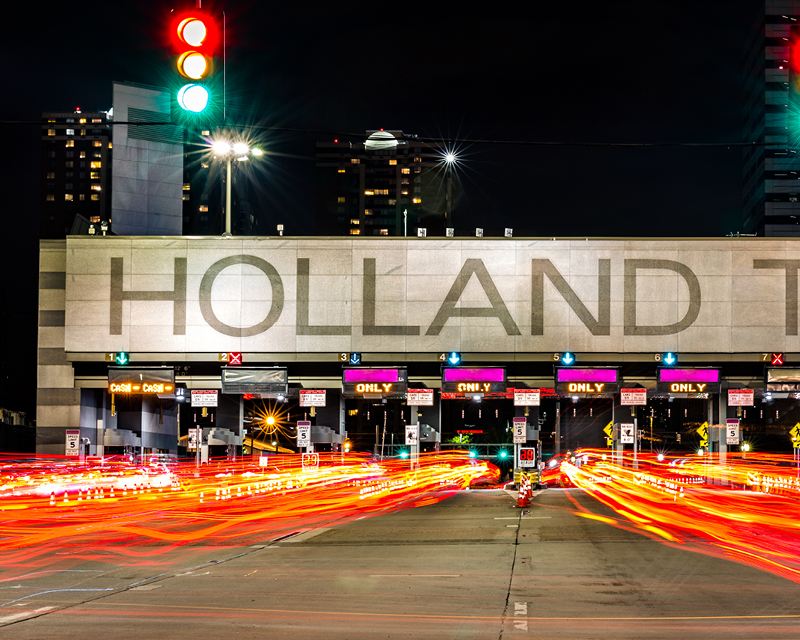
Carrying more than 90,000 vehicles each day between New York and New Jersey, the Holland Tunnel is one of the New York metropolitan area’s most critical highway links. To protect the tunnel from future flooding and extreme weather events, the Port Authority of New York and New Jersey advanced a federally funded resilience program to repair, harden and modernize the facility. STV is serving as the project manager and design engineer, guiding a complex construction phasing plan that enables extensive repairs with minimal lane closures. The program includes 13 individual projects, such as flood protection barriers and upgrades to curbing, piping, wiring and control systems.
What challenges did STV address?
Maintaining traffic flow through one of the region’s busiest tunnels required an innovative transportation management approach. STV needed to design improvements that could be built safely and efficiently while minimizing disruptions to commuters, freight and emergency services. Integrating modern flood protection while preserving existing systems and coordinating across agencies, contractors and operations teams created additional complexity.
What solutions did STV deliver?
STV developed a comprehensive construction phasing strategy that enables work to proceed with limited closures. The team designed and sited flood protection barriers and identified optimal locations for CCTVs, traffic flow monitoring and variable message signs to support real‑time traveler information. STV also crafted a detailed transportation management plan to prepare motorists for work‑zone conditions and streamline contractor access.
How does this project benefit the community?
The improvements enhance long‑term resilience, protect vital transportation infrastructure and reduce the risk of tunnel closures caused by flooding. By integrating modern monitoring and traveler information systems, the project improves safety and reliability for the millions of people who depend on the Holland Tunnel each year.
Key stats and accolades
- More than 90,000 daily vehicles served
- 13‑project flood protection and modernization program
- New barriers, wiring, control systems and drainage repairs
- Advanced construction phasing to minimize lane closures