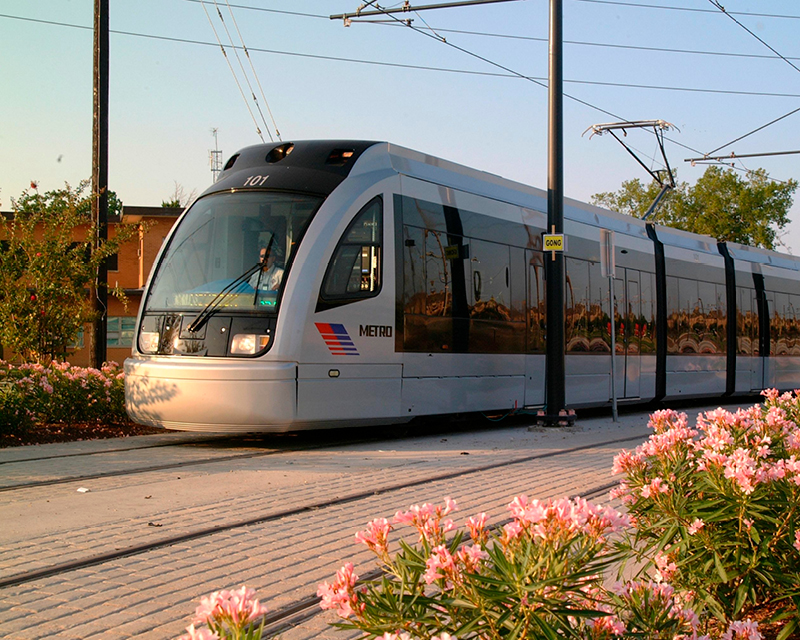
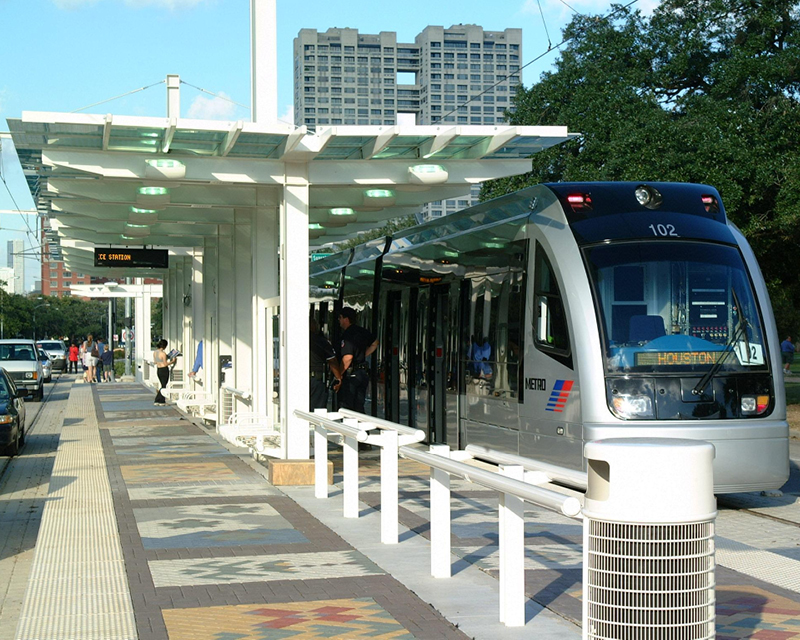
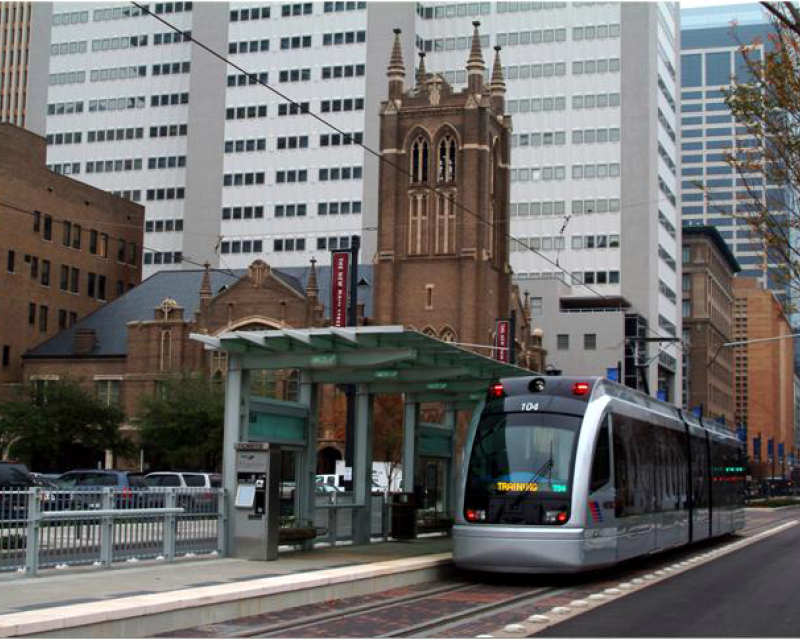
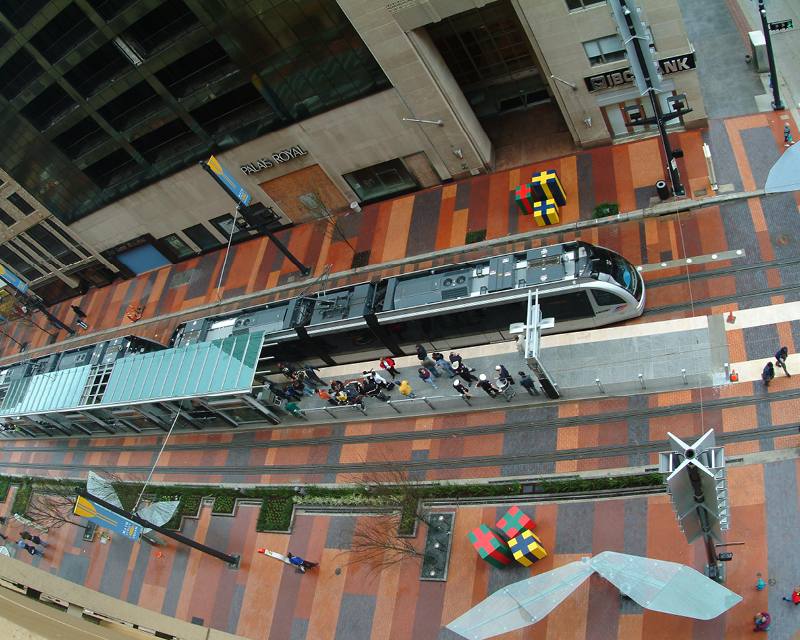
The Houston METRORail program marked a major transformation in one of the nation’s largest metropolitan regions, introducing a modern light‑rail transit system to improve mobility, reduce congestion and enhance air quality. Spanning 7.5 miles from Downtown Houston to the Astrodome, the New Starts light‑rail corridor features 16 stations and a state‑of‑the‑art maintenance facility, forming the backbone of a broader 22‑mile regional transit vision. The project reshaped transit access in Houston’s urban core and set a new standard for efficient delivery of major infrastructure.
What challenges did STV address?
Houston required a next-generation transit solution capable of supporting rapid population growth, improving multimodal connectivity and reducing the region’s dependence on vehicle travel. METRO also sought a partner capable of integrating extensive local enhancements –totaling $150 million – while navigating the complexities of building a new rail system within a dense and heavily traveled urban corridor.
What solutions did STV deliver?
As program management lead, STV guided every stage of the New Starts system with precision and coordination. The firm oversaw project execution, managed schedule and cost controls, coordinated multidisciplinary engineering, supported vehicle procurement and ensured seamless integration of communications, traction power, train control and overhead contact systems. Delivered 10 months ahead of schedule, the system stands as a model for efficient, collaborative urban infrastructure delivery.
How does this project benefit the region?
The METRORail system provides reliable, sustainable transit service for an estimated 58,000 daily riders, reducing congestion, improving air quality and expanding equitable access to jobs, education, entertainment and medical destinations. Its success continues to spur transit-oriented development and economic investment along the corridor.
Key stats and accolades
- 7.5 miles of new light‑rail track
- 16 stations and a modern maintenance facility
- 58,000 estimated daily riders
- $150 million in locally sourced enhancements
- Delivered 10 months ahead of schedule