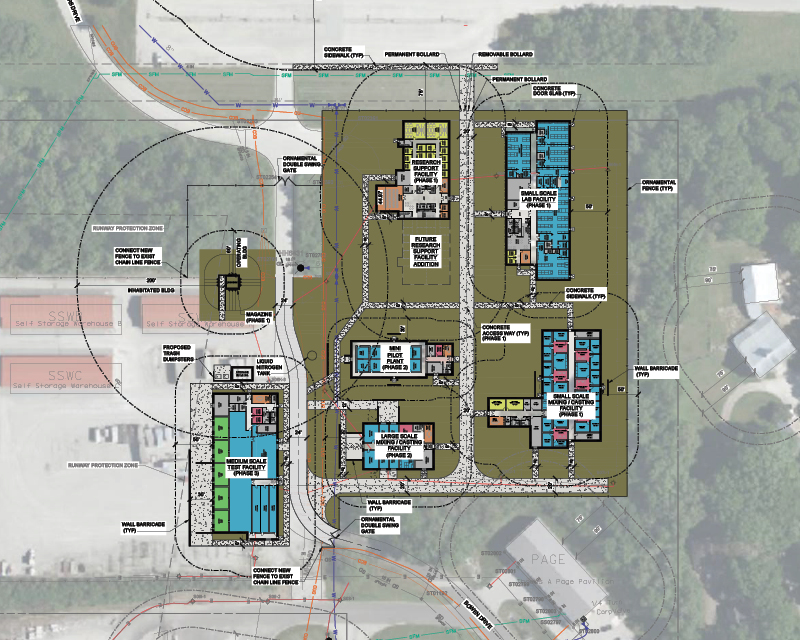
STV partnered with the Purdue Energetics Research Center (PERC) to conduct a comprehensive site selection, programming and planning study for a new, centralized research complex dedicated to advanced energetics. The study evaluated a 9.8-acre site to accommodate 110,000 square feet of state-of-the-art laboratory, testing and support facilities, designed to consolidate PERC’s dispersed research activities into a single, purpose-built campus.
What challenges did STV address?
As the world’s premier academic research institution focused on explosives, propellants and pyrotechnics, PERC operates across several campus buildings that lack the specialized safety, spatial separation and infrastructure required for high-hazard energetics research. The university sought a cohesive plan for locating, organizing and designing facilities that would meet stringent performance and safety criteria while supporting collaboration among researchers, government partners and industry.
What solutions did STV deliver?
STV’s planning and design team developed a concept for an off‑campus research campus composed of multiple stand‑alone structures, each dedicated to specific research functions. The plan integrated required separation distances, specialized construction typologies and advanced safety strategies to support the full lifecycle of energetics research – from synthesis and formulation to characterization and performance testing. The study provided programming, site analysis, conceptual layouts and a scalable framework for future implementation.
How does this project benefit Purdue and the research community?
The proposed facility strengthens Purdue’s leadership in energetics by creating a safer, more efficient and more collaborative environment for cutting‑edge research. By consolidating operations into a purpose‑built campus, the university can improve safety, enhance research quality, expand partnerships and accelerate innovation within a field critical to national defense, aerospace and advanced materials.
Key stats and accolades
- 9.8‑acre proposed site
- 110,000‑sf concept design
- Purpose‑built research campus with multiple specialized structures
- Planning and programming for high‑hazard energetics research environments